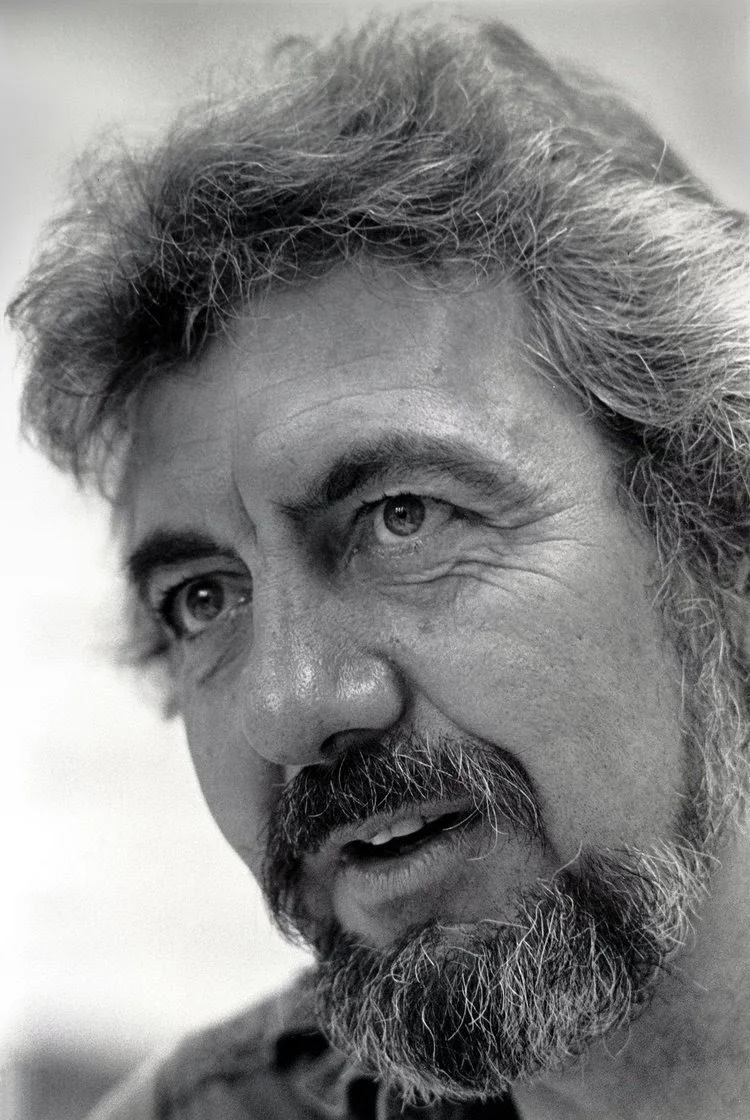
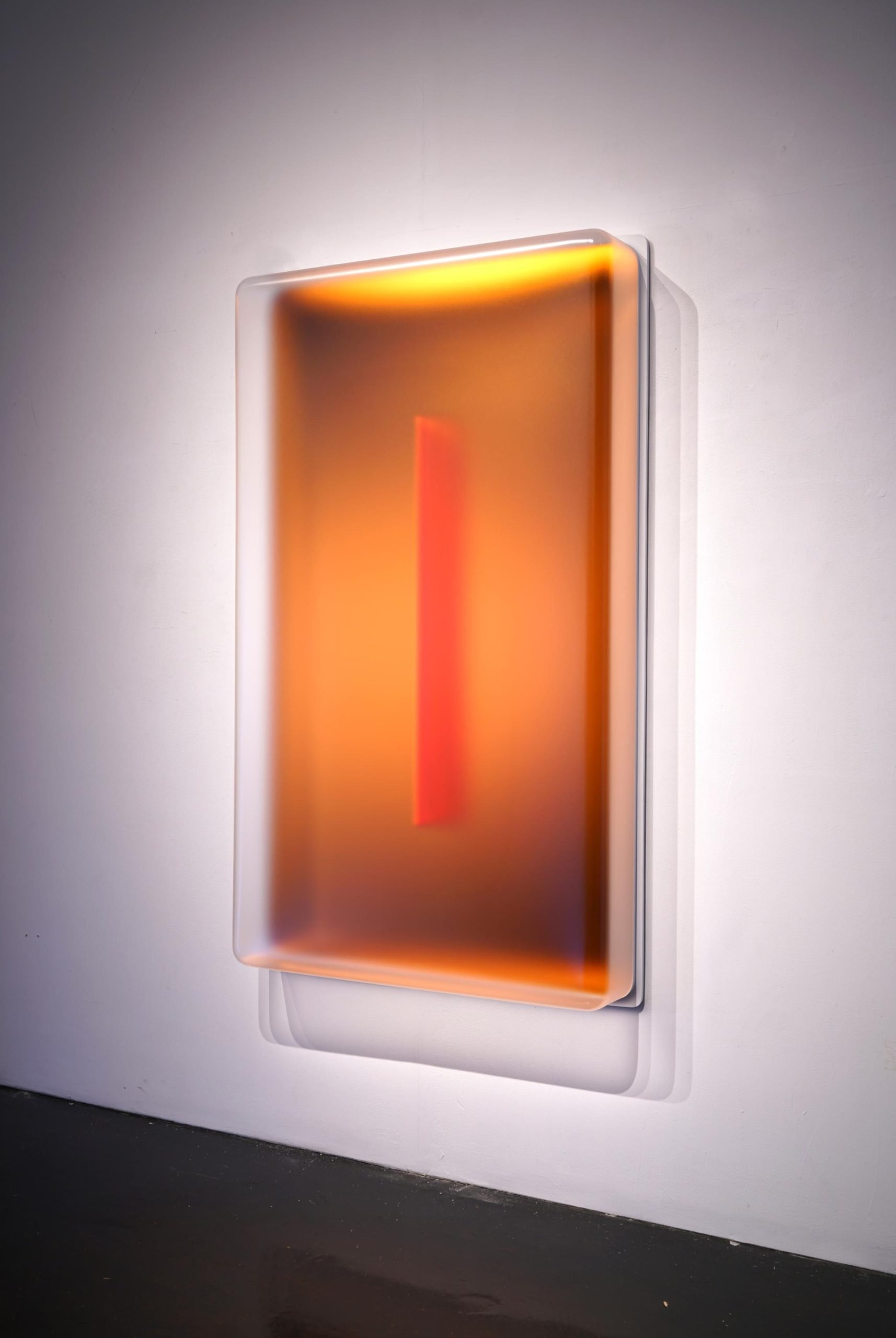
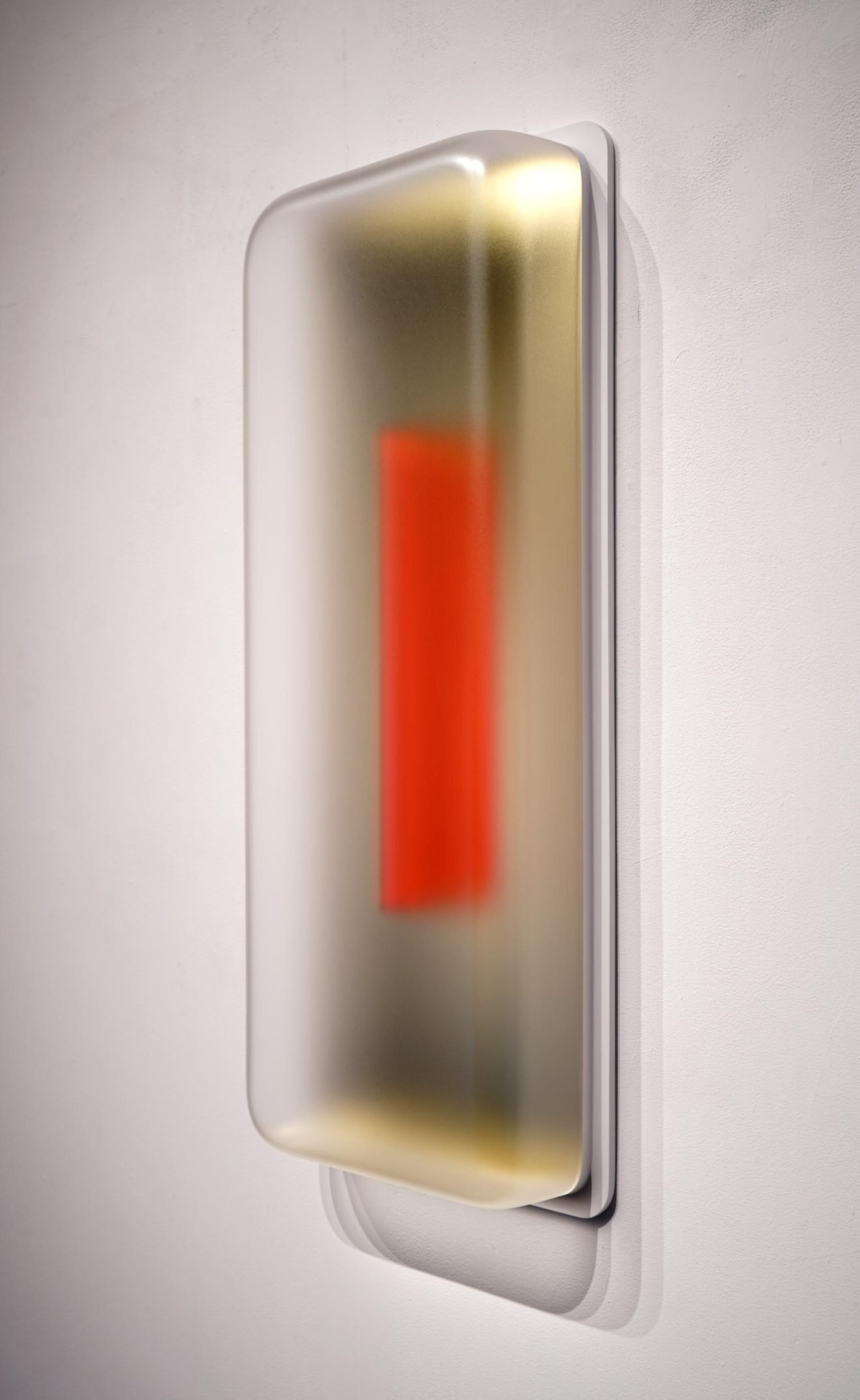
Guillermo Bert's Upcoming Solo Show at the Museum of Latin American Ar

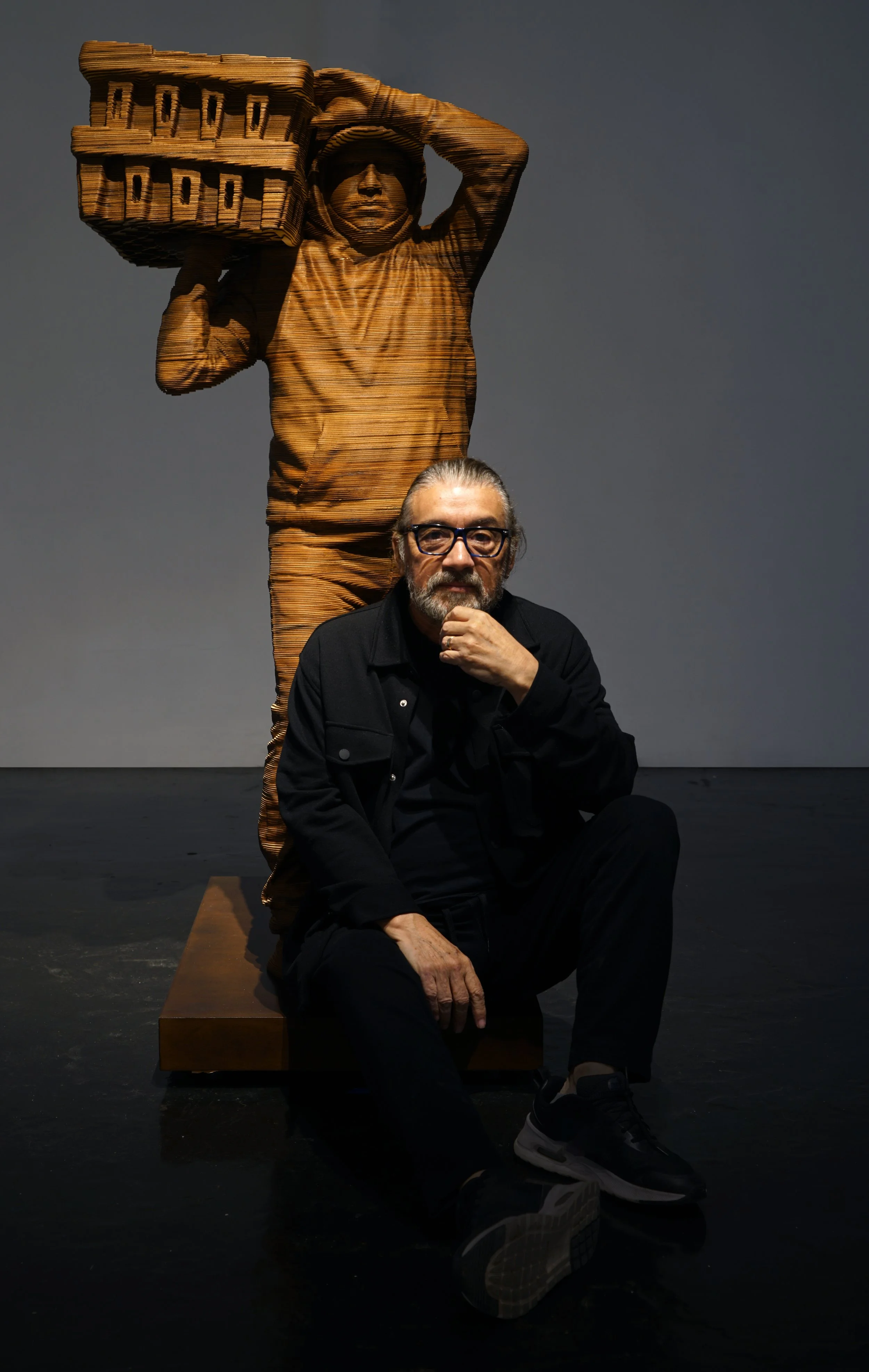
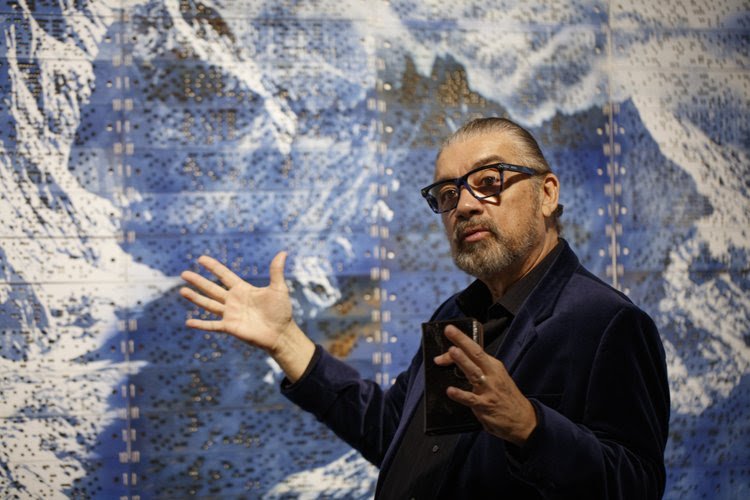
Congratulations to Guillermo Bert on his upcoming solo show, Techno-Empathy, opening at the Museum of Latin American Art on March 29.

This exhibition shows the Chilean-born artist Guillermo Bert bringing the two together in novel and powerful ways. He uses three principal tools, all of them uncommon in most art production: QR codes, 3-D imaging, and laser engraving. In the Encoded Textiles series, weavings include QR codes that literally embed the story of the weaver into the work so that anyone with a smartphone can see and hear them. Through 3-D imaging, the artist creates life-size images of workers whom he has met, allowing us also to meet them face to face from a unique perspective. Media images today often show migrants and refugees, but Bert uses laser engraving to transfer them onto unusual surfaces, such as wood panels that mimic the look of some of the earliest “high technology:” the rectangular panels that encoded instructions for the first mechanical looms in the 19th century.

Guillermo Bert At William Turner Gallery

Charles Arnoldi in The Hollywood Reporter

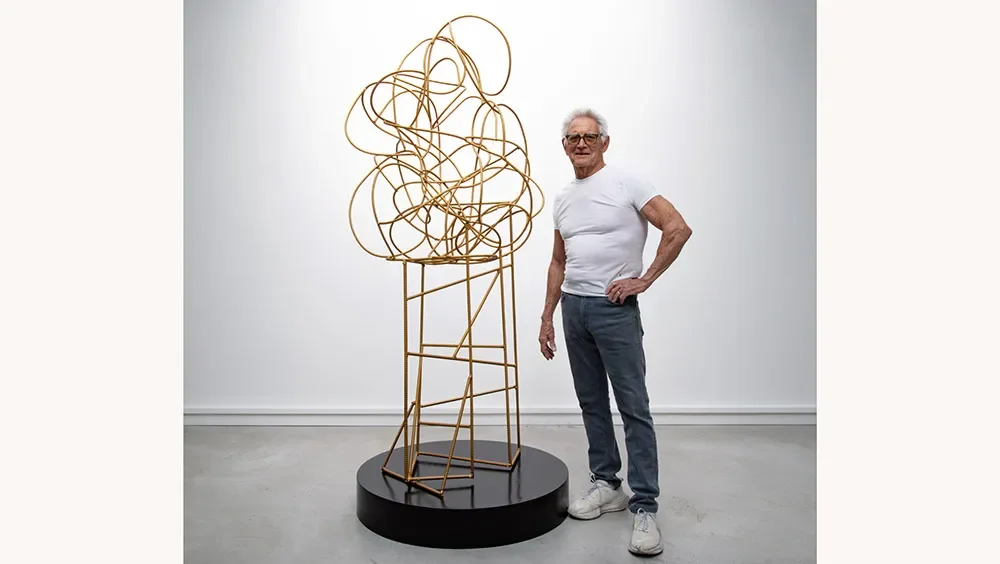
Congratulations to Charles Arnoldi for his recent feature in Michael Slenske's article "Guns and Glitter: How LA's Top Artists Reimagine the Oscar" for The Hollywood Reporter!

Charles Arnoldi

Slenske writes: For this portfolio, [Arnoldi] did something he almost never does: “I don’t really think about the Oscars, and I don’t make figurative work,” he says. “But there’s a human quality to this particular sculpture because it has legs and these morphing human forms. I guess you could say that’s a commentary on the chaos that accompanies the Oscars race every year.”

Read the full article at the link below!

Mark Steven Greenfield Solo Show at the Boone Family Gallery at Pasadena City College

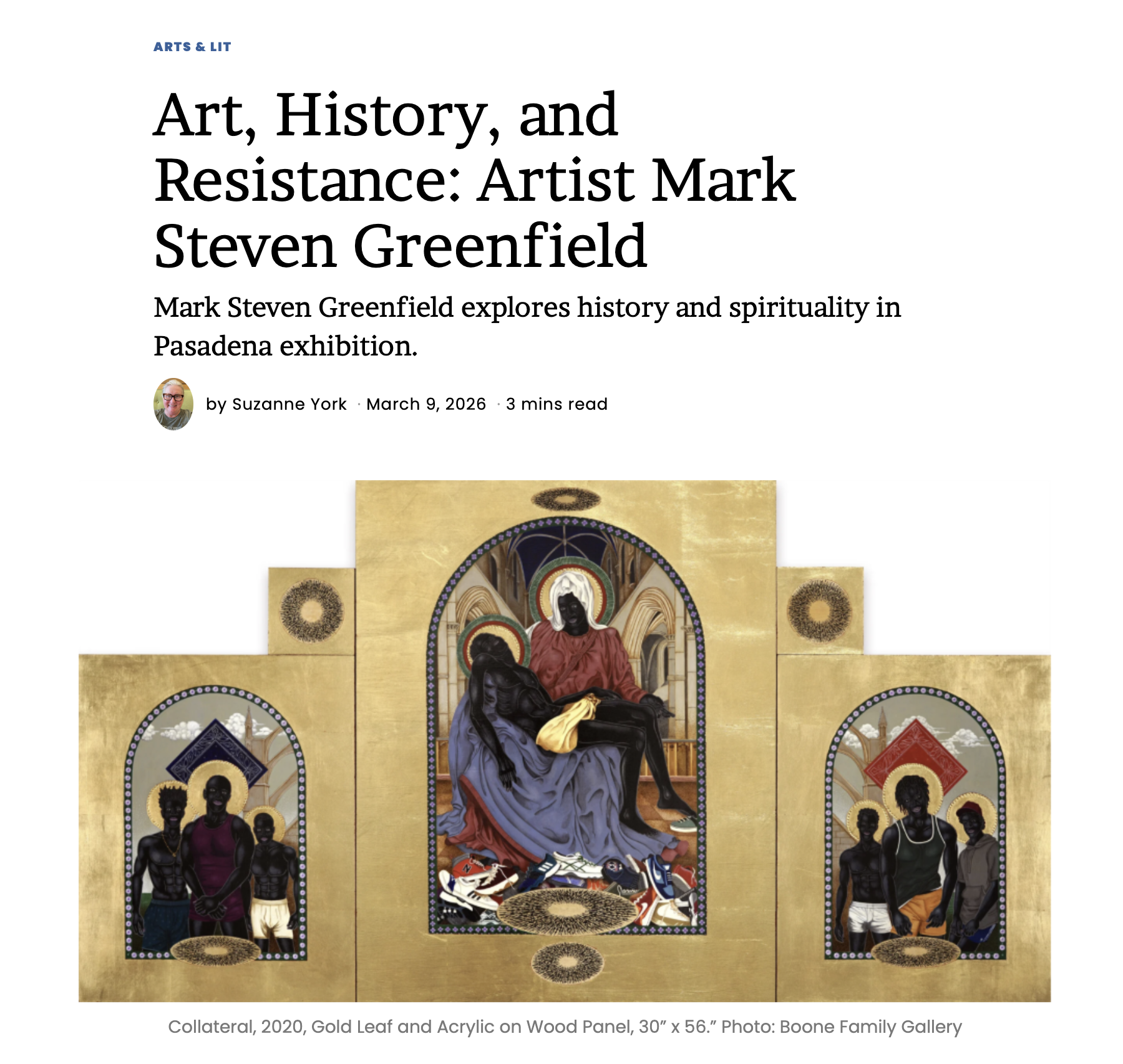
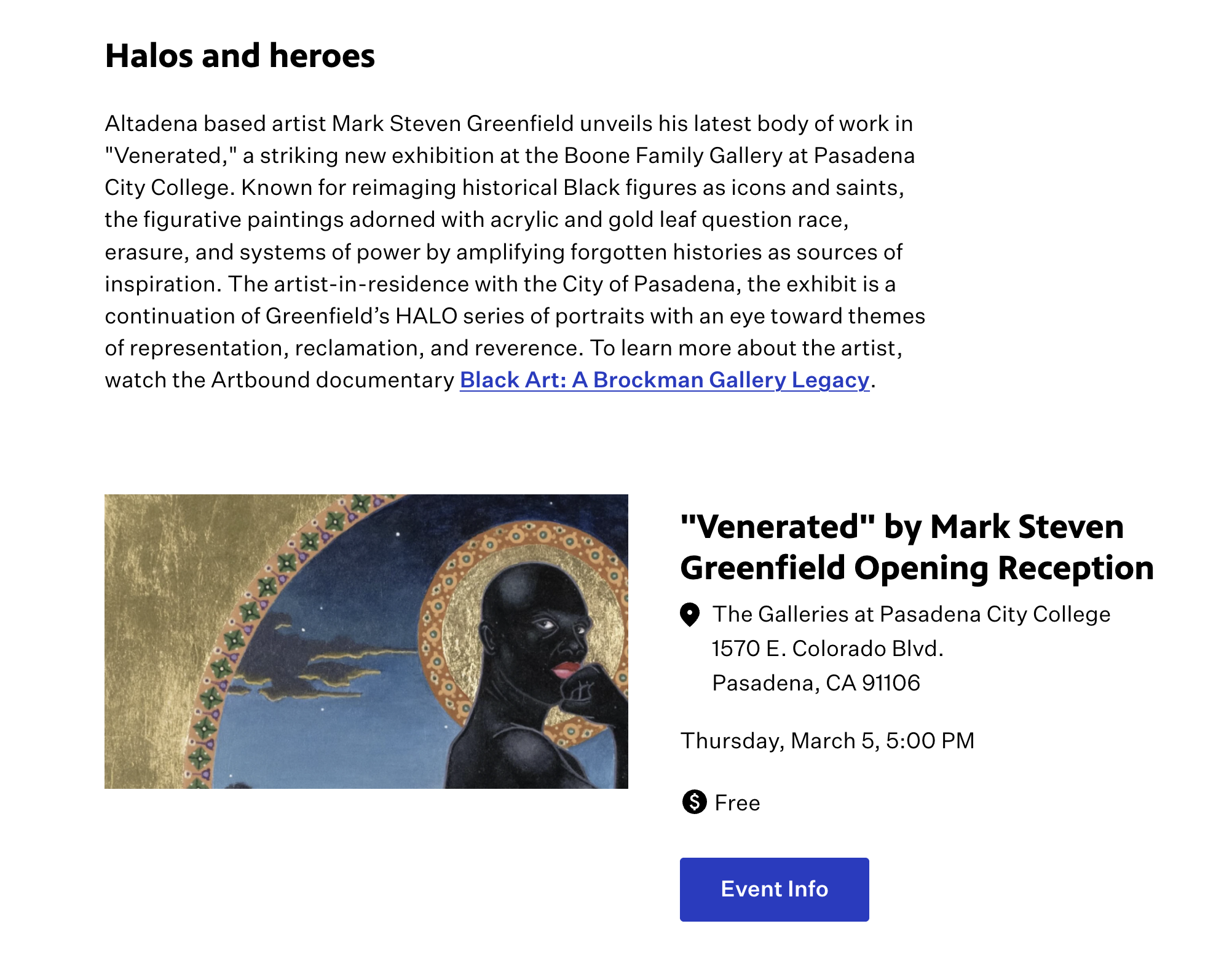
William Turner Gallery is happy to congratulate Mark Steven Greenfield on his extraordinary solo show, Venerated, at Pasadena City College’s Boone Family Gallery. The exhibition received an in-depth review by Suzanne York which included excerpts of Greenfield’s art practice and activism as well as discussion of the spiritual and historical themes that shape his work. York highlights how Greenfield’s paintings draw on cultural memory, overlooked figures from the African diaspora, and symbols such as the Black Madonna and mandala forms to explore history, resistance, and renewal.


“The Boone Gallery exhibition offers visitors a unique look across the evolving stages of Greenfield’s artistic life. It presents work that is visually striking, historically rich, and unapologetically challenging.”

The show was also cited by PBS SoCal as one of the five best things to do during the week of March 2-8!

SURFACE TENSION: Focus Los Angeles - Opening Saturday 5-8PM

Surface Tension: Focus Los Angeles Opening February 28 5-8PM

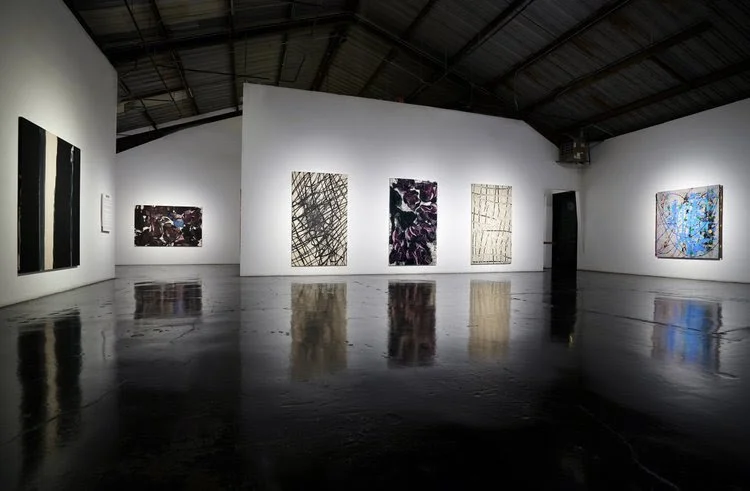
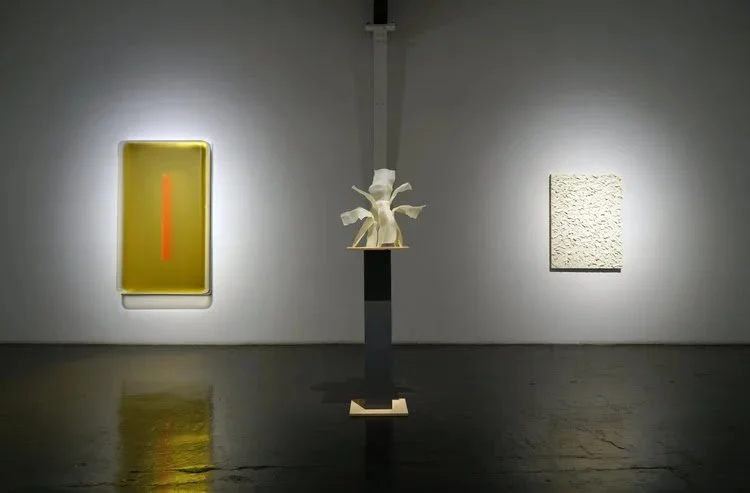
Santa Monica, CA  - William Turner Gallery is pleased to present Surface Tension: Focus Los Angeles, a major group exhibition of West Coast artists, opening February 28, 5-8 PM, and on view through April 11, 2026.

Surface Tension: Focus Los Angeles explores surface as an active site of meaning, sensation, and perception. The exhibition foregrounds how contemporary practices use texture, layering, and materiality to shape visual and sensory experience. Bridging painting, sculpture, and works at their intersection, the featured artists employ materials ranging from pearlescent and pigmented acrylics to urethane, resin, industrial finishes, and etched line-work.

Together, the works reveal surface as a dynamic interface that captures light, depth, and movement while inviting sustained, close looking. Through extended material experimentation and technical refinement, each artist demonstrates a deep attunement to their chosen medium, using surface to generate tension between control and intuition, precision and discovery, all aimed at igniting a spark of heightened perception.

Featured artists: Dawn Arrowsmith, Casper Brindle, Alex Couwenberg, Shingo Francis, Frank Gehry, Jimi Gleason, James Hayward, Eric Johnson, Peter Lodato, Andy Moses, Ed Moses, Roland Reiss, Scot Heywood and Jennifer Wolf.

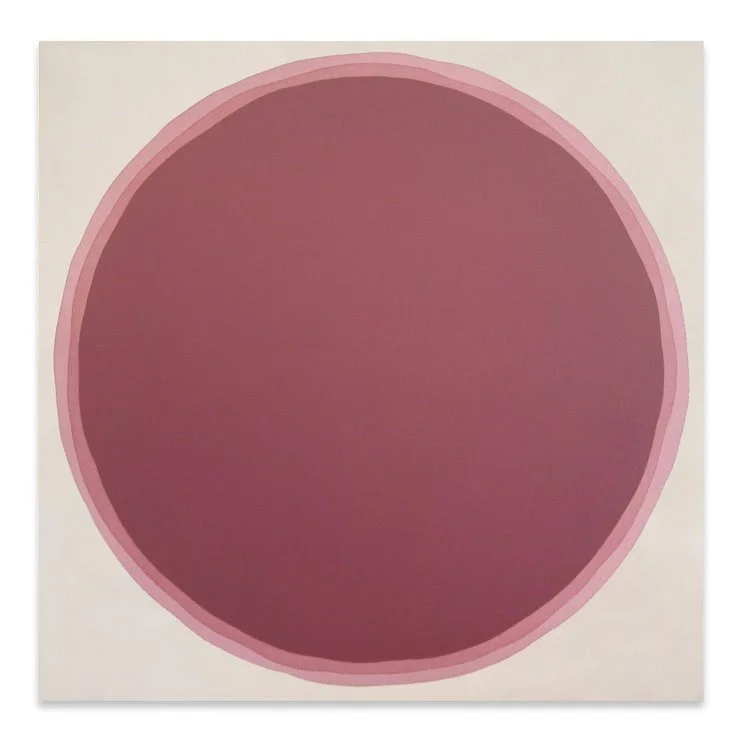
Dawn Arrowsmith, Plum Sienna, acrylic on canvas, 56" x 56"

Dawn Arrowsmith produces meditative, color-driven works informed by Buddhist philosophy and extensive travel. Her paintings appear minimal at first glance, gradually revealing optical shimmer and depth through prolonged viewing.

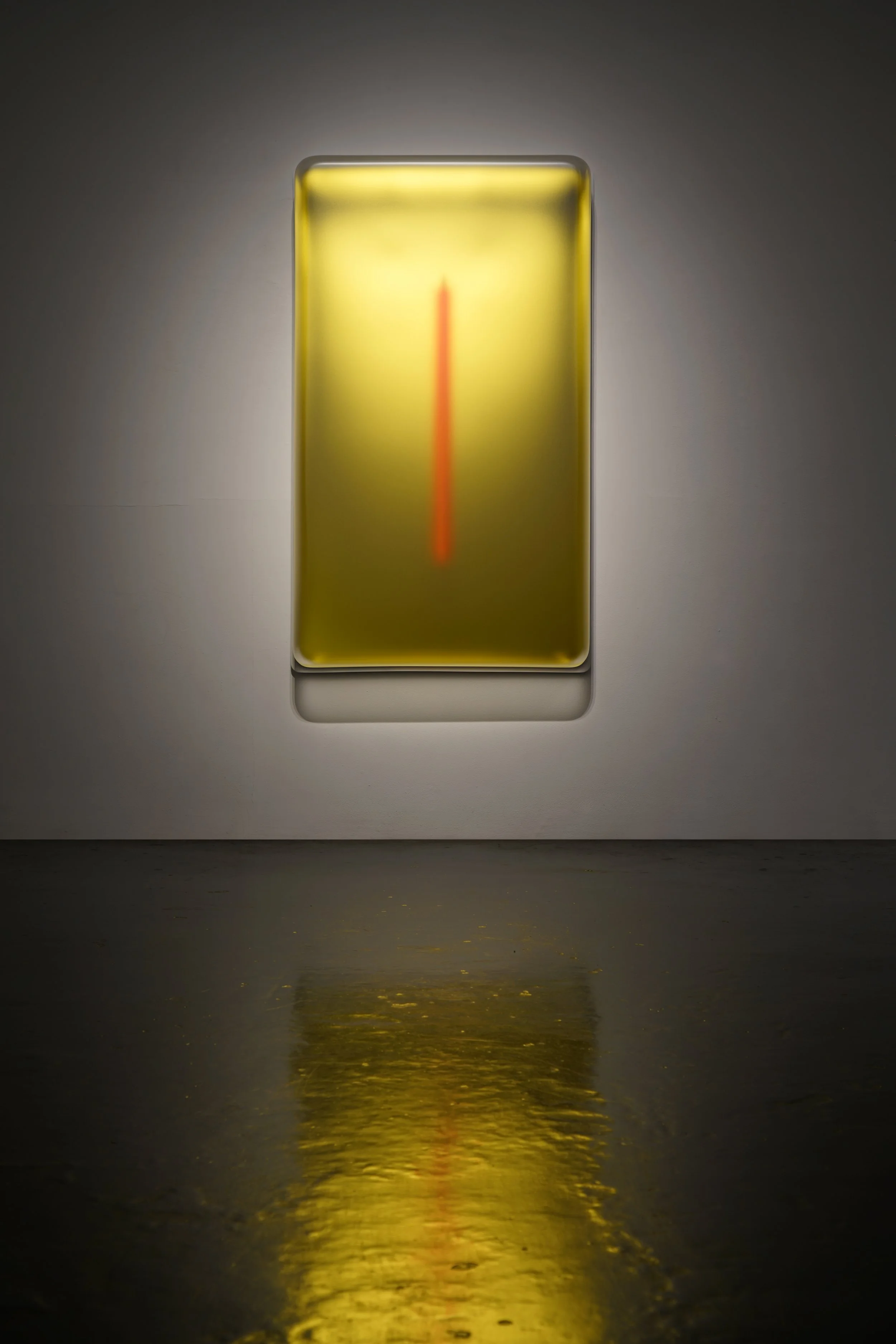
Casper Brindle, LIGHT GLYPH (YELLOW), 2026, VACUUMED FORMED PIGMENTED ACRYLIC

Casper Brindle creates paintings and sculptures that engage light through reflective, industrial materials including resin and automotive paint. His work shifts with the viewer’s movement, emphasizing perception and atmospheric depth.

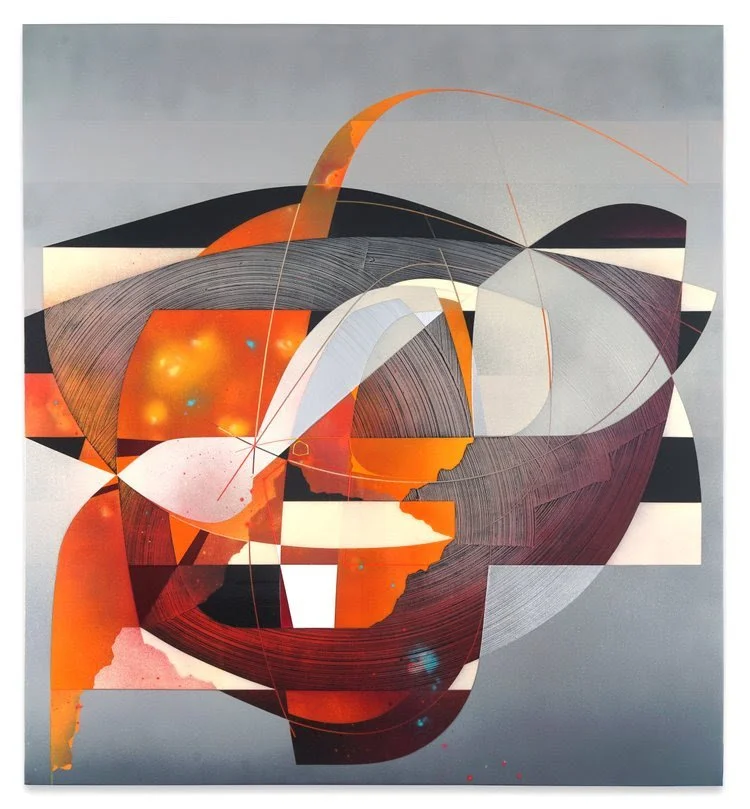
Alex Couwenberg,  Stranded (I’m), 2025, Acrylic & spray on canvas, 72” x 66”

Alex Couwenberg is a Southern California–based painter whose work draws from Los Angeles modernism and mid-century design. His sleek, glossy paintings are influenced by Hard-edge abstraction and Finish Fetish aesthetics.

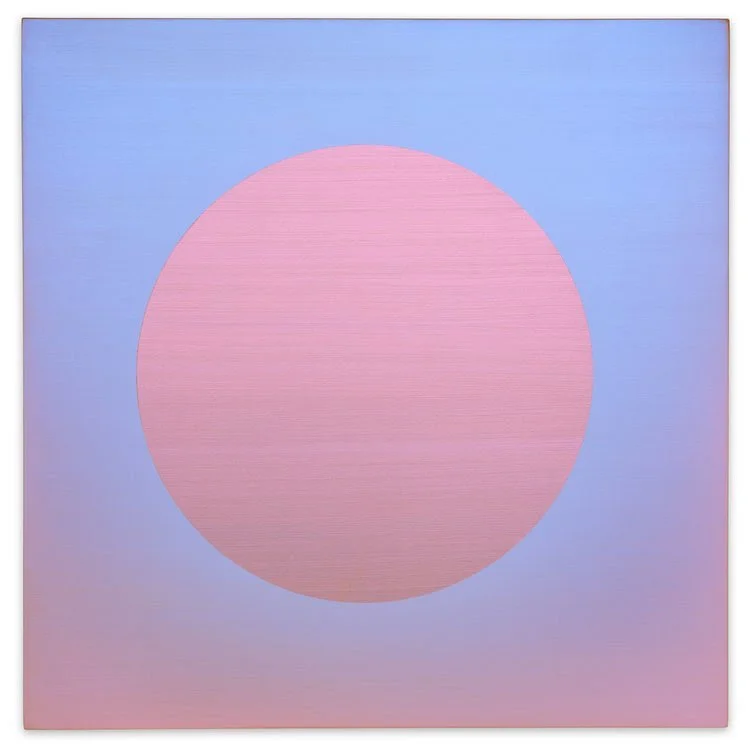
Shingo Francis, Mystery to Explore, 2023, Oil on canvas, 24" x 24"

Shingo Francis creates paintings that shimmer and shift through the use of interference pigments that refract light. Influenced by Southern California’s Light and Space movement and his immersion in LA’s art scene, Francis’s works change with viewer position and lighting conditions.

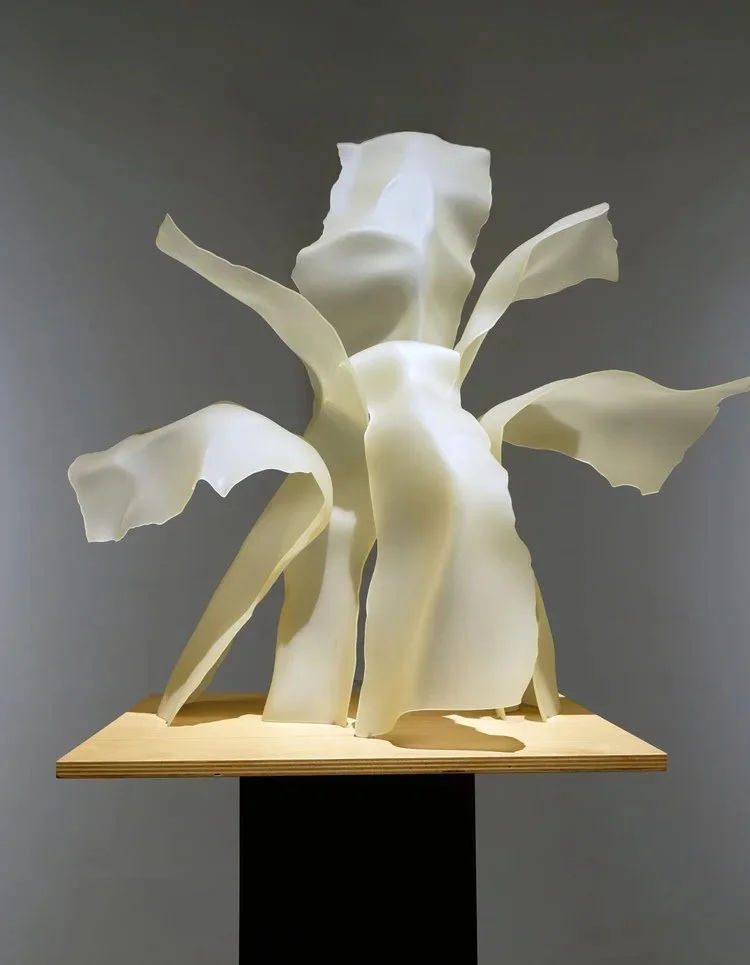
Frank Gehry, Memory of Sophie Calle’s Flower, 2012, Cast urethane with wood pedestal,
24” x 23” x 18”

Frank Gehry (1929–2025) Known for his de-constructivist approach and creative use of materials, Gehry’s buildings share an artist’s sensibility, where surface texture and dynamic form activate his structures. The undulating, curvilinear forms of his architecture are often echoed in the sculptures and drawings he created throughout his long career.

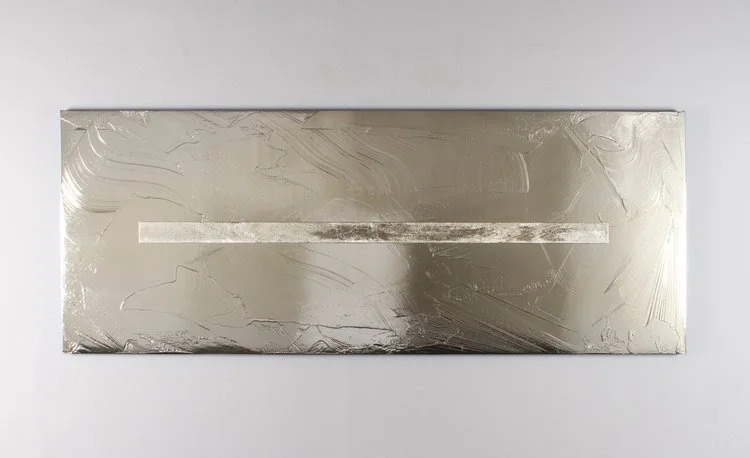
Jimi Gleason, Untitled, 2018, Silver nitrate & acrylic on canvas, 48” x 126”

Jimi Gleason explores the reflective and perceptual properties of light, using materials such as silver nitrate and pearlescent paint. His mirror-like surfaces shift with the viewer and environment, creating interactive, meditative experiences.

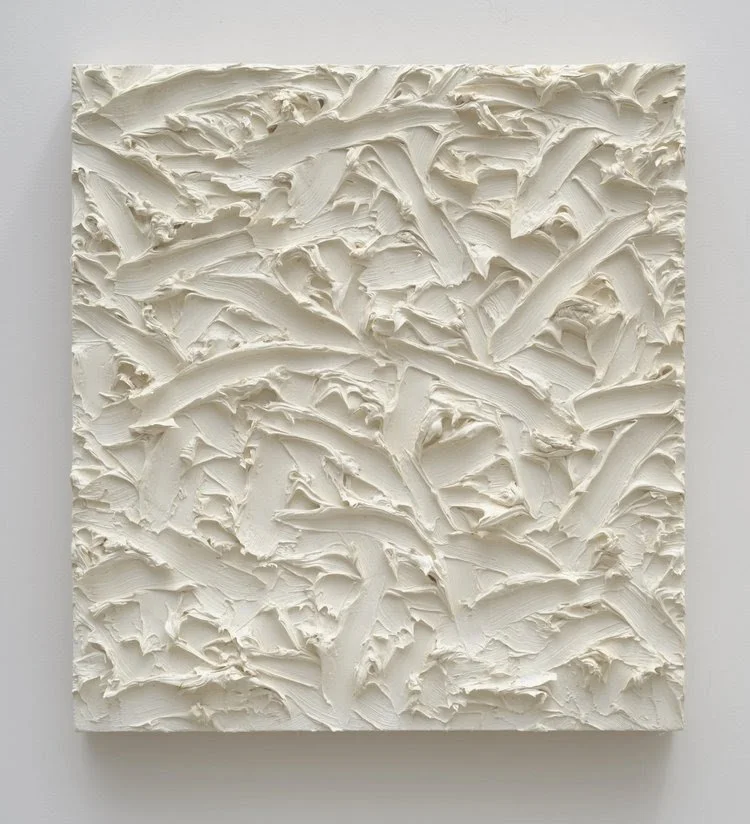
James Hayward, Abstract #247, 2023, Oil on canvas, 25” x 23”

James Hayward paints monochromes that celebrate the nuances of color and sensuality of texture. The surfaces are lavish cake icings of paint, almost daring the viewer to touch, lick, engage. Deft strokes of the artist’s hand remain as deep fissures in the surface, further exciting the senses to embrace their physicality.

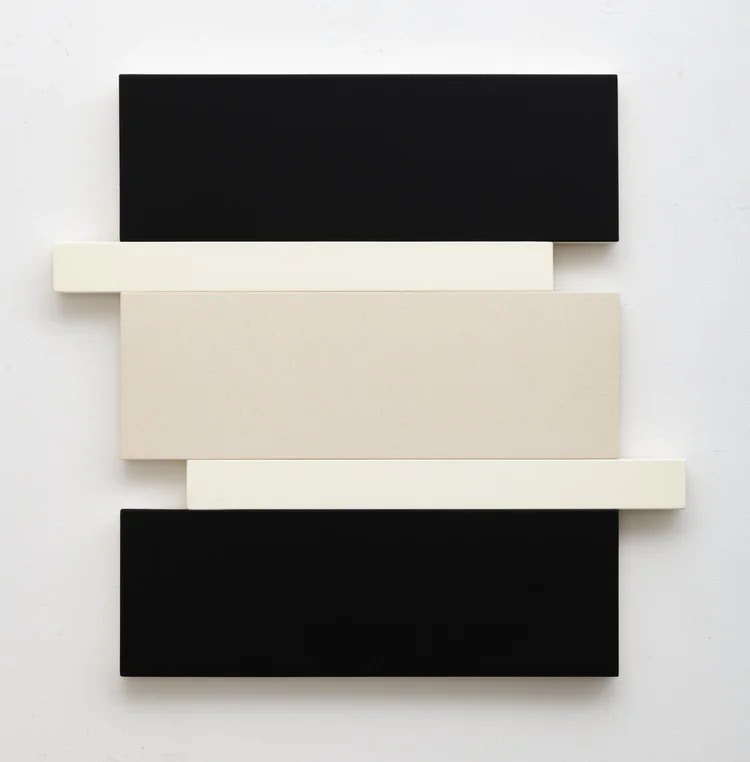
Scot Heywood, Stack - Black, White, Canvas, 2016, Acrylic on canvas, 70” x 74”

Scot Heywood’s works are indebted to the origins of geometric abstraction. Ranging in scale from intimate to encompassing, his paintings consist of multiple, colored canvases, connected in staggered, patchwork patterns, intentionally misaligned to create delightfully disruptive, staccato visual rhythms.

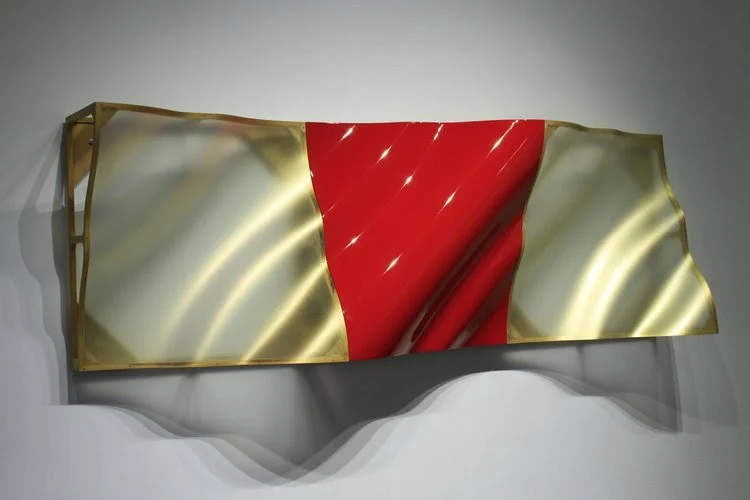
Eric Johnson, Altamira (Triptych), 1992, Composite, wood, & enamel, 40" x 120" x 18"

Eric Johnson creates resin-based sculptures that merge color, form, and structure, drawing from Southern California’s surf, automotive, and aerospace cultures. His works balance polished surfaces with exposed internal architectures, revealing both depth and construction.

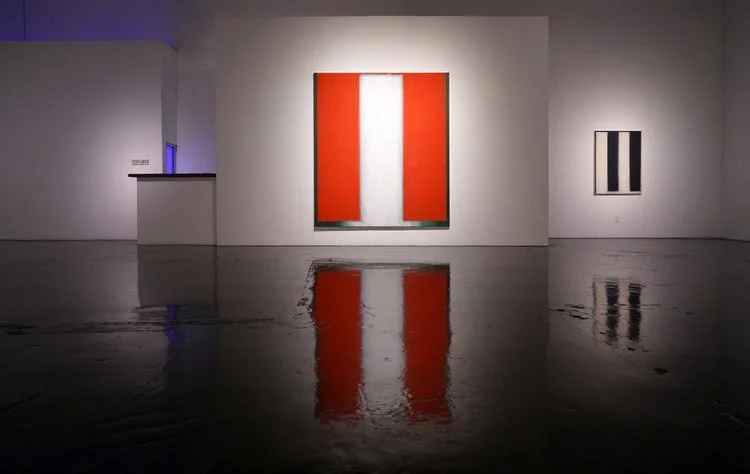
Peter Lodato, Vermilion Green & White, 2023, oil on canvas, 96" x 84"

Peter Lodato (1946–2025) emerged from the Light and Space movement, initially creating immersive light installations before translating perceptual effects into painting. His geometric compositions subtly dissolve through layered brushwork and color vibration, challenging visual certainty.

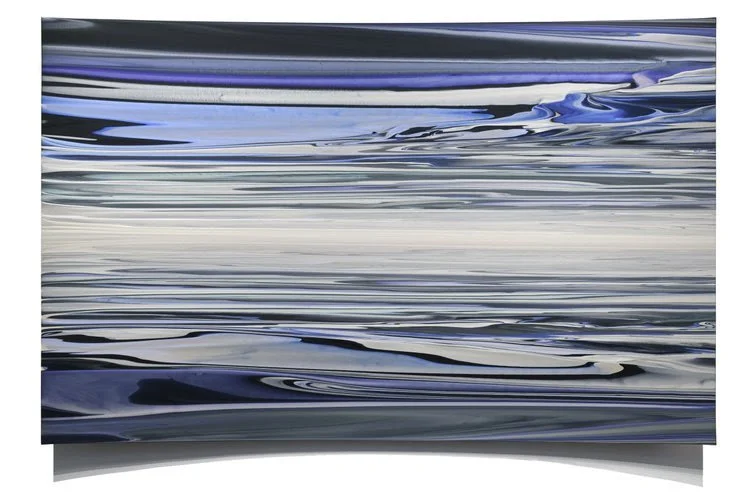
Andy Moses, Geomorphology 1608, 2023, Acrylic on canvas over concave wood panel,
57” x 90” x 5.5”

Andy Moses is known for his intensive exploration of paint’s alchemical properties. Through complex pouring and mixing processes, his luminous abstractions evoke natural forces rather than representational imagery.

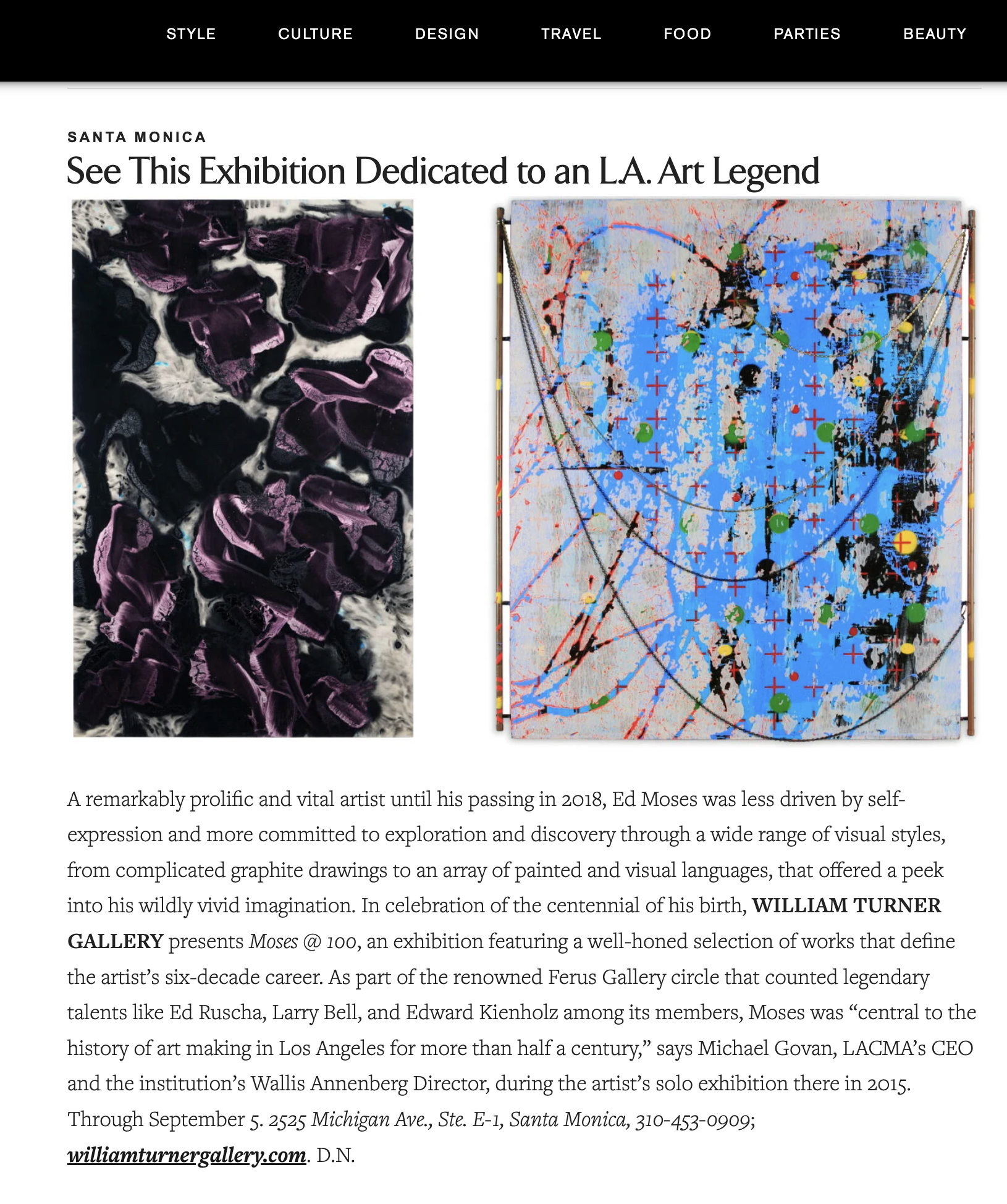
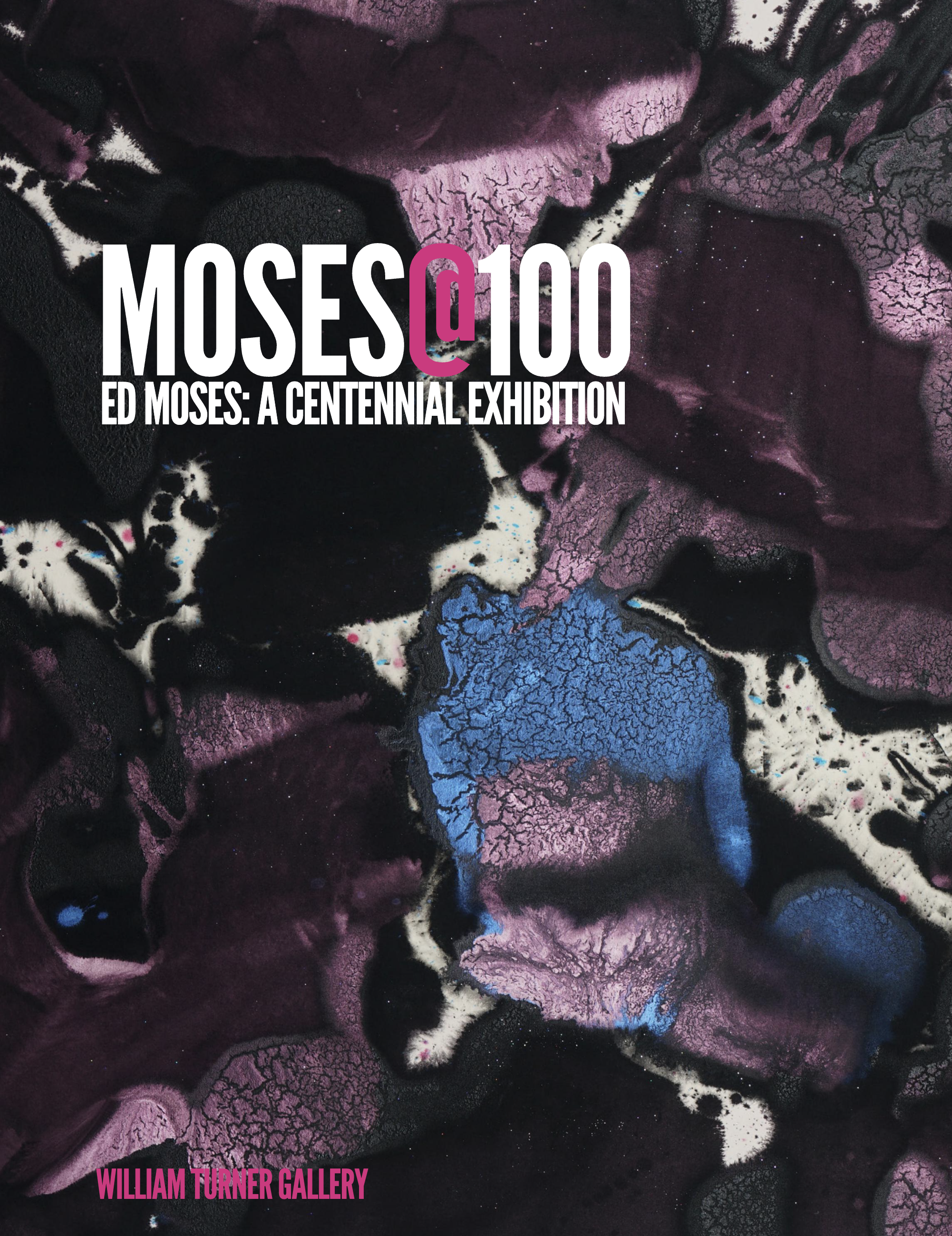
Ed Moses, Sato, 2008, acrylic on canvas, 72” x 120”

Ed Moses (1926–2018) was a pivotal figure in postwar Los Angeles abstraction and a core member of the Ferus Gallery circle. Known for his experimental, process-driven approach, Moses continuously redefined painting over a career spanning six decades.

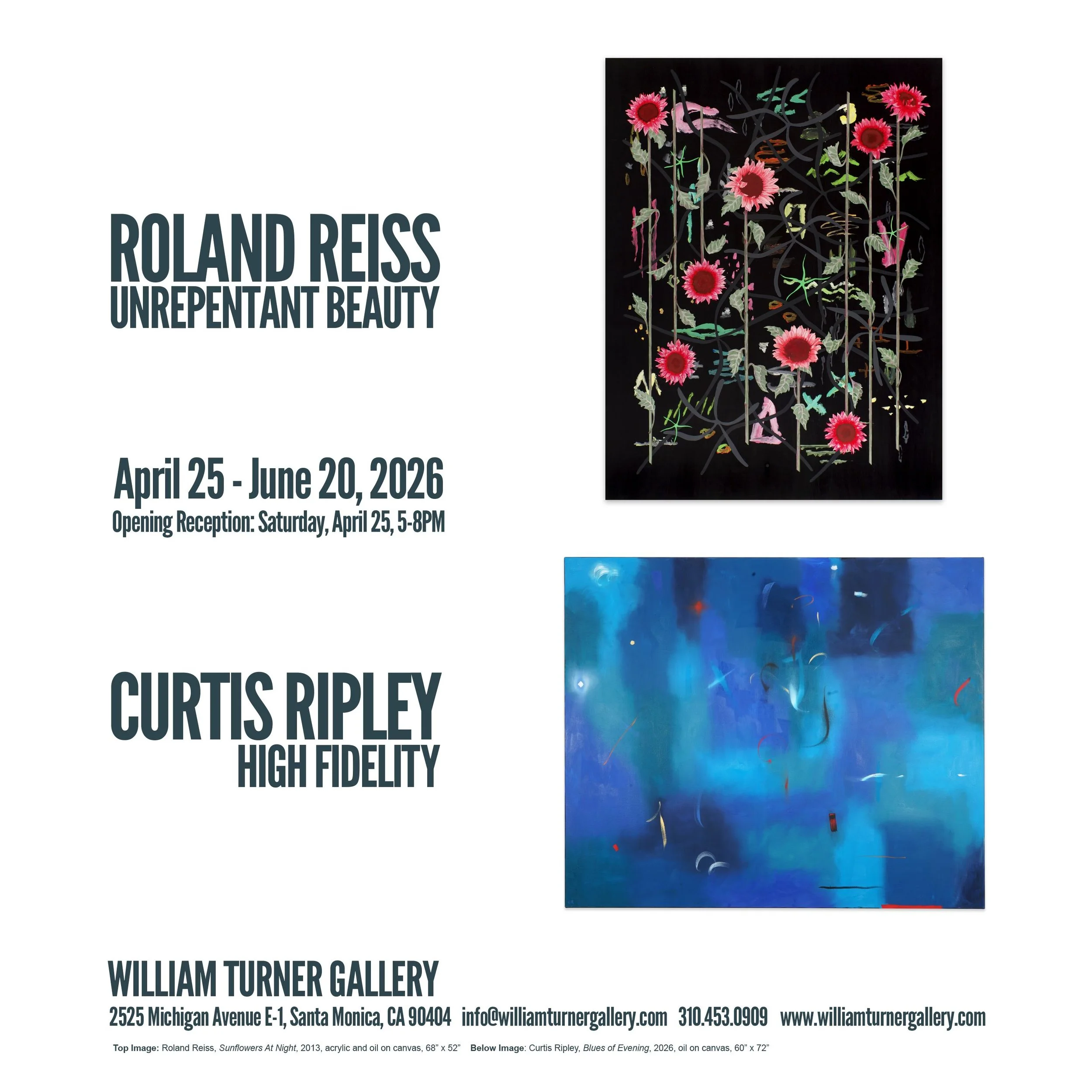
Left: Roland Reiss, Mirage, 1968, Fiberglass & resin, 46" x 46" x 6
Right: Roland Reiss, Conundrum, 1968, Acrylic, fiberglass, resin, & gelatin coat, 67" x 46.5" x 6"

Roland Reiss (1929-2020) played a significant role in the evolution of postwar West Coast abstraction. Moving from Abstract Expressionism through resin experimentation and conceptual inquiry, Reiss has consistently explored painting as an energetic, interactive field.

Jennifer Wolf, Dye Painting #2, 2021, Natural dyes and mineral pigments on silk with canvas on wood panel, 48” x 48”

Jennifer Wolf uses natural dyes and hand-ground pigments sourced from global expeditions to create subtly shimmering, immersive paintings. Her work explores the elemental qualities of color and surface through fluid, layered compositions that evoke natural environments.

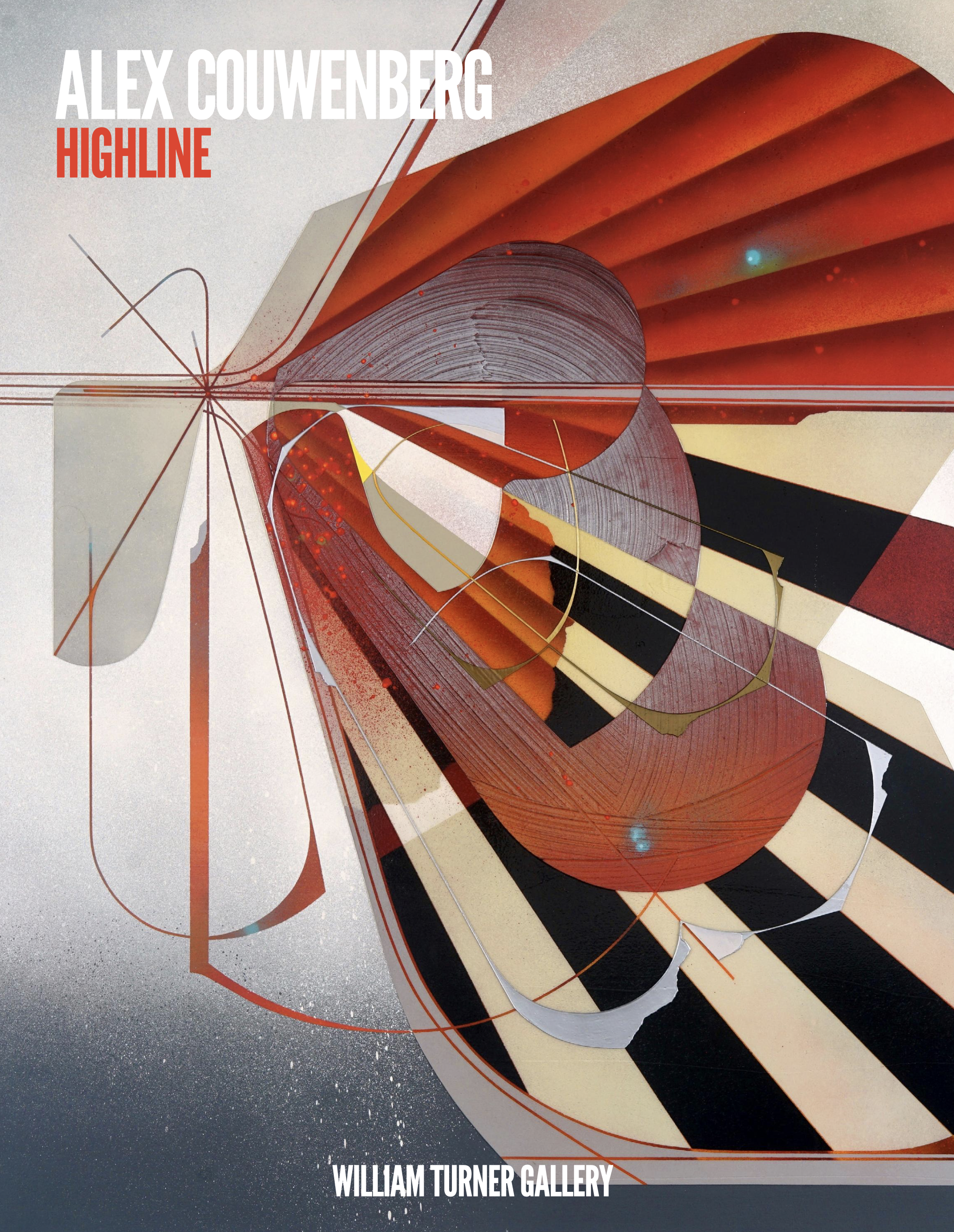
Alex Couwenberg: Highline - Digital Exhibition Catalog & Video is Now Available

Alex couwenberg: Highline (70-Pages Fully illustrated print catalog available october 20)


A 70-Page Exhibition Catalog Available Soon - Contact Gallery to Reserve a Copy

Couwenberg’s work taps into the visual rhythms of Southern California, where headlights and taillights play a noir contrapuntal beat to sunlight skittering across waves or filtering in gentle patterns through window blinds on a summer morning. In fact, Couwenberg likens his process to navigating a city: full of green lights, stop signs, and unexpected turns and views. This interplay between control and spontaneity animates the work, producing compositions that simultaneously convey tension and resolution. The resulting pieces are both formally rigorous and emotionally resonant—vivid reflections of an artist deeply attuned to the aesthetics of movement, light, and the layered complexity of memory and lived experience.

Born and based in Southern California, Couwenberg channels the contradictory dialectics of the region: the soft luminosity of ocean vistas and open sky versus the relentless linearity of urban freeway systems. His method—a reductive and additive layering ritual—recalls an abstract archaeology: excavated textures meet precise hard‑edge forms in a personal vernacular built from cultural signifiers and industrial gestures.

A graduate of Art Center College of Design and Claremont Graduate School, Couwenberg studied with Karl Benjamin, a pivotal figure in defining Southern California’s hard‑edge abstraction. Other influences are deeply woven into Couwenberg’s practice as well, ranging from the Finish Fetish movement—surfboard, custom‑car gloss, resin surfaces created with industrial rigor—to Light & Space’s subtle manipulations of perception. Couwenberg’s work is represented in numerous museum collections, including the Frederick R. Weisman Museum, the Long Beach Museum of Art, Lancaster Museum of Art & History, Laguna Art Museum, Crocker Art Museum, and the Daum Museum of Art in Missouri. In 2007, he received the Joan Mitchell Foundation Award for painting.


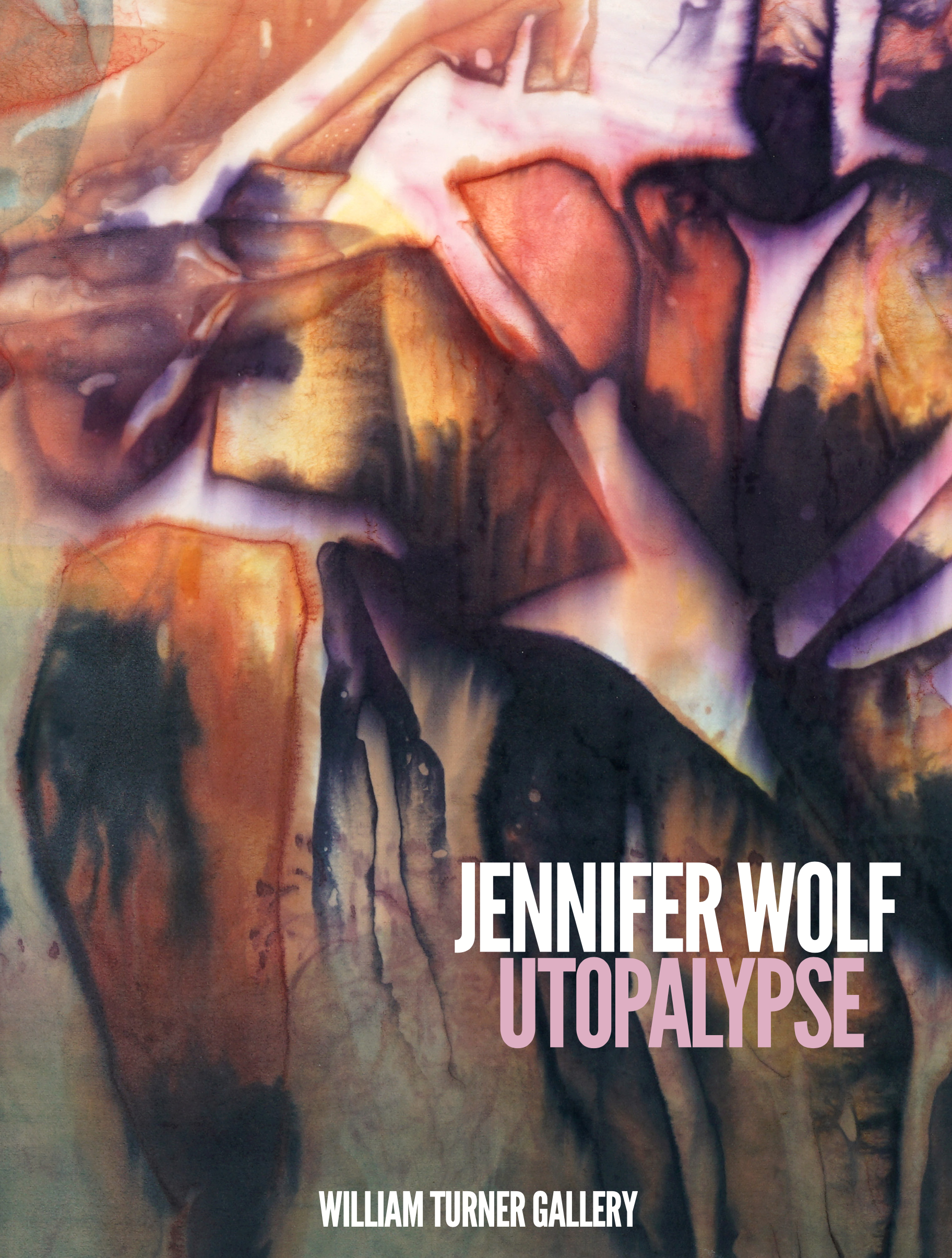
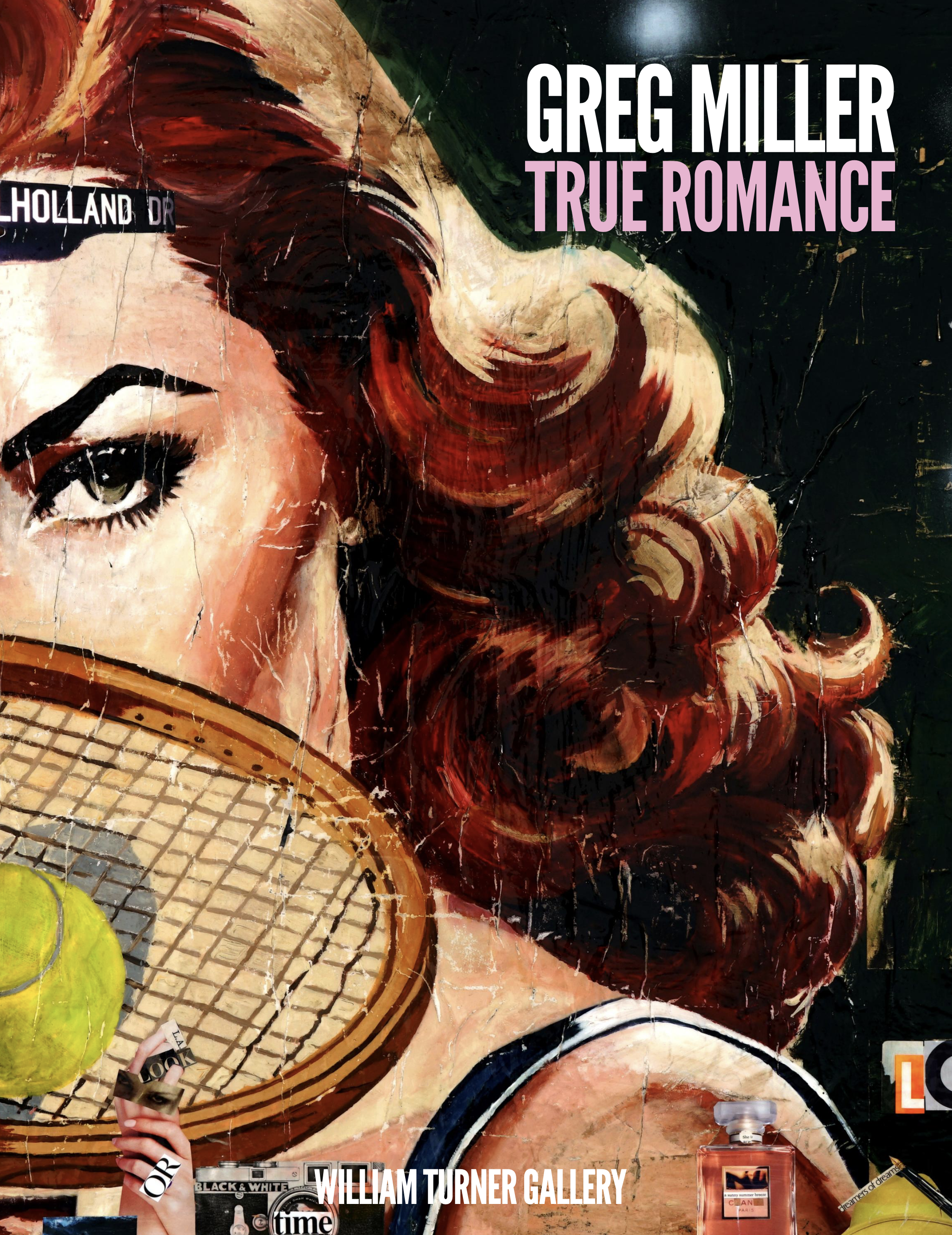
Digital Exhibition Catalogs for Greg Miller: True Romance & Jennifer Wolf: Utopalypse

William Turner Gallery currently has two solo shows on view: "Greg Miller: True Romance" and "Jennifer Wolf: Utopalypse". Jennifer Wolf’s art practice is deeply rooted in her personal connection to the Southern Californian landscape: she makes her own dyes and pigments, combining organic materials with state-of-the-art acrylic mediums. Her latest series –  “Utopalypse” – consists of highly evocative abstract pieces on silk mounted on wood. Greg Miller combines layered collages of ephemera collected from the 1950’s and 1960’s with large-scale, photorealistic paintings styled after the golden age of advertising and Americana. Much like an archaeologist delving into the layers of the earth to uncover fragments of the past, Miller digs into the layers of images and text to uncover hidden clues and meanings. Both “True Romance” and “Utopalypse” are ongoing through Saturday, August 16, and digital catalogs are available to view on the William Turner Gallery website.

Jennifer Wolf holds a BA in Art History from UCLA and an MFA from Otis College of Art and Design. A lifelong California resident, she has exhibited widely and has collaborated with William Turner Gallery since her first solo show in 2004.


Greg Miller (b. 1951) was born in Sacramento, California and holds a Master of Arts Degree from San Jose University. Once a long-time Venice, California resident, he currently resides in LA, CA & Austin, Texas. His work is featured in numerous museum and private collections, including those of: the San Jose Museum of Art, Newport Harbor Museum, Crocker Museum of Art, Los Angeles County Museum of Art, Laguna Art Museum, Riverside Art Museum,  Frederick R. Weisman Foundation and Charles Saatchi Foundation.  Greg Miller was the first exhibition at William Turner Gallery in 1991.  

MARK STEVEN GREENFIELD - RE/DEFINED - Opening at the IAAM, Charleston, SC on June 12, 2025

On Thursday, June 12th at 6 pm the International African American Museum, (Charleston, SC)  is hosting Blackness re/Defined | An Evening of Art & Conversation (IAAM Community) a special celebration marking the public opening of our newest special exhibition, re/Defined: Creative Expressions of Blackness from the Diaspora

This dynamic evening will explore the transformative role of Black artists and cultural producers in shaping identity, resisting systemic erasure, and redefining Blackness across generations and geographies. Through conversation and performance, the IAAM will examine how creative expression serves as both a reflection of lived experience and a powerful assertion of agency within the African Diaspora.

The evening will feature a live jazz performance, a curated dialogue between artists and scholars, and exclusive curator-led exhibition tours with Suzanne DiBella and Isabelle Britto. Curator-led tours will begin at 6:00 pm and 6:30 pm with the Music & Conversation Program beginning at 7:00 pm.

Mark Steven Greenfield, Dessalines, 2022, AcrlYic and Gold Leaf on Wood Panel, 20" X 16"


SHINGO FRANCIS INTERVIEW - Fondation D'Entreprise HERMÉS

William Turner Gallery is pleased to share a recently released interview with Shingo Francis where he discusses his artwork, influences, and inspirations for the “Interference” exhibition at Maison Hermès Le Forum in 2023. Le Forum is an exhibition space housed in a glass-brick building designed by Renzo Piano. Flooded with natural light that forms an integral part of its identity, it is an oasis of contemplation inviting visitors to discover contemporary art in the heart of Tokyo’s dynamic Ginza neighbourhood. Directed by exhibition curator Reiko Setsuda, Le Forum offers an international programme bringing Japanese artists together with others from all over the world.

In addition to sharing Francis’ newly released interview with Foundation d’enterprise Hermès, William Turner Gallery is thrilled with Francis’ participation in the Japanese Pavilion at the Ōsaka Expo 2025.

Born in Santa Monica, California in 1969, Shingo Francis’ work explores the expansiveness of space and spirituality in painting. Francis has participated in numerous solo and group exhibitions both in Japan and internationally. His works are held in collections such as the JPMorgan Chase Art Collection, Banco de España, the Frederick R. Weisman Foundation, the Mori Art Collection, the Sezon Museum of Modern Art, the Oketa Collection, the Tokyo American Club, the Ueshima Collection, and Tiffany & Co.

INTERVIEW WITH SHINGO AT FONDATION D’ ENTREPRISE HERMÉS

TIME LAPSE OF THE INSTALLATION

Le Forum is an exhibition space housed in a glass-brick building designed by Renzo Piano. Flooded with natural light that forms an integral part of its identity, it is an oasis of contemplation inviting visitors to discover contemporary art in the heart of Tokyo’s dynamic Ginza neighbourhood. Directed by exhibition curator Reiko Setsuda, Le Forum offers an international programme bringing Japanese artists together with others from all over the world.

What is “interference”? Under this title, the first exhibition of 2023 invites the public to find answers through experience. Four artists explore our perceptions through the effects on the body of stimuli such as light, vibrations or soundwaves. Through stripped-back aesthetics, each of these artists highlights the subtle variations caused by the interferences to which our bodies are subjected in everyday life. Visitors are invited to contemplate the nature of perception through deeply felt sensations both physical and unconscious. The title, “Interference”, is borrowed from a series of paintings by artist Shingo Francis (b. 1969, United States): containing pigments that interfere with light, the colours of these canvases shift according to the viewer’s position. Nearby, an installation by Susanna Fritscher (b. 1960, Austria) immerses the viewer in a sensory experience of vibrations and pulsations beyond the frequencies that we are capable of hearing. Finally, Bruno Botella (b. 1976, France) presents pieces that stimulate our subconscious perception through tactile sensation, while Aiko Miyanaga (b. 1976, Japan) invites visitors to embark on a cosmic journey – the ultimate sensation, transcending time and space – through a tea ceremony shared online.


HYPERALLERGIC Names Mark Steven Greenfield a top 10 show to see in October

Mark Steven Greenfield, “Saartjie Baartman” (2020), gold leaf and acrylic on wood panel, 24 x 24 inches (~61 x 61 cm) (photo by Rob Brander, courtesy William Turner Gallery)

Auras features two bodies of paintings by Mark Steven Greenfield — Black Madonna (2020) and HALO (2022) — that reconsider the breadth of the Black experience in the Americas by excavating and reframing contested histories. HALO comprises portraits of influential Black figures, from the revered to the lesser-known, including Haitian Revolution leader Toussaint Louverture, famed magician Black Herman, and silhouette artist Moses Williams — formerly enslaved by Charles Willson Peale — portrayed as saintly icons surrounded by gold leaf. Black Madonna depicts a beatific ebony Madonna and child, while Ku Klux Klan members and monuments to white supremacy are vanquished and toppled in the background.


VISUAL ATELIER 8 - An interview with Casper Brindle, Master of Light, Color, and Sensory Exploration

VISUAL ATELIER 8

An interview with Casper Brindle, Master of Light, Color, and Sensory Exploration

Image: Rob Brander for William Turner Gallery

Exploring the enchanting world of Casper Brindle
Jaimy Favela Le

Casper Brindle, a contemporary artist rooted in the 1960s & 70s Light and Space movement, explores the expressive possibilities of color, light, and form in his paintings. From vibrant technicolor to subtle monochromatic hues, Casper Brindle’s work consistently features a central focus, drawing viewers into enigmatic spaces of perception. Influenced by the Finish Fetish and Light and Space movements, he masterfully employs color reminiscent of Mark Rothko and Jules Olitski, creating immersive fields that evoke deep emotional responses.

Casper Brindle’s paintings, influenced by Southern California’s car culture, utilize airbrushed sprays for atmospheric depth, demonstrating a synthesis of diverse artistic sensibilities. Born in Toronto in 1968, Brindle, now based in Los Angeles, has exhibited internationally and is held in prestigious collections like the Frederick R. Weisman Art Foundation.

It is an incredible occasion to be able to chat with Casper Brindle about his awe-inspiring and sensory artwork! We would love to know what you think your child-self would think of you now as such an accomplished artist? What do you think little Casper would say to you? And what would he think about your expansive body of work? Is he glowing with pride?

Thank you for the kind words. I think Little Casper would be happy with my accomplishments so far. There is something innately childish about being a professional artist. Experimenting and “playing” with the materials in front of you. I could compare it to the feeling of playing with toys in the preschool sandbox. I am forever grateful to have had such a supportive mother, a terrific illustrator and designer in her own right. I’m deeply fortunate that I am able to make a living doing what I’m very passionate about.

What a wild trip it is to take in your illuminating works that seem to unfold more of themselves, the more you spend time with them and interact with the space them. We would love to know more about how you went from utilizing LED tubes for lighting up a painting to now being able to skillfully achieve an effect of illumination by using only color. What was the process like for you personally?

Yes, for years I was incorporating and embedding LED lights into my paintings and never really found what I was looking for. I was yearning for a certain magic, a more organic quality which the artificial light provided by the LEDs could never achieve. What most interests me is the manipulation of light, whether it be with refraction in an encapsulated form, such as the light glyphs, or using paints that intentionally transform as you walk around the works. Materiality is a primary principle of my practice as I have spent years experimenting with the applications of different materials.

Your work speaks to the auras felt when perceiving colors, light, a core, and atmospheric spaces. Contemplation about perception and connecting with the presence are a couple things that come from immersing oneself in your body of work. Do you think your work reflects these experiences from the living world or is it its own concentration of sensory conjuration?

Both. I think the materials are a grounding force for the pieces, whereas the treatment and color perception of the materials allow for the pieces to become almost otherworldly. However, the orchestrated fabrication of the pieces reflects the organized chaos of both the natural and the built environment that surrounds us.

What dream settings do you envision your colorful works in? Are there particular places in the world that you hope to bring your art to?

Of course, artists are always fantasizing about ideal settings for our work – Museums, major collections, within prominent public and architectural venues. I am no different and have been thrilled to have my work acquired and shown by museums, like the Weisman Museum, The Luckman, Lancaster Museum of Art, the new Frank Gehry hotel in LA and by a number prominent collectors. Looking ahead, I have an exhibition planned in Brussels at Gallery La Patinoire Royale, Valerie Bach, in April of 2024 and will be showing new paintings and sculpture that I am presently working on and excited about.

Soon following, I will be focused on my Los Angeles exhibition in September at the William Turner Gallery. Possibly less traditionally, I’d love to explore placing my work in “atypical” settings: a foggy forrest, a beach, a desert. Changing the context changes the piece. A glowing object in the middle of nowhere tells a much different story than a painting hung on a white wall of a gallery. Hmm, could this be a short film? You’ve got the wheels turning!

We also know that you are also a sculptor. Can you divulge a bit about how this way of creating your art differs in from how you approach making your paintings? Taking something that you typically form on a 2D surface to a 3D realm?

The three dimensional work is more of an elaborate, organized process, compared to the typical trance I’m in while I’m painting. With my paintings, I’m just going on rapid fire instincts in a meditative state. With the sculptural work it’s about logical problem solving. Like a puzzle. The Light Glyph sculptural works are expanded iterations of the Portal Glyph paintings -They just extend into three dimensions. Both explore the same theory, but within different mediums and materialities.

Maybe a comparable example is the painter as an actor and the sculptor as the director in theater or film. The actor is always reacting to a situation in front of them instinctively, but the director (sculptor) is planning the entire vision out before the production has begun. Two different processes for me, neither better than the other. Although, I enjoy the visceral process of painting more, both outcomes are equally fulfilling.

What does abstraction mean to you? Describe to us the way you philosophize the human senses in response to abstract visualizations that imbue a particular experience.

I’m in search of something beyond, something that can be truly simple and complex. Making my work is a selfish act, as I’m making the painting or sculpture solely for myself, to release it from my mind, without thinking about how they will be seen or felt. It’s a place where I can be hyper focused yet, in a meditative state. The artwork may be used as a conduit for the viewers own experiences, but I would never force a narrative onto them. Abstraction to me is being free of story telling or narration. To create a work based on raw emotions or even lack of emotions. Free of rules. The freedom to dance any way you like.

What does the process of dreaming up a painting or sculpture look like for you? Is it the case that the end result always matches the first drop of inspiration?

My paintings or sculptural works come to me usually in solitude, whether that be just before bed or alone in my studio. With my paintings, I may have an idea to explore, but rarely do they end up visually resembling my initial thoughts. I find in painting the decisions are made quickly and based on instinct. Sculpture for me is a much more thought out concept as you are dealing with construction and fabricating a well explored object with prototyping all while aiming to achieve the concept that was originally in my head.

What has been a major highlight for you as an artist so far? What sort of new things are you seeking to further your creative endeavors? Any personal revelations that you wish to share over the years?

My highlights constantly change as I grow, but a recent noteworthy highlight was working with Mika Cho who curated my Museum exhibition at The Luckman space at California State University Los Angeles. It was a phenomenal show and experience. Cho’s execution
and presentation were terrific. Constantly thinking of new ideas, projects, materials and collaborations, I know there is always something inspiring around the corner. It’s important to do the work you enjoy as opposed to chasing trends. I believe that if you do your own thing, a thing you are truly passionate about, everything will eventually fall into place.

ARTNOWLA - Andy Moses: Recent Paintings

William Turner Gallery will present Andy Moses: Recent Paintings, a compelling exhibition of new large-scale works by Los Angeles-based artist, Andy Moses. The exhibition will run from September 9th through November 11th, 2023.

Andy Moses: Recent Paintings is an excitingly ambitious new body of work, showcasing an artist fully engaged and at the height of his creative process. Blurring the line between abstraction and a new kind of pictorialism, Moses utilizes techniques that facilitate his almost obsessive study of the alchemical properties of paint. The paintings that emerge articulate the abstract nature of perception, reaching beyond the material and tapping into the visceral.

The images reveal undeniable traces of natural phenomena, seeking not to replicate the natural world, but rather to suggest the forces of nature itself. The artist’s complex process of mixing and pouring paints conveys a sense of undulating energies pushing and pulling within the rectilinear and circular forms of the canvases themselves.

The paintings are sweeping and luminescent, their lustrous surfaces seemingly executed with an impossible combination of absolute precision and wild improvisation. Meandering lines of psychedelic chroma oscillate between vivid sharpness and dissolving washes of color, achieving works of captivating presence. Viewing the work from multiple perspectives, one is swept into an interactive dance, as light plays across the surfaces in lustrous ever-changing hues.

Speaking about his work, Moses says, “I want the work to stop you in your tracks, to shake you out of your head and into the moment, into the present, where you can become receptive to a more meditative experience that hopefully begins to attune you to the transcendent beauty of the natural world.”

Born in Los Angeles in 1962, Andy Moses attended the legendary CalArts from 1979-1981, studying with John Baldessari, Michael Asher and Barbara Kruger. In 1982, Moses moved to New York where he worked as a studio assistant to Pat Steir and quickly became part of New York’s nascent art scene. Moses began exhibiting with Annina Nosei Gallery, shortly after Jean-Michael Basquiat. During that time Moses also developed close ties with artists such as Jeff Koons, Marilyn Minter, Rudolf Stingel and Christopher Wool, who were also just emerging onto the scene.

After eighteen years in New York, Moses returned to Southern California in 2000, where the change in coasts led to a significant shift in his work. In New York, the artist’s work had explored the macro / micro influences of nature, conveying a sense of gravitational and geologic forces. In returning to California, the scope of Moses’s work expanded, as he was once again inspired by the unique effects of light glancing off waves, and the vast sky-scapes he encountered on his daily drive down the Pacific Coast Highway. The artist began exploring materials that would capture the mercurial aspects of perception, where slight shifts in perspective would reveal dramatic shifts in impression. Accordingly, Moses’ work began to incorporate many of the qualities now associated with the Southern California Light and Space movement, where the work of art became less an “art object”, and more of a “catalyst” for one’s experience of what and how they perceived. Suggesting panoramic space, Moses began introducing concave and shaped panels to further investigate how light and its wave-lengths would curl and flex with refractive paints. These bold new paintings quickly found their audience and brought Moses to the attention of museums and major collectors alike.

Andy Moses’ work is included in the permanent collections of Los Angeles County Museum of Art, Orange County Museum of Art, Laguna Art Museum, and the Frederick R. Weisman Art Foundation. He currently lives and works in Venice, CA.

ART REVIEW - White Hot Magazine / Andy Moses: Recent Paintings

By LORIEN SUÁREZ-KANERVA September 11, 2023

Andy Moses’ Recent Paintings will be showcased at the William Turner Gallery in Los Angeles from September 9 until November 11, 2023. Moses Recent Paintings’ distinct color use encompasses a predominantly white, blue, black and gold palette. All-white color tints, shades, and their lustrous variability are at play amidst clear, sharper, fluid lines, and softer open gradations, leading toward ethereal spaces. Moses’s sensibility spans a buoyantly luminous subtlety and achieves a refined definition through a meticulously grounded and richly orchestrated embodied perception. Maurice Merleau-Ponty pointed to embodied perception as the experience of the self in an environment at the crucible towards forms of relatedness that reveal meaning and expand perception.  

Geomorphology 1607, Acrylic on canvas, over concave wood panel, 57 x 90 inches, 2023

Fiber Birren, Johannes Itten, and Carl Jung address the subject of color each through a psychological vantage point, cultural nuances (like Jung’s groundbreaking study of mandalas of the East by introducing these to the West), and Color Theory. The sensorial effects of color suggest a responsive universality based on similarities that bridge cultural bounds.  In his works “Color and Meaning” and “Color and Culture,” John Cage supports these observations on color's meaningful effect on sensorial understanding across cultures.   Most salient in Moses’ works is the combination of white and blue, where black shifts through a reflective play with light toward shades of blue. From these earlier scholars' observations, colors such as whites speak of clarity, illumination, and spirituality, and blues inspire serene tranquility and introspective depth.
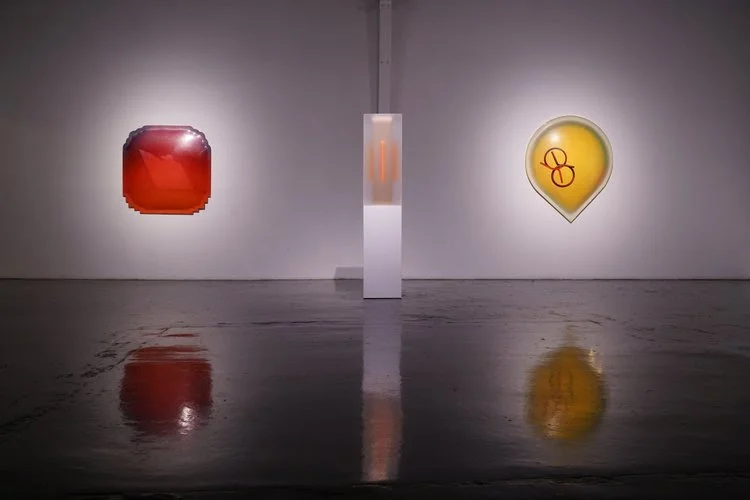
As a countertone, gold's earliest cultural associations with the sun's radiant power extend the hue's significance to encompass wealth and prominence. For Jung, gold represented the self's individuation process, stimulating wisdom and enlightenment—likewise, Itten and Birren associated illumination and divine inspiration with gold. Extensively, gold in East Asia, including Japanese 18th-century iconography, signifies wealth, power, good fortune, and divinity.

Geomorphology 1606, Acrylic on canvas over concave wood panel, 57 x 90 in, 2023

Moses shares the American Transcendentalists’ numinously intuitive perception of nature alongside the critical figures of Thoreau, Whitman, Emmerson, and their predecessor, the Canadian Henry Wadsworth Longfellow. Poetry such as Henry Wadsworth Longfellow’s lines from his poem “The Tide Rises, The Tide Falls” are evident in Moses’ paintings, and they highlight a kinship, reveling in transcendental sensibilities grounded in the human experience of nature and its patterns throughout time.

 “The little waves, with their soft, white hands,
Efface the footprints in the sands.”

Geodesy 1514, Acrylic on canvas over circular wood panel, 72 in diameter, 2023 

Longfellow summarizes this generational contribution towards a deepening receptiveness and recognition of how these contemplations become influential legacies in his poem “A Psalm of Life.”

“Lives of great men all remind us.
We can make our lives sublime,
And, departing, leave behind us
Footprints in the sands of time.”


Geodesy 1515, Acrylic on canvas over circular wood panel, 72 in diameter, 2023

Similarly, Moses perceived an affinity and kinship from the East with Ryukyuan lacquerware for its craftsmanship and conceptual design motif through his introduction while viewing LACMA’s “The Five Directions: Lacquer from the Ryukyu Islands” exhibition. This iconography and the craft itself of creating a painstaking layering of resin polished into lacquer was characteristic of Japan’s Ryukyu Islands from the 18th century.  The motif speaks of benevolent mystical forms seeking wisdom in East Asian cultural iconography. One particular piece in LACMA’s exhibition, a circular tray, inspired his painting titled Geodesy 1515. The matter of the enlightenment is also poetically crafted as an adornment – Dragons Chasing the Flaming Pearl. The Flaming Pearl holds as its essence the themes of wisdom within a spiritual scope. At the same time, the dragons culturally appear as strong protective forms that control natural elements.
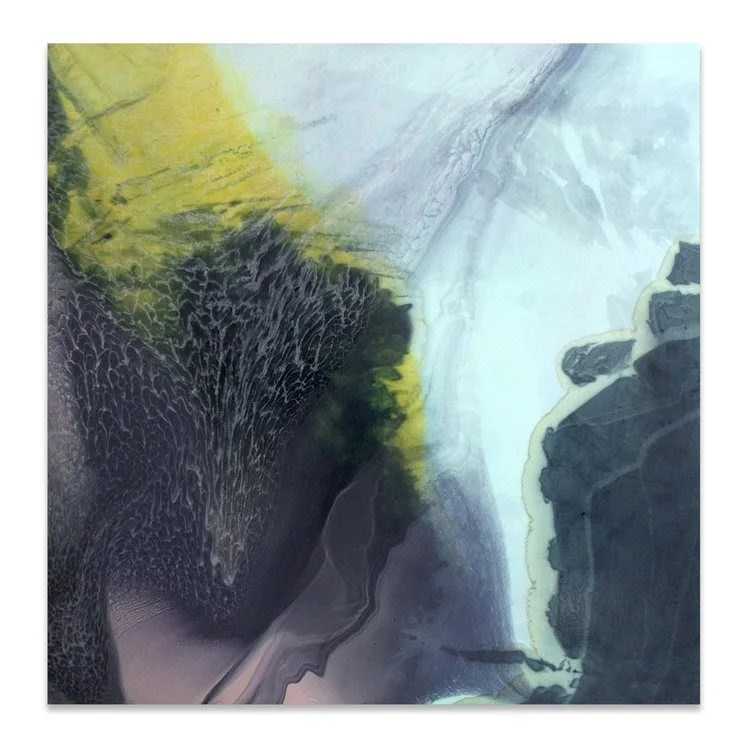
Circular Tray with Dragons Chasing a Flaming Pearl, Black Lacquer on Wood Core with Mother of Pearl Inlay, 3.5 x 35.25 in, Ryukyu Islands, 1700-1800, LACMA Permanent Collection.

The American transcendentalist ethos, presented in the poem “Come, said my soul” by Whitman, attests eloquently to their literary movements’ vision of universal unity.  Their writings draw deeply from their dedicated contemplation and communion with nature. This is akin to the sensibility the mystics have shared throughout time.

Geomorphology 1608, Acrylic on canvas over concave wood panel, 57 x 90 in, 2023

“Come, said my soul,
Such verses for my body let us write, (for we are one,)
That should I after death invisibly return,
Or, long, long hence, in other sphere,
There to some group of mates the chants resuming,
(Tallying earth’s soil, trees, winds, tumultuous waves,)
Ever with pleas’d smile I may keep on, Ever and ever yet the verses
owning – as, first, I here and now,
Singing for soul and body, set to them by name,
Walt Whitman

Andy Moses’s paintings attest to this universal transcendence, poetically defined, and breathtakingly revealing its cultural lineage’s kinship. WM

Greg Miller Exhibition Walk-through, Cello Performance & Summer Block Party This Saturday

William Turner Gallery would like to invite you to an exhibition walk-through and special musical performance by renown cellist Jernej Copic this Saturday, July 15 beginning at 2:30PM.  

Jernej Copic will perform at 2:30 for one half hour and then again following the talk at 3:30.  William Turner will guide the discussion starting at 3pm. 

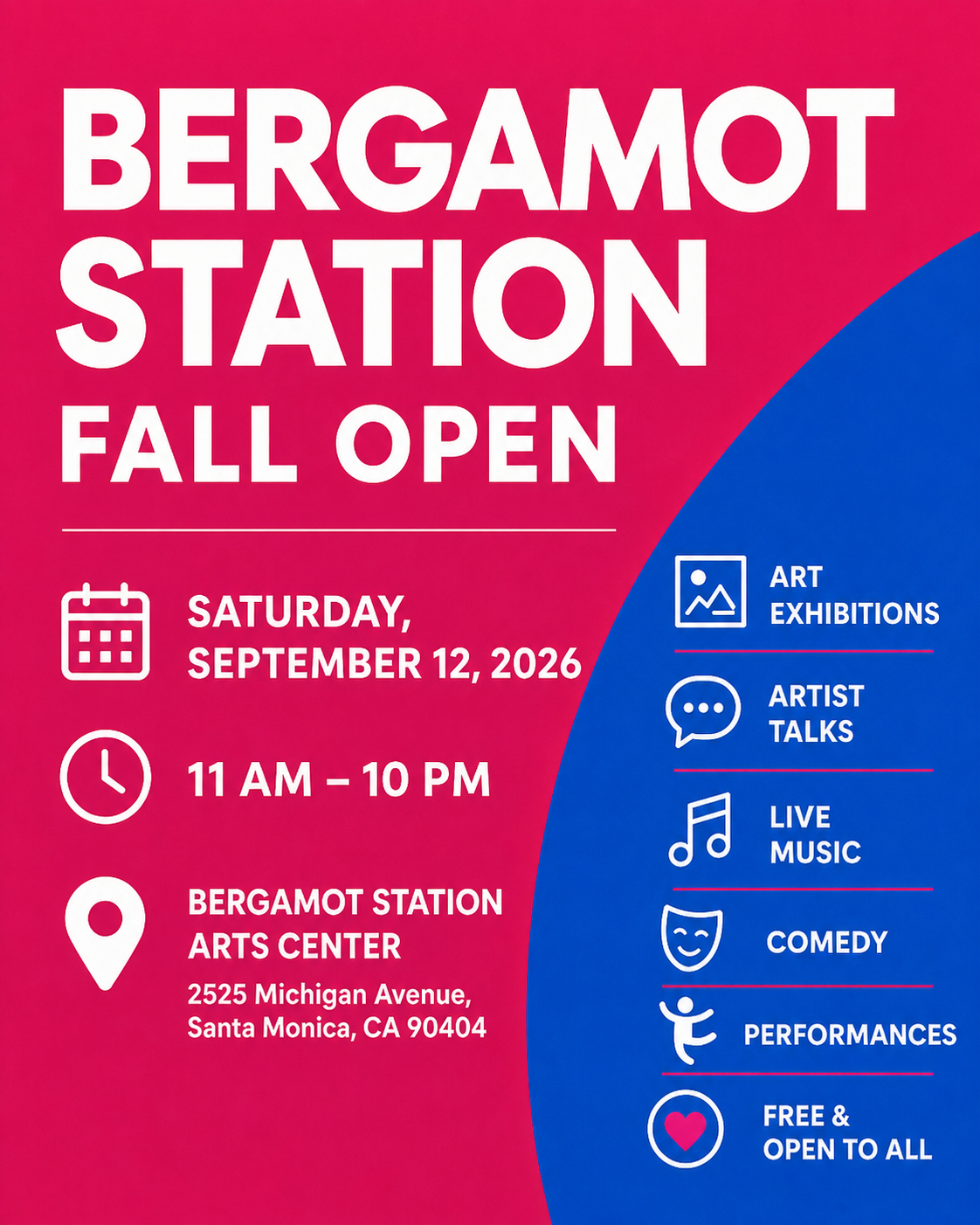
Also this Saturday Bergamot Station will host its annual Summer Block Party featuring food trucks, musical performances, and special menu items from Bergamot Station’s newest culinary addition Le Great Outdoor.


Mark Steven Greenfield - The LA Metro Project - Red Car Requiem

For L.A.'s newest underground art experience, head down to the Metro Regional Connector

For your next art outing, head underground.

The Los Angeles Metropolitan Transportation Authority debuted its Regional Connector Transit Project yesterday, a $1.8 billion undertaking that’s been more than a decade in the making. It includes three new downtown L.A. subway stations — theGrand Ave. Arts/Bunker Hill, Historic Broadway and Little Tokyo/Arts District stops — and each are filled with ambitious new works of art.

Eight artists were commissioned by Metro Art to create permanent, site-specific installations for the stations: Andrea Bowers, Clare Rojas, Audrey Chan, Mark Steven Greenfield, Ann Hamilton, Clarence Williams, Mungo Thomson and Pearl C. Hsiung.There are also two wall-mounted light box installations in the Broadway and Grand Avenue stations, part of a rotating art program. The inaugural artists for those spaces are Ralph Gilbert and Samira Yamin.

Mark Steven Greenfield with his glass mosaic, “Red Car Requiem,” at the new Historic Broadway Station. (Christina House / Los Angeles Times)

“These are significant pieces, by established artists, that are integrated into the overall architecture of the project but also will attract people on their own,” says Metro Art program Senior Director Zipporah Yamamoto. “People will stop and look at these artworks. It’s a major part of the transit experience — and the Los Angeles experience. It extends the downtown L.A. arts and culture experience into the station.”

By Deborah Vankin (Read the rest of the piece on LATimes.com)


ABOUT THE PROJECT
Piecing together parts of a large-scale glass mosaic mural in for the Historic Broadway Station. Created by Mark Steven Greenfield, “Red Car Requiem” is a site-specific mural spanning a 171-foot wide. The artwork is the largest glass mosaic artwork in Metro’s system. Each element of the artwork was matched in the dynamic colors and the placement of over 1 million hand-cut glass pieces during the mosaic’s fabrication process. The Regional Connector is a 1.9-mile light rail project connecting the A Line (Blue), E Line (Expo) and L Line (Gold) in downtown Los Angeles. The project features artwork integrated into three new stations: Little Tokyo/Arts District Station, Historic Broadway Station, and Grand Ave Arts/Bunker Hill Station. For more information on the Regional Connector Transit Project artworks, visit: https://metro.net/moredtlaart

Greg Miller: Once Upon A Time Exhibition Catalog Now Available

Greg Miller's artistic versatility is evident in his adept use of various painting styles. With a deft hand and craftsmanship, he navigates different techniques to achieve diverse visual effects in his work. Using a Renaissance practice of layering paint, he is able to achieve the photorealism in his portraits which is a highly labor intensive and skillful process.

One can observe Miller's skillful mastery of realism in his highly detailed and precise portrayals. Whether it's capturing the nuanced expressions of faces or rendering intricate textures, his attention to detail demonstrates his command over the Realist style.

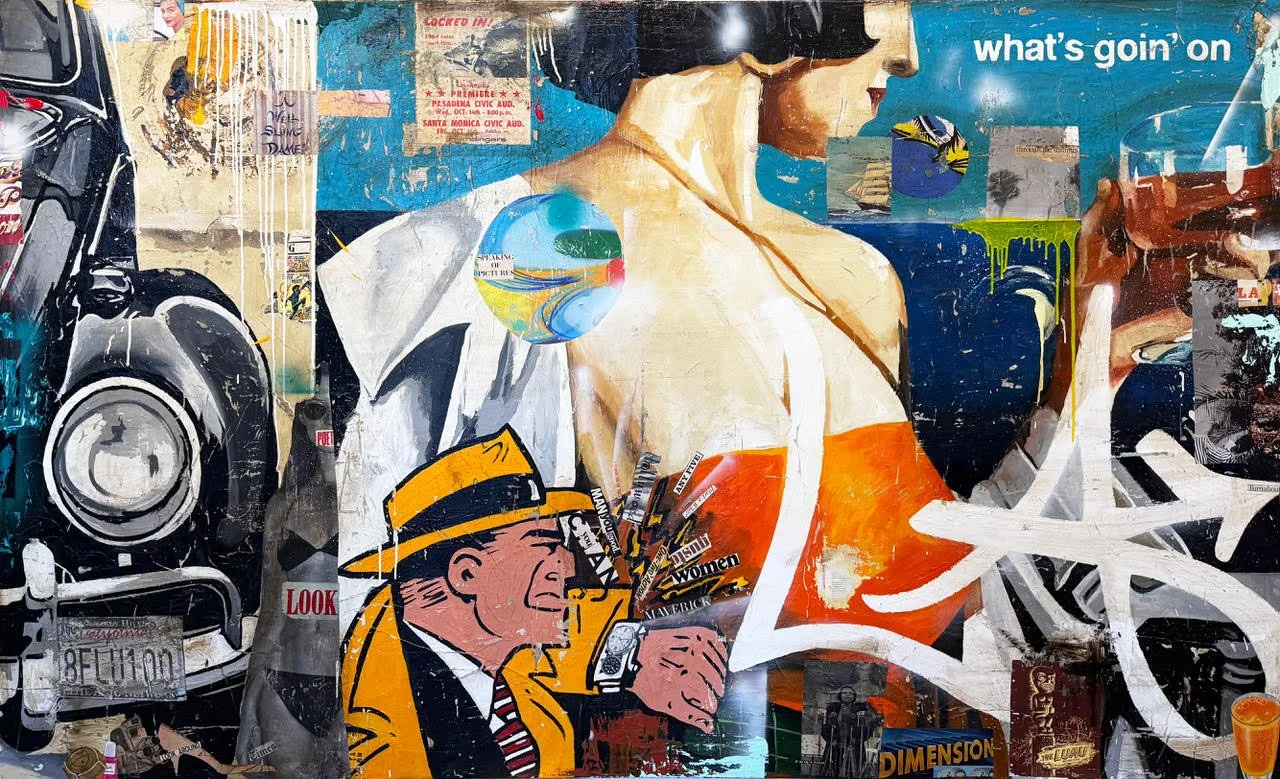
The exhibition’s title comes from the work Once Upon a Time, which illustrates many of the themes, and techniques characteristic of Miller’s oeuvre. Central to the image is a black-and-white painting of a vintage Hollywood city-scape during its “Golden Age”.  Super-imposed, is the profile of a comic book action-hero surveying the vista. To the right, Grisaille is applied with spray paint to produce a photorealistic portrait of a woman seductively peering out from what appears to be a cropped still-frame. The scratched surface alludes to wear, and the passage of time. Collaged below is a text clipping of “the right” with a clock next to it, suggesting “time”. On the far left, a faceted crystal highball glass is labeled with a clipping reading “ACTION”.

Once Upon A Time, acrylic on canvas, 60” x 72”, History, acrylic on canvas, 36” x 72”, Truth, acrylic on canvas, 48” x 48”

GREG MILLER

Greg Miller (b. 1951) was born in Sacramento, California and holds a Master of Arts Degree from San Jose University. Once a long-time Venice, California resident, he currently resides in Austin, Texas.

His work is featured in numerous museum and private collections, including those of: the San Jose Museum of Art, Newport Harbor Museum, Crocker Museum of Art, Los Angeles County Museum of Art, Laguna Art Museum, Riverside Art Museum,  Frederick R. Weisman Foundation and Charles Saatchi Foundation. The Get Go, a volume of his writings, photography and paintings was published in 2010, and the first comprehensive monograph of the artist, Signs of the Nearly Actual, was published in 2009.

GREG MILLER Once Upon A Time 
June 10, 2023 – August 12, 2023 

 
Embed Block
Add an embed URL or code. Learn more

Opening Tonight, Saturday, April 8, 5-8pm - Jay Mark Johnson: Íslenskir Fossar

Jay Mark Johnson
Íslenskir Fossar

April 8 - May 27, 2023
Opening Reception: Saturday, April 8, 5-8PM

“Utilizing sophisticated exposure techniques…Johnson has been touring the world’s nature reserves to produce these critical images and many others like them. The images prove just how serious he is.” - Ingeborg Ruthe, Berliner Zeitung

SELJALANDFOSS #3 (Rangàrthing Ekstra, Iceland), 2021, Archival pigment on paper mounted on aluminum with UV laminate, 43” x 120” frameless Edition of 3; 25” x 64” frameless Editions of 9

Santa Monica, CA - The William Turner Gallery is pleased to present the fourth solo exhibition of Los Angeles-based, multi-disciplinary artist Jay Mark Johnson. Ten spectacular large format images of waterfalls and geysers are selected from the most recent photographic artworks in the artist’s two-decades-long production of paradigm-shifting timeline imagery.

The artworks presented in ÍSLENSKIR FOSSAR were produced in Iceland in October of 2021 towards the end of global travel restrictions. Traversing the stark volcanic landscape, Johnson focused on the atmospheric turbulence of rushing waters and freezing air emanating from the region’s waterfalls and geysers, capturing the dramatic interplay of the spectacular geological events within the seasonal low-raking “golden hour” light. In the Icelandic language, the word “foss” means waterfall—with  roots in the Nordic word for “force”. In his exploration of the possibilities for timeline photography, Johnson has repeatedly turned his attentions to marveling at the forces of nature, specifically the reciprocal physical interactions of light, water and atmosphere found in coastal waves and inland waterfalls.

FAXAFOSS #2 (Faxi, Iceland), 2021, Archival pigment on paper mounted on aluminum with UV laminate, 60” x 60” framed Edition of 3, 30” x 30” framed Edition of 9

Johnson has always been fascinated at how the transmorphisms of his slit scan photographs—because they are both recognizable and strange—challenge the viewer’s expectations, forcing recognition of both the truthfulness and validity of alternative perspectives. Over the years he has worked to exploit both the refraction and diffraction of light waves as they encounter objects out in the environment and within the camera itself. Working close to the billowing plumes of waterfalls he plays with the naturally occurring displays of banded light waves visible in rainbow-like color patterns. He “paints” with the incoming color spectrum emanating from the outer reaches of the waterfalls, from the water as it crashes against rocks, and from the space between the falls and the shear rock face behind. Recorded within his inventive temporal delineations, the resulting artworks are as startling and unimaginable as they are eye-popping and poetic.

Each image in the exhibition bears distinct site specific features. For SELJALANDSFOSS #3, Johnson carried his camera equipment into a giant cavern behind a monolithic, 200 foot high cascade. Turning to look back outward, he captured an ephemeral curtain—a delicate and translucent waterwall—through which one magically views a wide horizontal stretch of the distant azure sky. In SKÓGAFOSS, a rainbow materializes through the viscous spray at the heel of the cataract while the volcanic substrate immediately behind the falls is refracted into muted color striations. In GEYSER #1, an abrupt eruption of a massive thermogenic jet sprays its sulphured-green waters skyward and then, vanishing quickly, dissipates into the low-hanging overcast fog. Two of the images in the show were produced at Stewart Falls in Sundance, Utah while another was recorded on the Big Island in Hawaii.

FAXAFOSS #3 (Faxi, Iceland), 2021, Archival pigment on paper mounted on aluminum with UV laminate, 40” x 106” frameless Edition of 3; 31” x 81” framed Edition of 9

Held by prestigious private institutions and public collections throughout the U.S. and Europe, Johnson’s work has been exhibited and collected by the Museum of Modern Art, the Smithsonian Institution, Art Institute of Chicago, Frederick R. Weisman Art Foundation, the Phoenix Art Museum, the Langen Foundation and Zentrum für Kunst und Medientechnologie, Karlsruhe.                

Johnson was born in 1955 in St. Petersburg, Florida, USA. Since 1996 Johnson has resided intermittently in Paris, Antwerp, Rome and rural Italy.  He maintains studios in both the Arts District of downtown Los Angeles and Uptown New Orleans where he draws, paints, sculpts and writes.

#jaymarkjohnson

Julian Lennon: Atmospheria Catalog Now Available Digitally & in Print

William Turner Gallery is please to present the catalog for Julian Lennon’s exhibition Atmospheria. The catalog is available to view using the button below and a print version (36 pages fully illustrated) is available by contacting the gallery.

Lennon’s photographs serve as allegorical vehicles in this time of heightened awareness for our planet’s peril.In surveilling these ever-changing skies, Atmospheria celebrates the beauty of these vaporous vistas to inspire us to better revere and protect them.

The collection is suffused with a sense of wonder and awe at the majesty of natural phenomena. Each image simultaneously evokes feelings of sweeping grandeur and indefinable yearning. Luminary, shape-shifting clouds, distinguished by the combings and crests of light and shadow, speak with gravitas and elegance.

A portion of the proceeds from Atmospheria will benefit The White Feather Foundation (TWFF), Lennon’s nonprofit organization. Since its inception in 2007, TWFF has championed conservation projects worldwide.The foundation raises funds for Indigenous, environmental, education, health and clean water projects around the world. TWFF has saved native lands from being taken from Indigenous groups; brought clean water to developing communities; provided girls with educational scholarships; helped furnish and build schools in underprivileged areas; brought mobile ambulances to remote villages; assisted with disaster relief and brought meaningful social justice films to light.

SHINGO FRANCIS + FONDATION D'ENTERPRISE HERMÉS TOKYO

Le Forum is an exhibition space housed in a glass-brick building designed by Renzo Piano. Flooded with natural light that forms an integral part of its identity, it is an oasis of contemplation inviting visitors to discover contemporary art in the heart of Tokyo’s dynamic Ginza neighbourhood. Directed by exhibition curator Reiko Setsuda, Le Forum offers an international programme bringing Japanese artists together with others from all over the world.

What is “interference”? Under this title, the first exhibition of 2023 invites the public to find answers through experience. Four artists explore our perceptions through the effects on the body of stimuli such as light, vibrations or soundwaves. Through stripped-back aesthetics, each of these artists highlights the subtle variations caused by the interferences to which our bodies are subjected in everyday life. Visitors are invited to contemplate the nature of perception through deeply felt sensations both physical and unconscious. The title, “Interference”, is borrowed from a series of paintings by artist Shingo Francis (b. 1969, United States): containing pigments that interfere with light, the colours of these canvases shift according to the viewer’s position. Nearby, an installation by Susanna Fritscher (b. 1960, Austria) immerses the viewer in a sensory experience of vibrations and pulsations beyond the frequencies that we are capable of hearing. Finally, Bruno Botella (b. 1976, France) presents pieces that stimulate our subconscious perception through tactile sensation, while Aiko Miyanaga (b. 1976, Japan) invites visitors to embark on a cosmic journey – the ultimate sensation, transcending time and space – through a tea ceremony shared online.