Roland Reiss: Unrepentant Beauty Opening

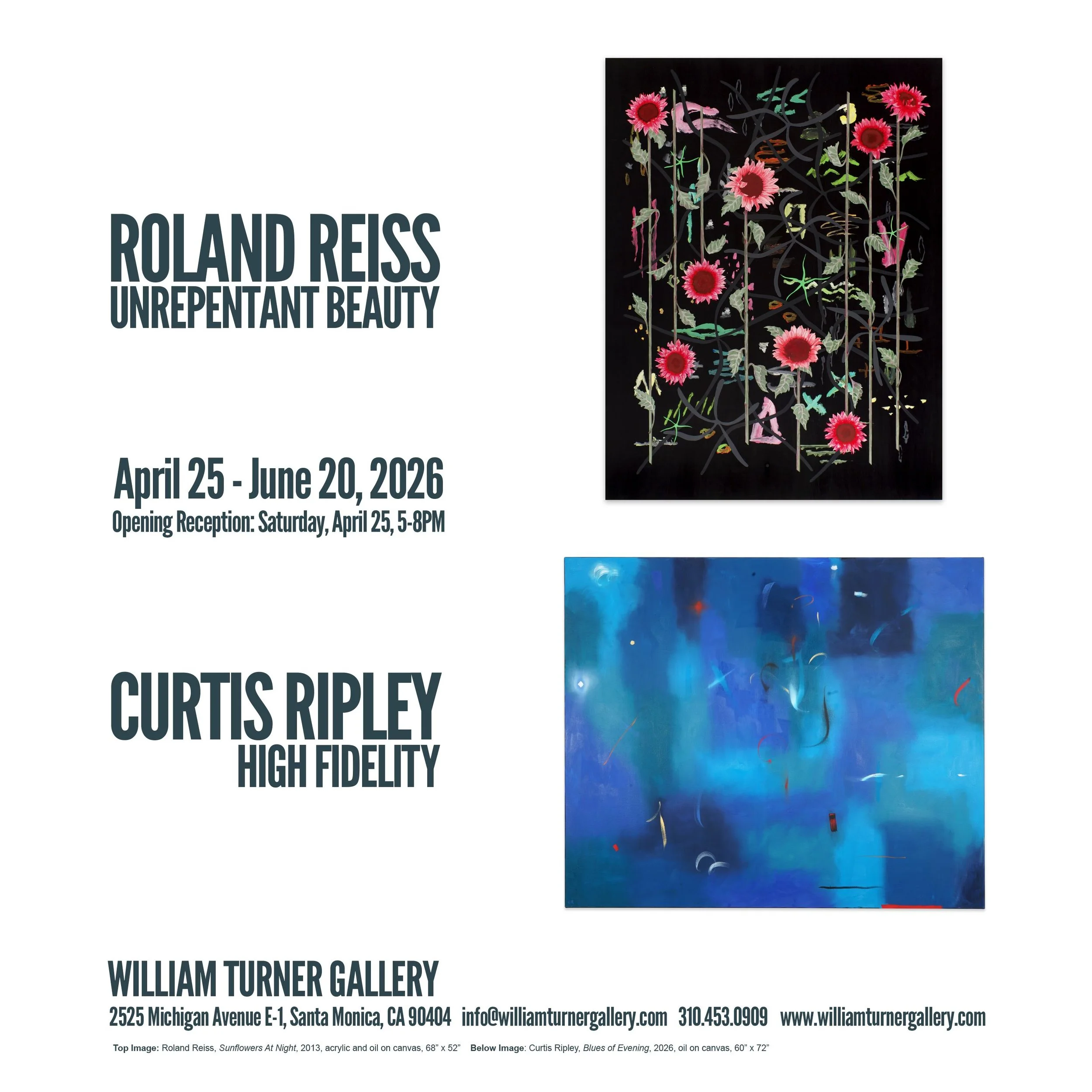
Santa Monica, CA  - William Turner Gallery is pleased to present Roland Reiss: Unrepentant Beauty, an exhibition of late paintings by Roland Reiss (1929–2020), opening April 25, 5-8PM and on view through June 20, 2026.
A pioneering figure in postwar American art, Reiss spent more than six decades redefining the possibilities of painting. From his early explorations of abstraction and representation to his groundbreaking sculptural works and miniature environments, his practice consistently expanded the boundaries of the medium.

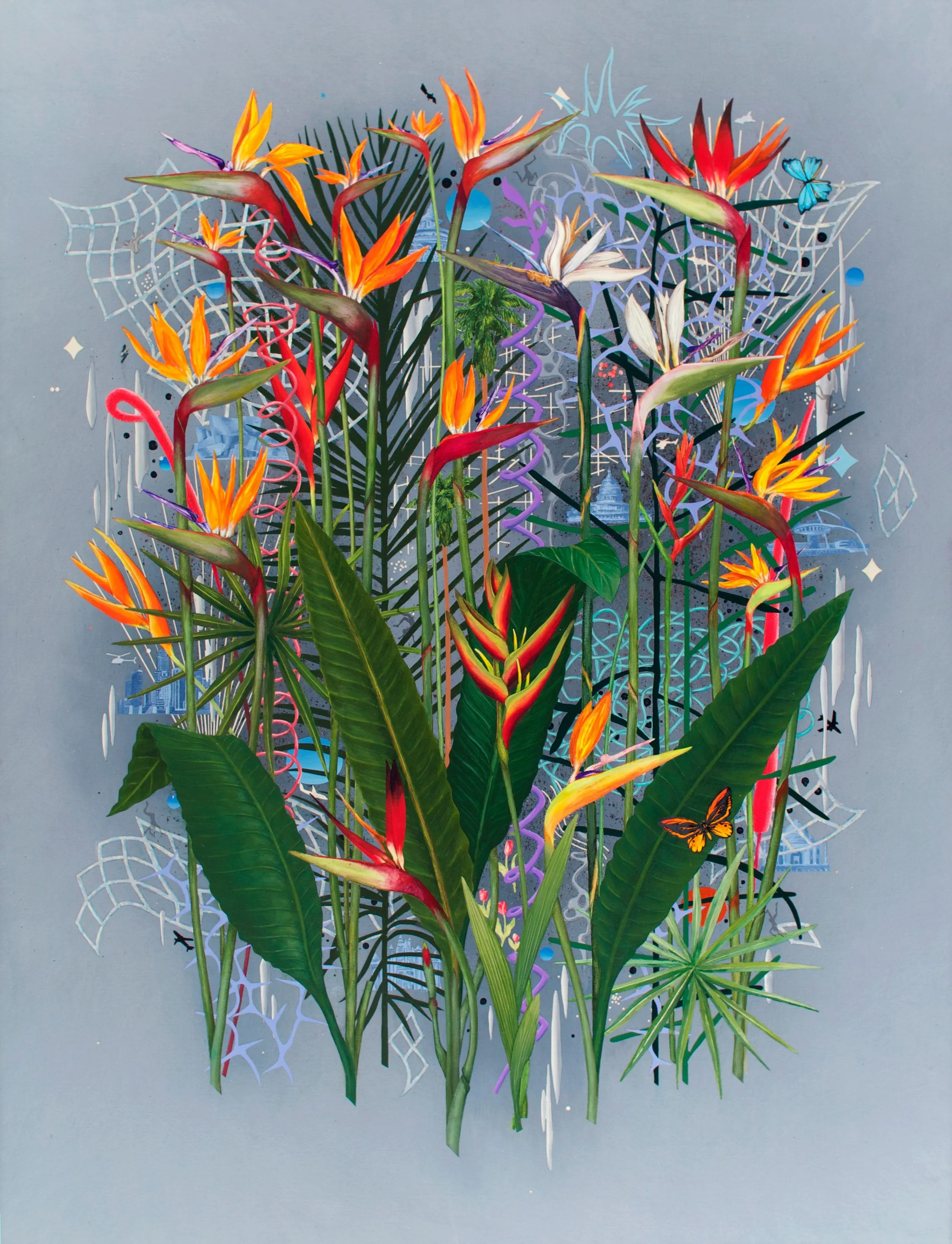
This exhibition focuses on a remarkable development in his final decades: a series of vibrant, dynamic flower paintings that challenge long-standing assumptions about beauty and subject matter in contemporary art. Historically regarded as decorative or peripheral, the motif of the flower becomes, in Reiss’ hands, a site of formal and conceptual innovation. The artist approached these works with full awareness of their cultural baggage, describing the act of painting flowers as requiring “a leap of faith.”
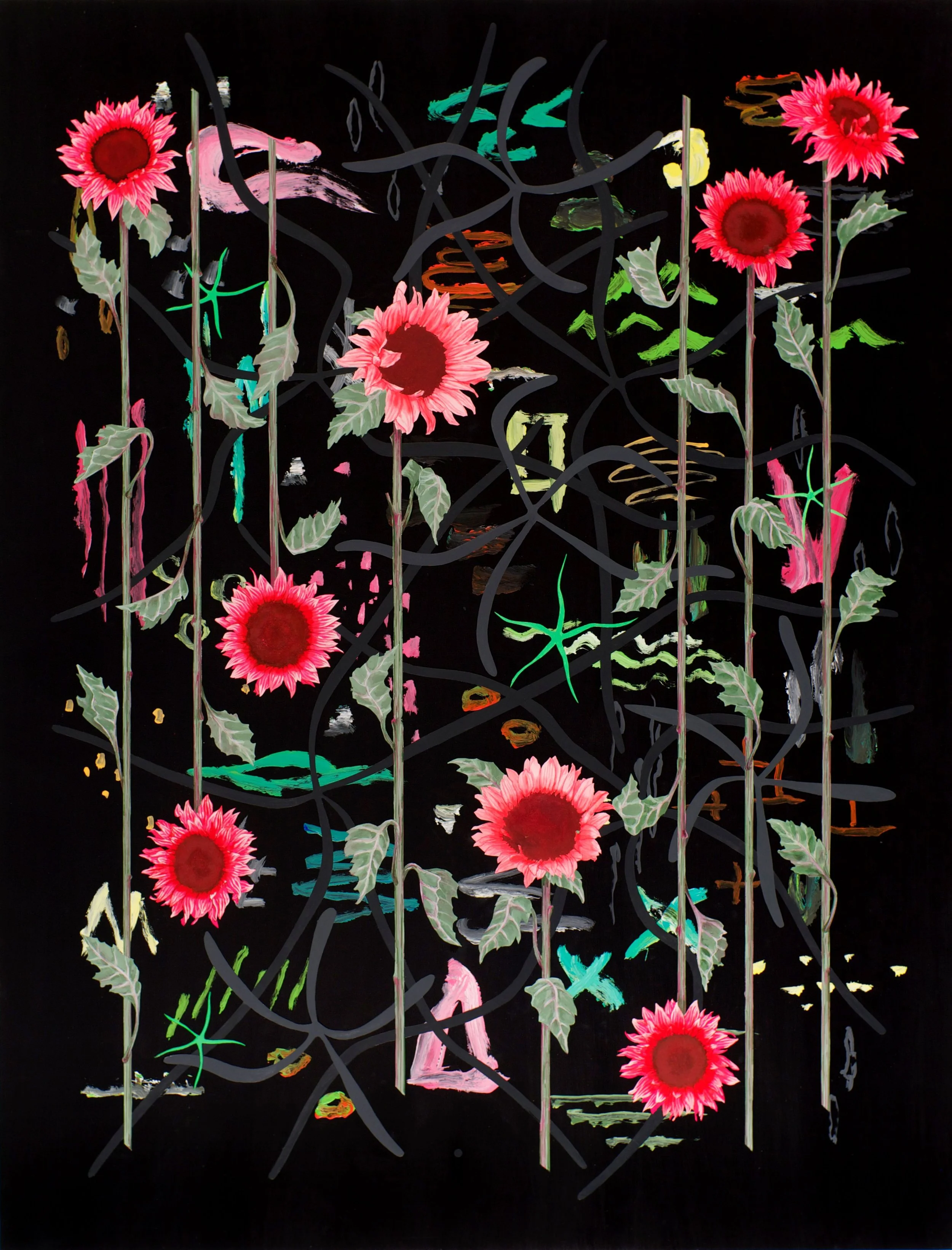
About these paintings Reiss stated, “Flowers are the vehicle for putting everything I have learned about painting into my work.” The resulting paintings move fluidly between abstraction and figuration, combining bold color, gestural energy, and spatial complexity. Rather than depicting flowers, Reiss uses them as a framework for exploring perception, materiality, and the enduring power of visual experience.

The title Unrepentant Beauty reflects the artist’s unapologetic embrace of beauty as both subject and strategy. In contrast to earlier generations for whom beauty was often viewed with suspicion, Reiss’ late work asserts its relevance with clarity and conviction.

At the end of a long and influential career, Reiss produced a body of work that is at once playful, rigorous, and deeply resonant—offering a powerful reconsideration of what painting can be.
Roland Reiss studied at the American Academy of Art, Mount San Antonio College and at UCLA. He taught at UCLA, the University of Colorado, and Claremont Graduate University, where he served as Chair for 30 years, from 1971 to 2001. In 2009 he received the College Art Association Award for the Distinguished Teaching of Art. At CGU he held the Benezet Chair in the Humanities and in 2010 an endowed chair in art was established in his name. He was also the director of The Painting's Edge residency at Idyllwild Arts.

Reiss was the recipient of four N.E.A. grants and of numerous prizes and awards. His work is included in many important public and private collections, such as the Whitney Museum of American Art, Museum of Contemporary Art, Los Angeles, the Los Angeles County Museum of Art, and the Hammer Museum, among others.

PRESS: The Argonaut Reviews LIGHT | GLYPHS

Argonaut_4inch.jpg
Photograph courtesy Brent Broza Photography

Photograph courtesy Brent Broza Photography

Casper Brindle is convinced that he’s putting out some of his best work yet in his latest exhibition at William Turner Gallery in Santa Monica.

The artist, who began painting in the 1980s and is a disciple of the Light and Space art movement in Los Angeles, has woven a Southern California influence through all his work, whether the hot rod and surf culture found in his earlier work or the pure light in his latest exhibition.

“I think the light in LA is different than anywhere else in the world,” Brindle said. “This will be my best show yet. I’m really proud of this show.”
The show is called “Light | Glyphs” and will be on display through November 5. The series contains 25 pieces of which 15 will be shown at William Turner Gallery.

“Light is a huge part of my work in general and especially this body of work,” Brindle said. “I would say it is as important as the materials that I use, even more so. These works came to fruition just playing with light and seeing what happens with other materials. I started with light itself and manipulated the materials to do different things and bring different energies.”

Brindle, who was born in Toronto, moved to LA when he was 6 years old in the mid-1970s and he has lived there ever since. He was an apprentice to the Light and Space pioneer Eric Orr. He has exhibited on a regular basis at William Turner Gallery for more than 10 years and this is his 7th solo exhibition with the gallery.

A surfer, Brindle is constantly observing the play of light on water and how it expresses itself with color. Many of the works were done during the COVID lockdowns, something that Brindle said worked out to be a great thing for a lot of artists.

“Everything went on the backburner,” Brindle said. “You didn’t have to follow deadlines. You were kind of like, now it is time to really play with ideas and research and do the things that you can’t do when you have commitments and things like that.”

To create the works in this exhibit, Brindle used automotive paints, pigmented acrylic and metal leaf. The final works are 3 feet by 3 feet by 4 inches. He used translucent sculptural boxes which he air painted with diffused colors through the frosted surfaces.

The light in the colored background reflects in a quietly dramatic manner. In the center of each piece is a glyph, inspired by hieroglyphs that were ancient modes of communication, where symbols or marks were carved in relief to convey ideas.

Brindle’s glyph is a three-dimensional rectangle that intersects the center of the translucent box. The glyphs have been described as a beacon cutting through fog – quietly dramatic.
“I’m fascinated with hieroglyphs and how they used them to communicate,” Brindle said. “I use that as kind of a vehicle to do this newer work with glyphs. They go back awhile in the paintings.

There is just something that a spirit bigger than us is speaking to us. When I look at just a single glyph, it is speaking to that bigger power. I found that fascinating to use in the work.”

With Brindle’s use of gold and silver leaf to create the glyphs, he feels they really lend themselves to telling a story and he wanted to further the investigation into glyphs with these paintings.

Casper Brindle, Light-Glyph II, 2021, pigmented acrylic, 74” x 44” x 12”

Two different processes went into creating the works in this exhibit. With the glyphs, he did a lot of preparation, research and models. The decision-making process was very conscious as from the start he had an idea of where he wanted to go with them.
The paintings, on the other hand, had a more Zen approach. Brindle would find himself in a meditative state, a state of calmness where he let the work take over.

“It is a meditative state where all of a sudden at the end of the day, you’re like, ‘What just happened?’” Brindle said. “It’s that kind of thing when you’re driving and then all of a sudden, you’re at your destination and you don’t remember how you got there. That’s the same feeling I get when I make the works. The day starts and then it is 8 p.m. and I’ve got to go home.”

Brindle said he doesn’t typically have a preconceived idea of what he is going to do with the paintings. He lets them paint themselves.

“It’s a constant trance-like state of making right and wrong decisions along the way,” Brindle said. “I don’t say I’m going to do a blue painting. I just start and make a number of decisions along the way and just kind of paint these paintings.”

Throughout the years and with individual paintings, his choice of materials has always changed and shifted, evolving until he gets to where he is now.

“That’s part of the process,” Brindle said. “The best part about making art is the process. Things are changing all the time until you get to a place where you are like, now I have it. I know what this is about.”

The trance-like state is one that he shares with those that experience his work. Brindle said he’s had a lot of reactions to his art, but the most common one is a sense of lightness and calm — a sense of their bodies decompressing and entering a meditative state.

He stressed the importance of seeing his three-dimensional work in person. It’s the only way to experience its depth and the way the light shimmers and moves. The large paintings shift as a person walks by them, inviting viewers to pause, to explore perception.

This is Brindle’s first major show since the pandemic delayed an earlier showing at the William Turner Gallery in 2020. He invites patrons to come and lose themselves in his meditative works, to let art minister to their hungry souls.”