Curtis Ripley: High Fidelity Opening

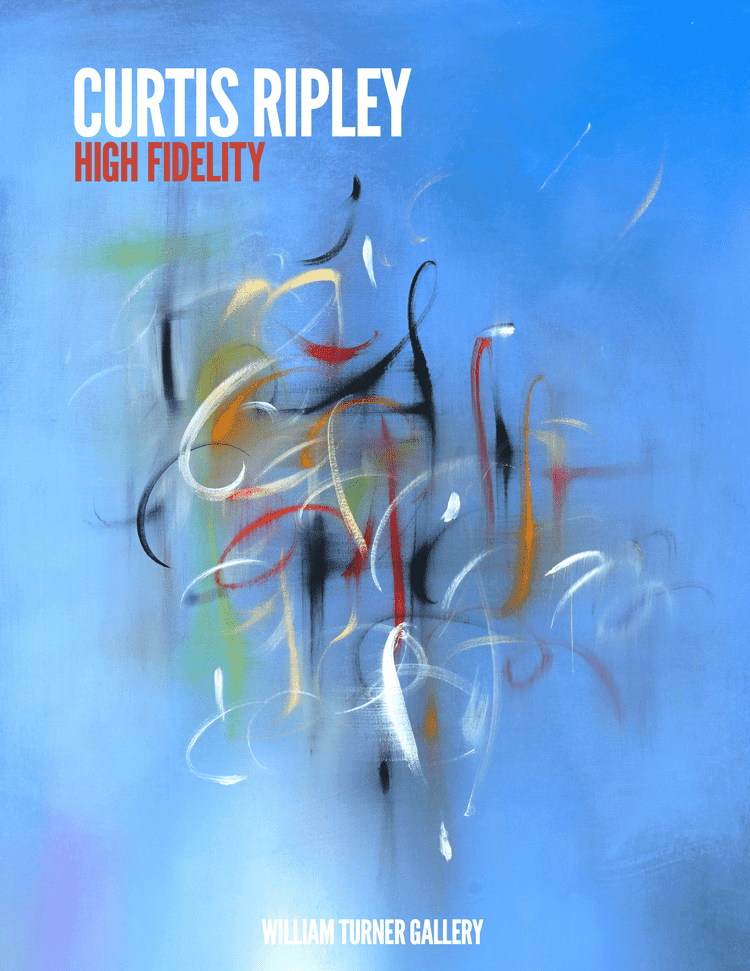
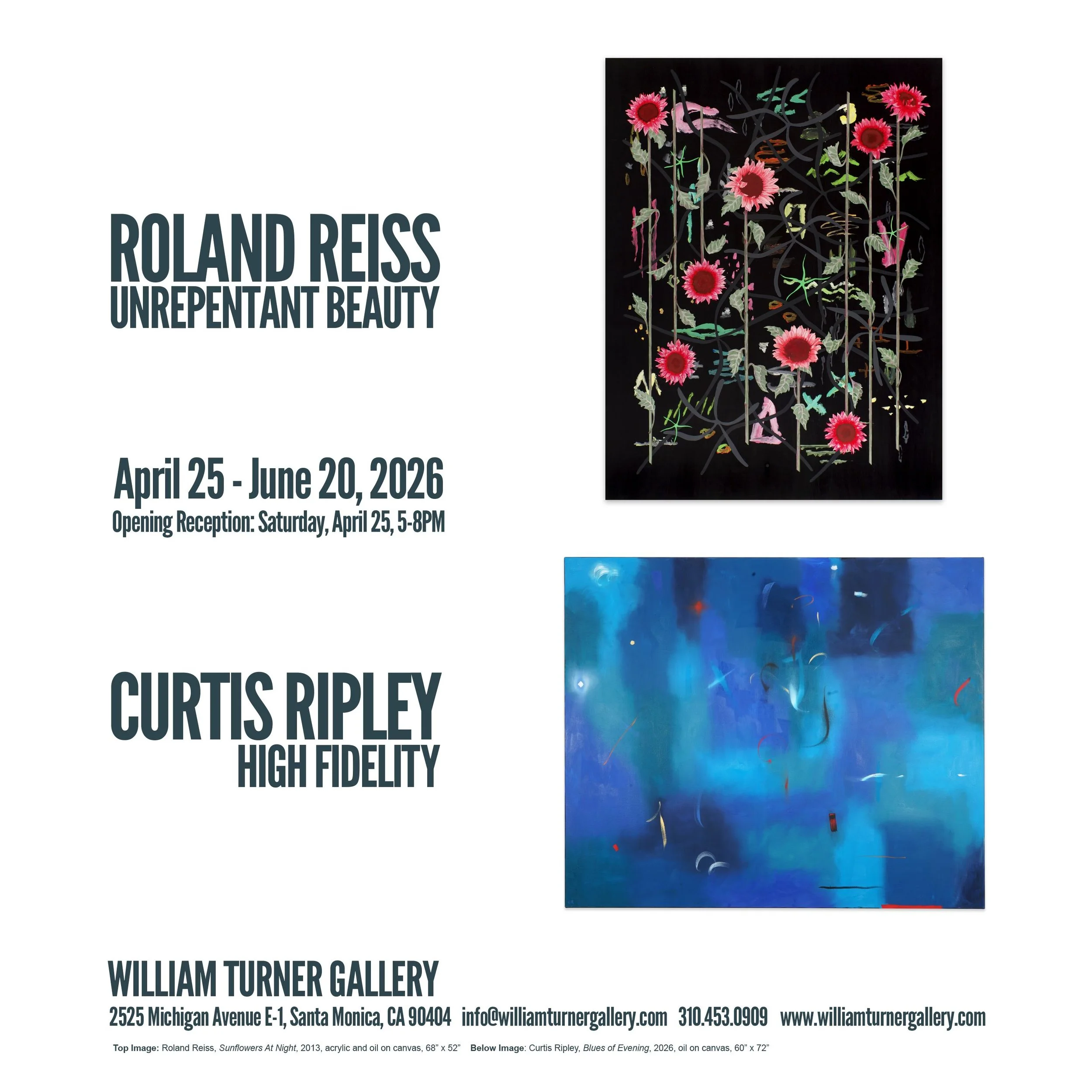
Santa Monica, CA - William Turner Gallery is pleased to present Curtis Ripley: High Fidelity, an exhibition of new paintings by Curtis Ripley opening April 25, 5-8 PM, and on view through June 20, 2026. The exhibition unfolds as a visual composition: lyrical, atmospheric, and finely attuned to the rhythms of perception.

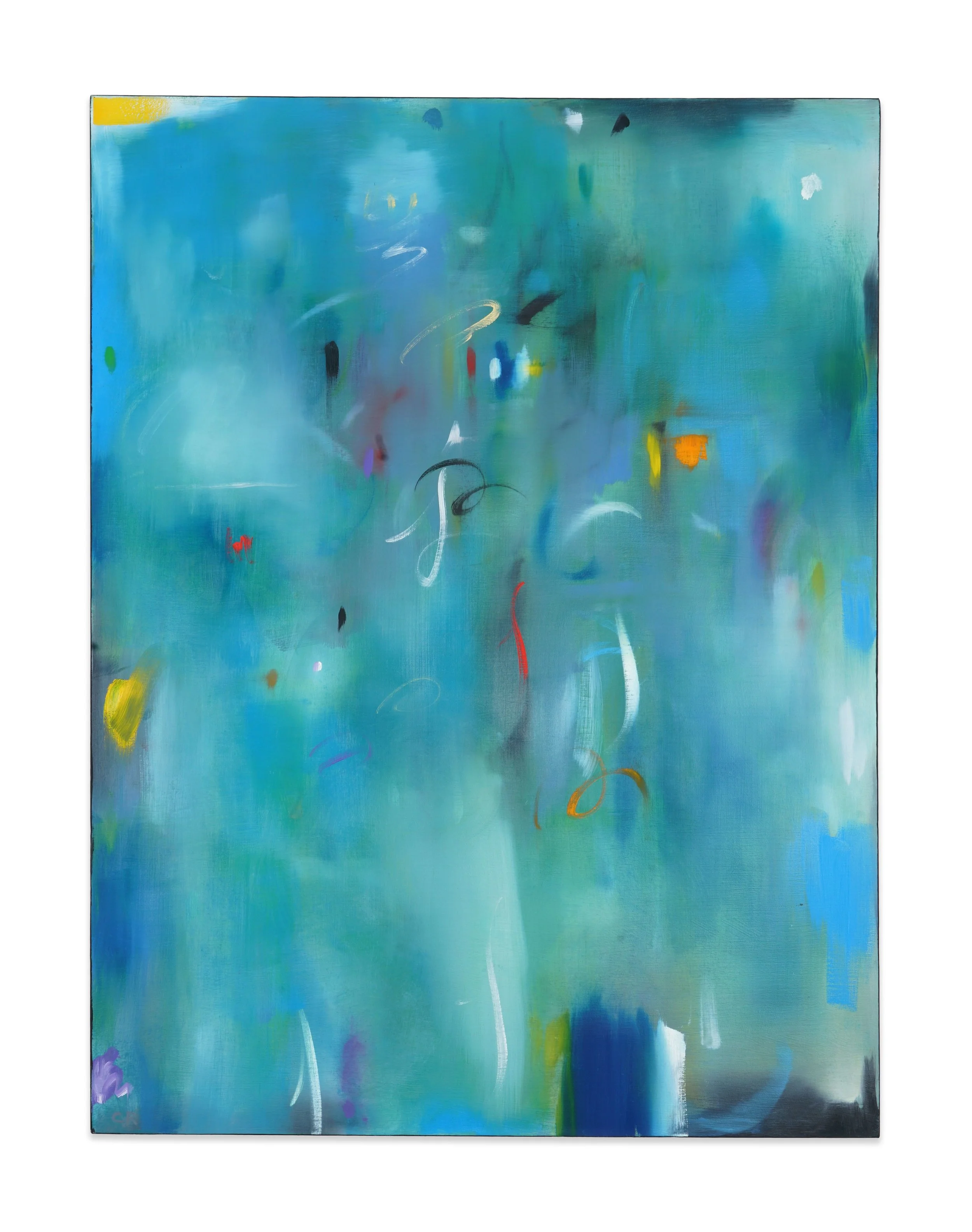
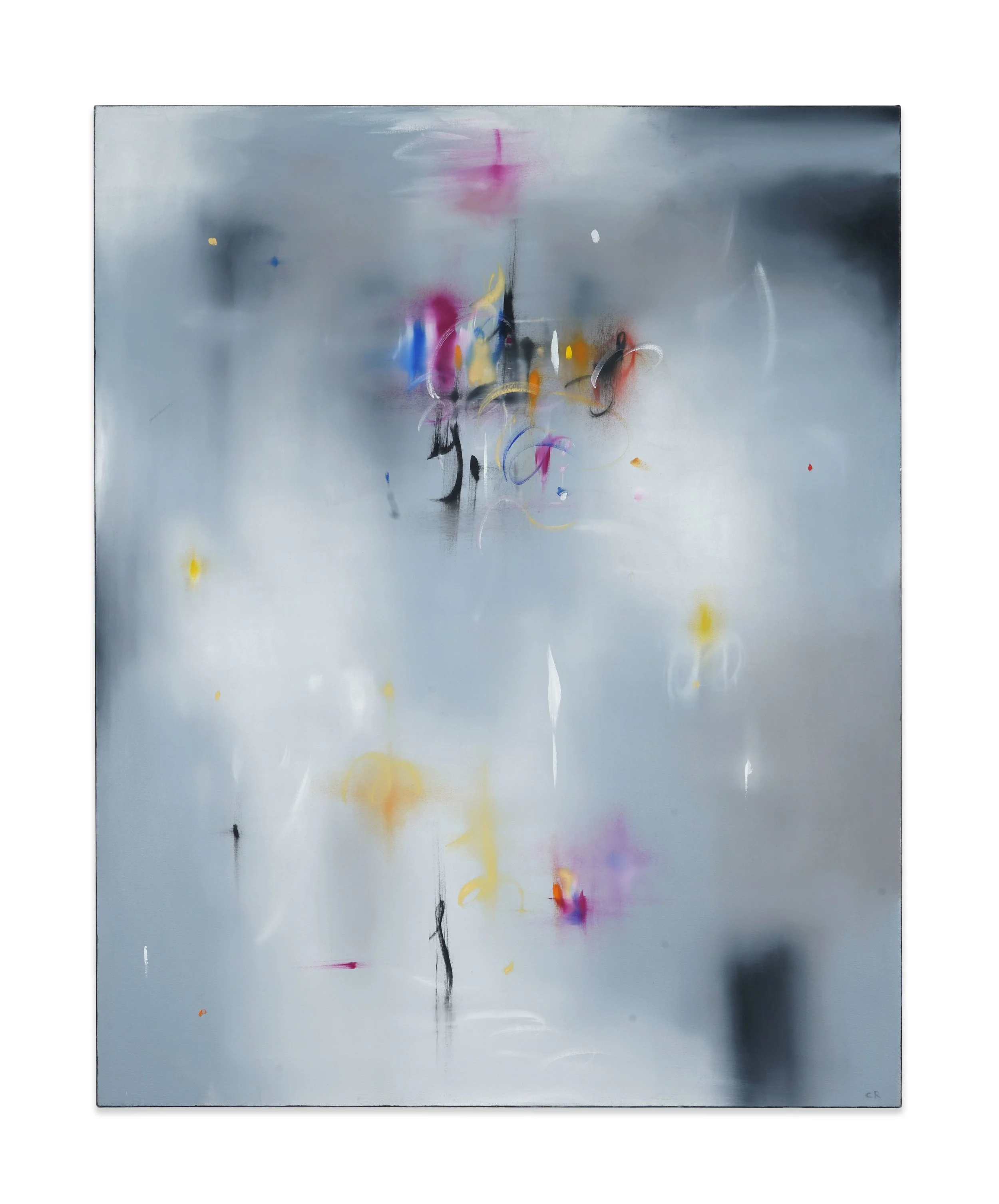
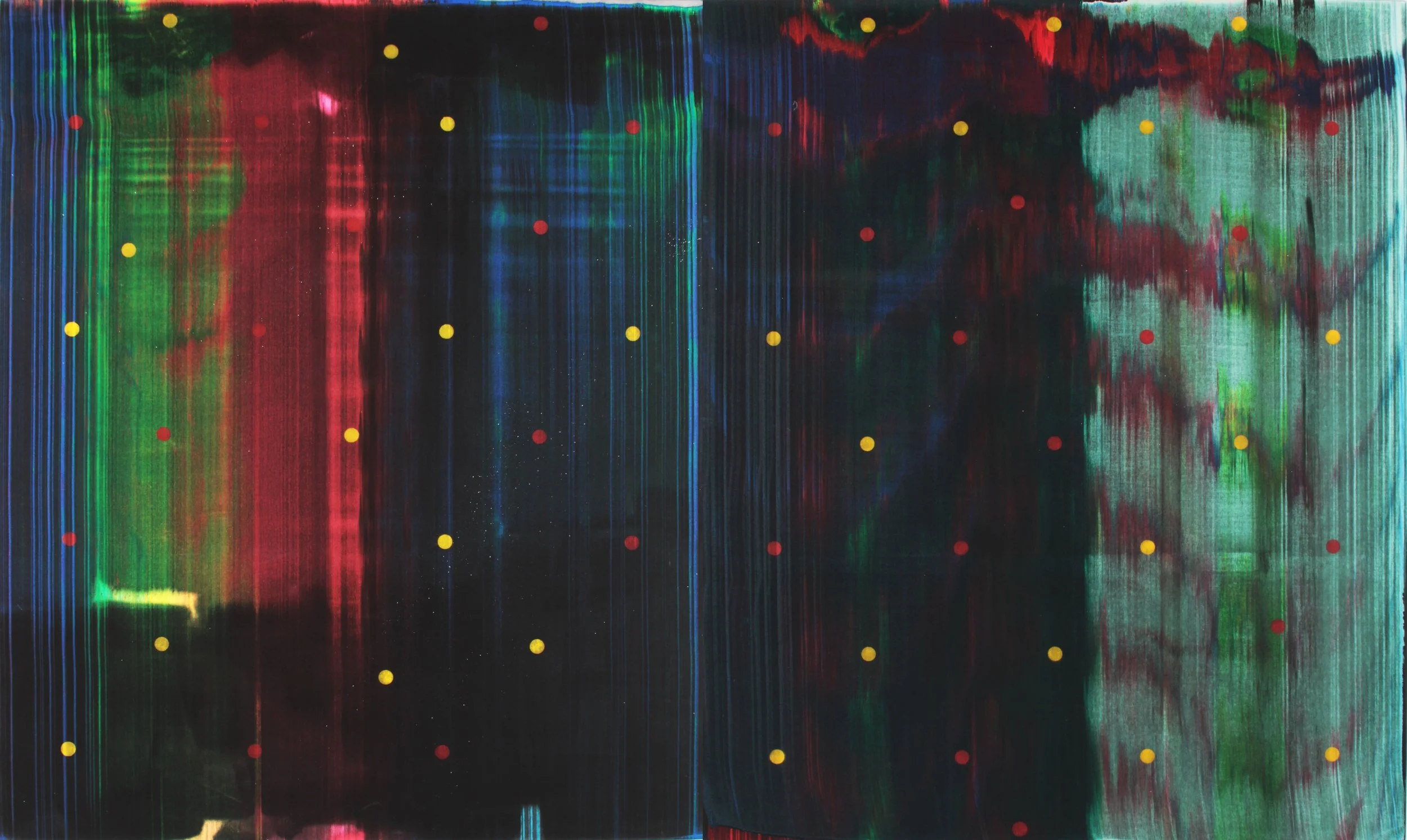
In Ripley’s paintings, glimmers of paint flicker and flare across darkened grounds, activating the surface with a sense of movement and light. Gestural curls and swirls interact with lines and dashes that guide the viewer’s eye in a choreographed passage across the picture plane. These marks are not merely expressive—they are structural, establishing a sense of tempo and poetic cadence that gives each work its internal coherence.

Forms in Ripley’s work do not resolve immediately. They hover, coalesce, and dissolve, shifting in and out of focus as the viewer’s attention lingers. Color behaves similarly: shapes emerge from the ground only to recede again, creating a continuous interplay between presence and disappearance.

Curtis Ripley, Dreaming in Color, 2026, oil on canvas, 40 x 30”.

The result is a dynamic tension between flatness and depth that remains deliberately unsettled. This instability gives rise to a pronounced sense of atmosphere. Gestural forms drift across layered fields of tone, while Ripley’s palette moves between moments of luminous intensity and expanses of saturated darkness. Subtle gradations of color produce fleeting effects — recalling distant light, reflective shimmer, or the charged stillness of a landscape at dusk. The paintings unfold perceptually, revealing themselves over time rather than at a glance.

Ripley’s practice occupies a space between the gestural immediacy of Abstract Expressionism and the immersive chromatic sensibility of Color Field painting. His work synthesizes these traditions into a contemporary language grounded in process, layering, and revision. While resonant with historical explorations of light and atmosphere, his paintings remain distinctly present—open-ended, responsive, and experiential.

Curtis ripley, Silver Springs, 2026, oil on canvas, 60” x 48

Presented concurrently with Unrepentant Beauty by Roland Reiss, High Fidelity offers a complementary approach to perception—one grounded not in constructed illusion, but in painterly sensation and temporal experience.

Throughout a career spanning more than four decades, Curtis Ripley has exhibited nationally and internationally, with an extensive record of solo exhibitions. Born in Lubbock, Texas in 1949, he received his MFA from the University of Wisconsin, Madison in 1975.

CHROMESTHESIA Catalog Now Available for Online Viewing

William Turner Gallery is pleased to present Curtis Ripley’s most recent investigations into abstraction Chromesthesia. The exhibit is on view February 19, through April 16, 2022.

How does one visually qualify the sound of color, or conversely, the color of sound? Chromesthesia is a neurological phenomenon experienced in the synthesis of binary sensorial modalities (synesthesia) where sound and color converge into a joint perception. In his painterly choreographies, Ripley interprets this ephemeral phenomena where light dances and shadows play in concert, whilst color is given musical agency. He often cites music as a departure point in his process, evidenced in the working titles. The canvases are gestural expressions of events conducted into orchestrations of lyrical harmony as the eye traverses through fields of color.

Activating the canvas’ surface through visceral gesticulations, he employs a vast repertoire of painterly techniques to amplify the dynamism of the viscous medium. In the tradition of the Old Master’s, veil’s of glazed oils are washed upon washes whilst opaque pigments dissolve into gauzy vapors, simultaneously revealing and obfuscating. One’s gaze is drawn in-and-out as a lens’ aperture renders depth-of-field. The transient nature of the corporeal world is described through lingering films of atmospheric haze interlacing with solid volumes rendered in highly saturated pigments; this tension is achieved through varied processes of application and deletion. Vibrations are deftly strung from his palette as colors rhapsodize in polychrome hums and variegated tremors. Expressionistic drips dapple indiscriminately here, automatic splatters chance to rupture spontaneously there… calligraphic strokes animatedly reach to articulate into attenuated arabesques. Rhythmically the paintings pulse into sublimely syncopated interventions of color, light, space and motion.

Boundless forms are liberated into ambiguous spatial fields through intuitive placement. Improvisatory bits of miscellaneous paraphernalia - such as scraps of sheet music - are occasionally embedded in the paintings, imbuing a whimsical element of surprise. Void of academic hierarchies, he refrains from privileging space, favoring the spontaneity of improvisational arrangements. Resistant to strict interpretation, the paintings are nonobjective distillations informed by Ripley’s relationship with his environment. Inevitably there are loose associations employing a pictorial vocabulary, not limited to: sound, ambient light, landscape, seasons, sky, and architecture which are then dematerialized into symphonic arrangements of reductive forms and undulating color harmonies.

Breaking from traditional modes where the canvas is detached from its audience, these are rather, environments intended to engulf the spectator. Ripley instinctively unifies the subjective phenomena of color and sound into atmospheric poems intended to actively translate into an intimate experience uniquely spirited by individual perception.

Curtis Ripley was born in 1949 in Lubbock, Texas. He attended the University of the Americas, México D.F. in 1969; Texas Tech University, earning a Bachelor of Fine Arts degree in 1971; and the University of Wisconsin, Madison, where he earned a Master of Fine Arts degree in 1975. Ripley served as a lecturer in 1975 at the University of Wisconsin, Madison; an Assistant Professor at Purdue University, West Lafayette, Indiana from 1975 to 1977; an Associate Professor at the Virginia Commonwealth University, Richmond, Virginia from 1977 to 1985; an Associate Professor at California State University, San Bernardino from 1985 to 1986; and a lecturer at California State University, Long Beach from 1986 to 1987. His awards include a National Endowment for the Arts Artists Fellowship, 1979, and Juror’s Award, Zeichnung Heute, Kunsthalle, Nurnberg in 1983. He has had numerous solo exhibitions throughout the United States, has participated in a wide-variety of group exhibitions, and has works in several collections such as those of the Fine Art Museums of San Francisco, California; J.P. Morgan Chase, New York; Federal Reserve Bank, Richmond VA; HSBC Private Bank, New York; Chemical Bank, New York City; Yokohama Royal Park Hotel, Japan; and The Ambassador Hotel, Taipei. The artist lives and works in Los Angeles, California.

OPENING THIS SATURDAY 4-7PM - WILLIAM TURNER GALLERY

CURTIS RIPLEY
CHROMESTHESIA
Opening Reception: Saturday February 19, 4-7pm

William Turner Gallery is pleased to present Curtis Ripley’s most recent investigations into abstraction Chromesthesia. The exhibit is on view February 19, through April 16, 2022.

How does one visually qualify the sound of color, or conversely, the color of sound? Chromesthesia is a neurological phenomenon experienced in the synthesis of binary sensorial modalities (synesthesia) where sound and color converge into a joint perception. In his painterly choreographies, Ripley interprets this ephemeral phenomena where light dances and shadows play in concert, whilst color is given musical agency. He often cites music as a departure point in his process, evidenced in the working titles. The canvases are gestural expressions of events conducted into orchestrations of lyrical harmony as the eye traverses through fields of color.

Activating the canvas’ surface through visceral gesticulations, he employs a vast repertoire of painterly techniques to amplify the dynamism of the viscous medium. In the tradition of the Old Master’s, veil’s of glazed oils are washed upon washes whilst opaque pigments dissolve into gauzy vapors, simultaneously revealing and obfuscating. One’s gaze is drawn in-and-out as a lens’ aperture renders depth-of-field. The transient nature of the corporeal world is described through lingering films of atmospheric haze interlacing with solid volumes rendered in highly saturated pigments; this tension is achieved through varied processes of application and deletion. Vibrations are deftly strung from his palette as colors rhapsodize in polychrome hums and variegated tremors. Expressionistic drips dapple indiscriminately here, automatic splatters chance to rupture spontaneously there… calligraphic strokes animatedly reach to articulate into attenuated arabesques. Rhythmically the paintings pulse into sublimely syncopated interventions of color, light, space and motion.

Boundless forms are liberated into ambiguous spatial fields through intuitive placement. Improvisatory bits of miscellaneous paraphernalia - such as scraps of sheet music - are occasionally embedded in the paintings, imbuing a whimsical element of surprise. Void of academic hierarchies, he refrains from privileging space, favoring the spontaneity of improvisational arrangements. Resistant to strict interpretation, the paintings are nonobjective distillations informed by Ripley’s relationship with his environment. Inevitably there are loose associations employing a pictorial vocabulary, not limited to: sound, ambient light, landscape, seasons, sky, and architecture which are then dematerialized into symphonic arrangements of reductive forms and undulating color harmonies.

Breaking from traditional modes where the canvas is detached from its audience, these are rather, environments intended to engulf the spectator. Ripley instinctively unifies the subjective phenomena of color and sound into atmospheric poems intended to actively translate into an intimate experience uniquely spirited by individual perception.

Curtis Ripley was born in 1949 in Lubbock, Texas. He attended the University of the Americas, México D.F. in 1969; Texas Tech University, earning a Bachelor of Fine Arts degree in 1971; and the University of Wisconsin, Madison, where he earned a Master of Fine Arts degree in 1975. Ripley served as a lecturer in 1975 at the University of Wisconsin, Madison; an Assistant Professor at Purdue University, West Lafayette, Indiana from 1975 to 1977; an Associate Professor at the Virginia Commonwealth University, Richmond, Virginia from 1977 to 1985; an Associate Professor at California State University, San Bernardino from 1985 to 1986; and a lecturer at California State University, Long Beach from 1986 to 1987. His awards include a National Endowment for the Arts Artists Fellowship, 1979, and Juror’s Award, Zeichnung Heute, Kunsthalle, Nurnberg in 1983. He has had numerous solo exhibitions throughout the United States, has participated in a wide-variety of group exhibitions, and has works in several collections such as those of the Fine Art Museums of San Francisco, California; J.P. Morgan Chase, New York; Federal Reserve Bank, Richmond VA; HSBC Private Bank, New York; Chemical Bank, New York City; Yokohama Royal Park Hotel, Japan; and The Ambassador Hotel, Taipei. The artist lives and works in Los Angeles, California.