Roland Reiss: Unrepentant Beauty Opening

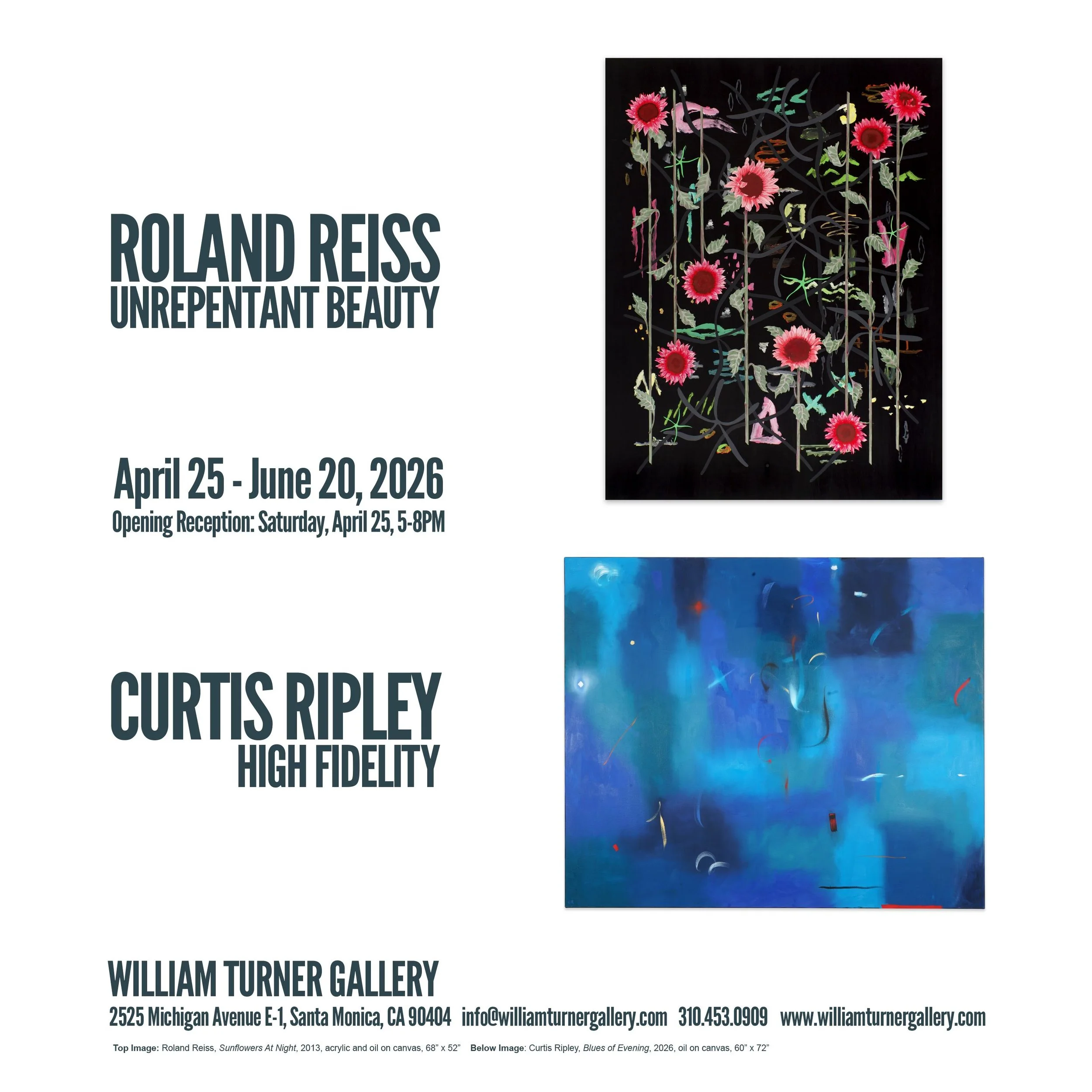
Santa Monica, CA  - William Turner Gallery is pleased to present Roland Reiss: Unrepentant Beauty, an exhibition of late paintings by Roland Reiss (1929–2020), opening April 25, 5-8PM and on view through June 20, 2026.
A pioneering figure in postwar American art, Reiss spent more than six decades redefining the possibilities of painting. From his early explorations of abstraction and representation to his groundbreaking sculptural works and miniature environments, his practice consistently expanded the boundaries of the medium.

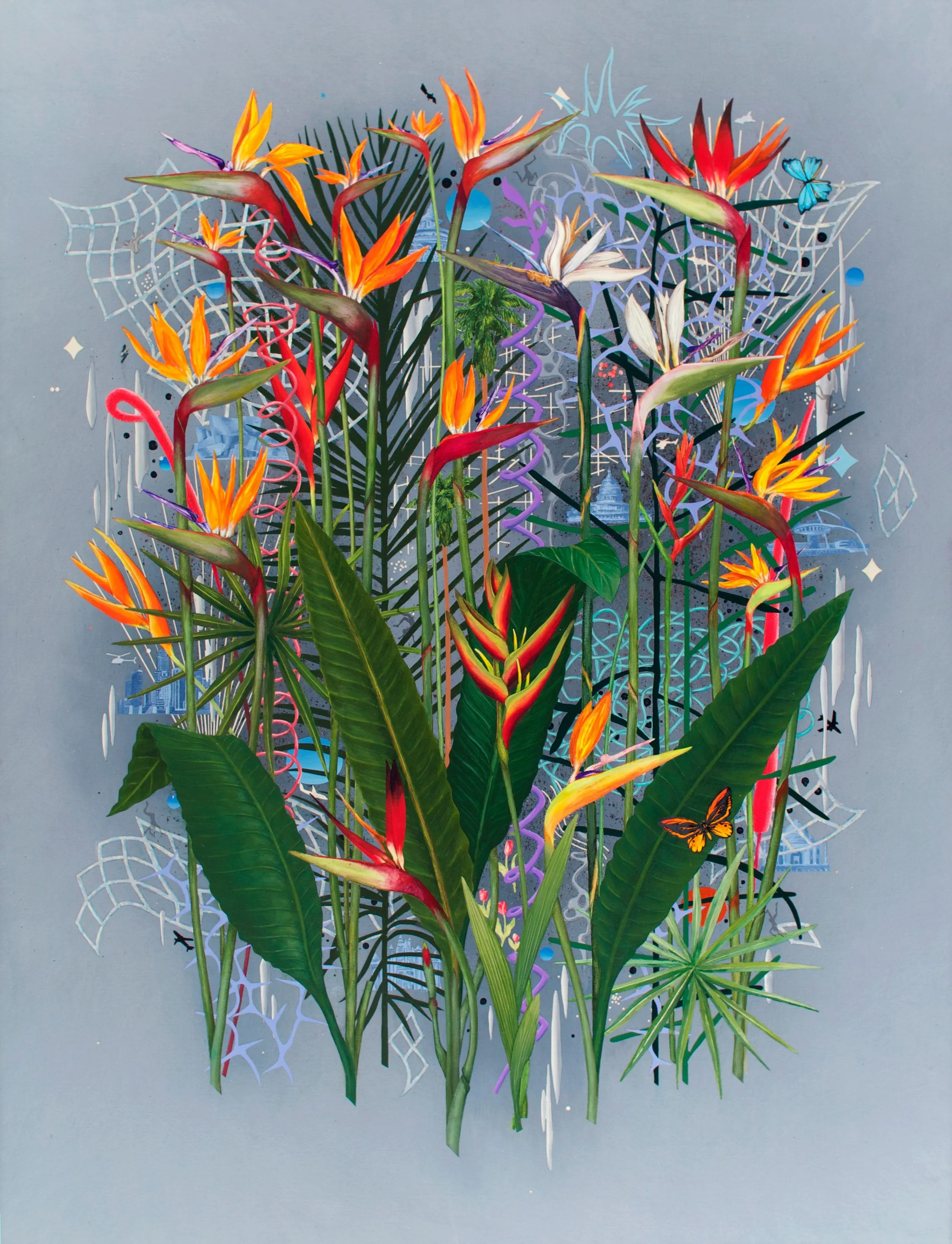
This exhibition focuses on a remarkable development in his final decades: a series of vibrant, dynamic flower paintings that challenge long-standing assumptions about beauty and subject matter in contemporary art. Historically regarded as decorative or peripheral, the motif of the flower becomes, in Reiss’ hands, a site of formal and conceptual innovation. The artist approached these works with full awareness of their cultural baggage, describing the act of painting flowers as requiring “a leap of faith.”
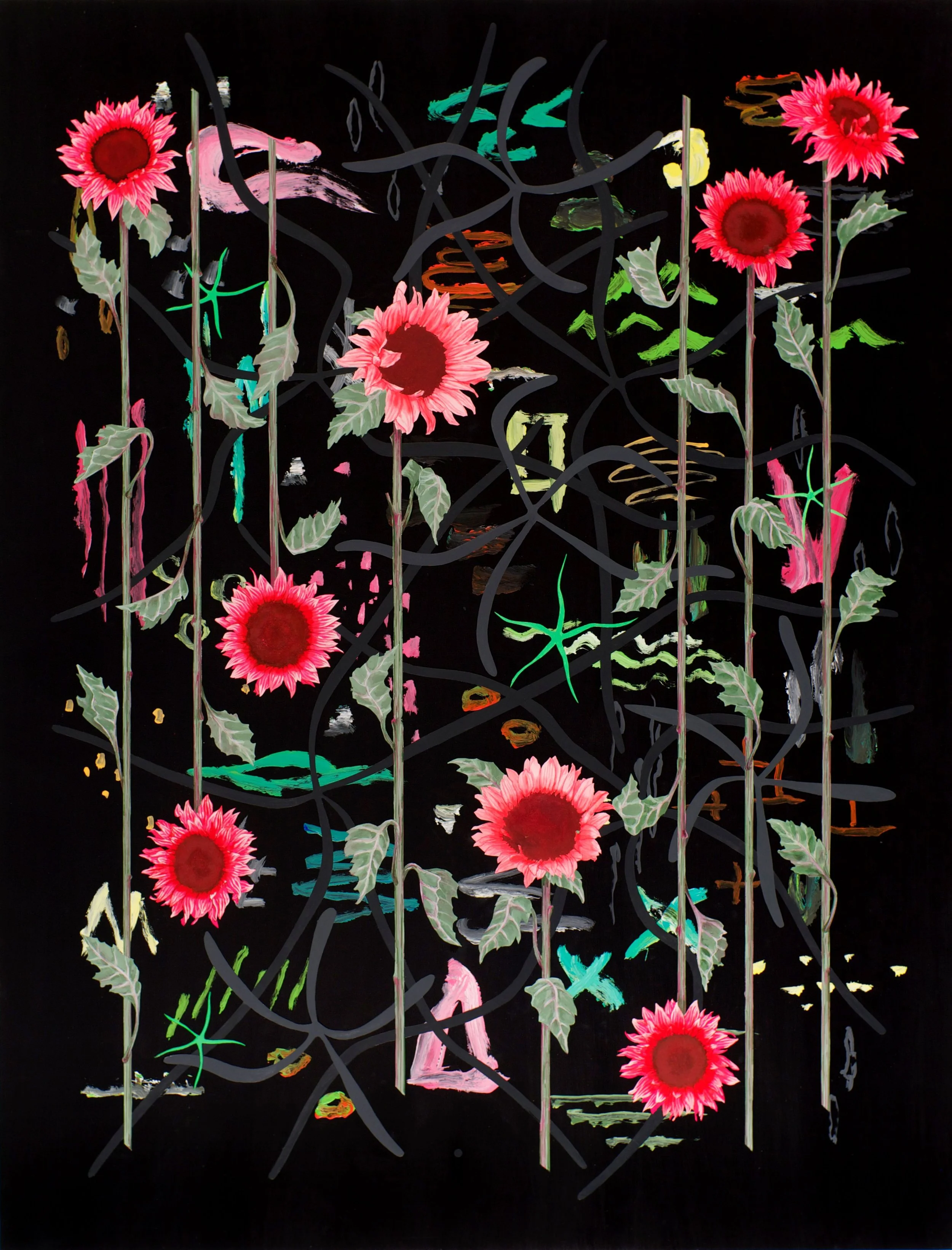
About these paintings Reiss stated, “Flowers are the vehicle for putting everything I have learned about painting into my work.” The resulting paintings move fluidly between abstraction and figuration, combining bold color, gestural energy, and spatial complexity. Rather than depicting flowers, Reiss uses them as a framework for exploring perception, materiality, and the enduring power of visual experience.

The title Unrepentant Beauty reflects the artist’s unapologetic embrace of beauty as both subject and strategy. In contrast to earlier generations for whom beauty was often viewed with suspicion, Reiss’ late work asserts its relevance with clarity and conviction.

At the end of a long and influential career, Reiss produced a body of work that is at once playful, rigorous, and deeply resonant—offering a powerful reconsideration of what painting can be.
Roland Reiss studied at the American Academy of Art, Mount San Antonio College and at UCLA. He taught at UCLA, the University of Colorado, and Claremont Graduate University, where he served as Chair for 30 years, from 1971 to 2001. In 2009 he received the College Art Association Award for the Distinguished Teaching of Art. At CGU he held the Benezet Chair in the Humanities and in 2010 an endowed chair in art was established in his name. He was also the director of The Painting's Edge residency at Idyllwild Arts.

Reiss was the recipient of four N.E.A. grants and of numerous prizes and awards. His work is included in many important public and private collections, such as the Whitney Museum of American Art, Museum of Contemporary Art, Los Angeles, the Los Angeles County Museum of Art, and the Hammer Museum, among others.
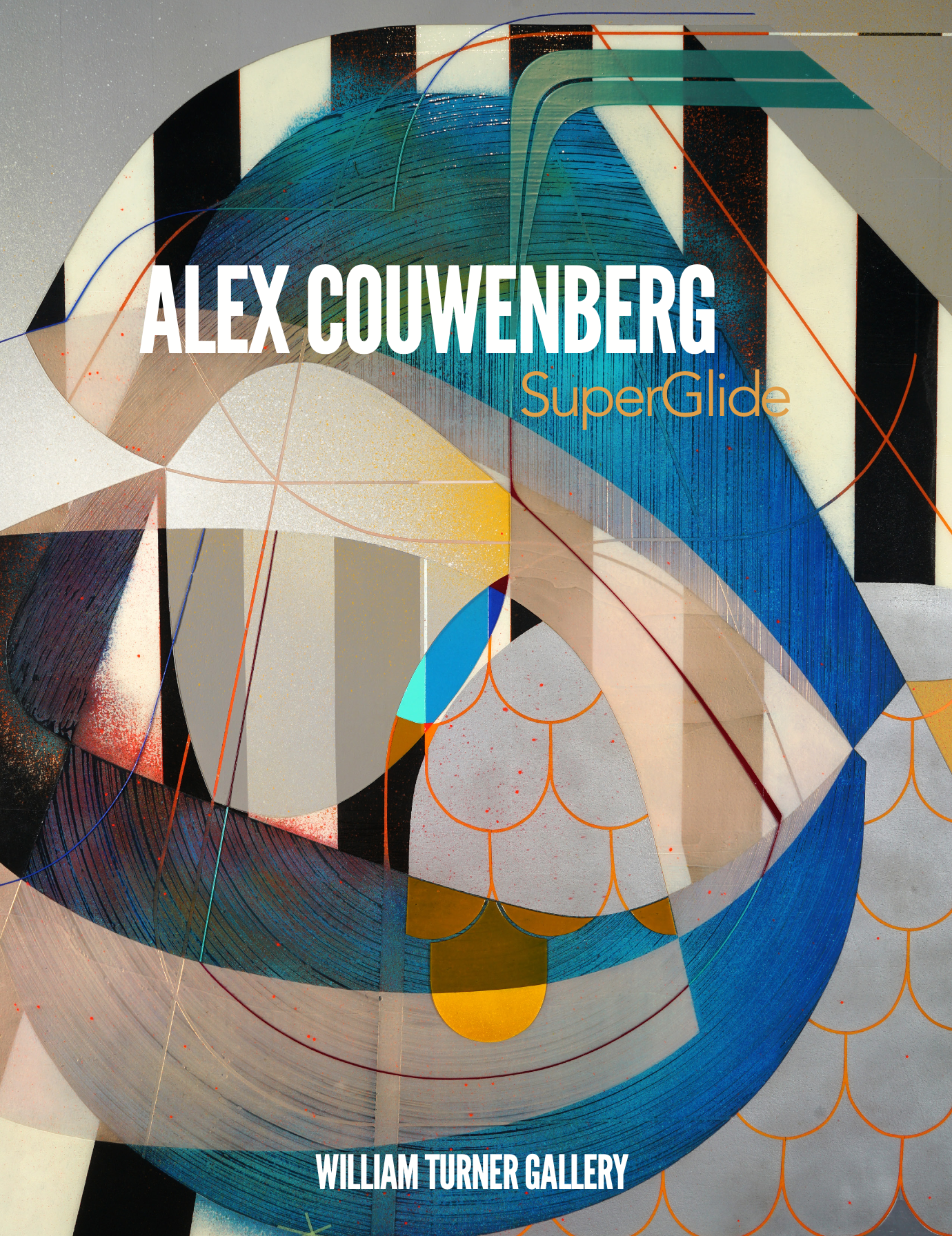
Alex Couwenberg: SuperGlide - Exhibition Catalog Now Available

In this new series of visually exquisite works, Alex Couwenberg utilizes a jazz-like ensemble of color, line and texture to create lyrically engaging, deftly complex compositions. These multi-layered canvases captivate the viewer with the precision of their virtuosic execution, but they are at heart wonderful improvisations - reductive and additive processes drawing upon his intuitive and spontaneous reactions in the moment. Couwenberg simultaneously builds upon and excavates the surfaces of his paintings, constructing an abstract archaeology of his own deeply personal, semiotic patois. Born and raised in Southern California, Couwenberg’s work expresses the seemingly contradictory sensibilities of the region - the love of nature, and its variegated, open-spaced color and light, and, conversely, the embrace of an urban architecture, in all of its physical and cultural density.

A graduate of The Art Center College of Design and The Claremont Graduate School, Couwenberg worked under the guidance of Karl Benjamin, one of the leading figures in the Southern California-base school of Hard-edge geometric abstraction. Beginning in the mid to late 60s, Benjamin was instrumental in developing a highly refined painting style, process, and philosophy of tightly ruled shapes and edges. Concurrently, other artists in LA began working with industrial materials to create highly refined surfaces, termed “Finish Fetish”, and investigating alternative mediums and technological advances. Both of these influences coalesce into Couwenberg’s post-postmodern vernacular, characterized by its layered formal, material, and textured surfaces.

A synthesis of styles and processes particular to the artist's experience materialize on the canvas to construct the poetics of his investigations. Masking off portions of the painting in his process recalls the batik technique of wax-resist dying and geometric patterning used in his father’s birthplace of Java, Indonesia, a former Dutch colony. His parents met in the Netherlands and immigrated to the U.S., making Couwenberg a first-generation Eurasian American. This synthesis of cultures manifests in his pristine Neo-Plast lines, which disrupt the rigid grid of De Stijl to formulate topsy-turvy cartographies embedded with encoded sign- systems. The alternating black-and-white banding alludes to “Invasion Stripes” used by Allied forces to define friendly aircrafts on their fuselages and wings during World War II but can also refer to Chevron stripes. The industrial spray gun is employed to create diaphanous atmospheric effects, where the foreground and background oscillate, while pearlescent paints shimmer on the surface. Couwenberg lacerates striations on portions of the architectonic compositions with tools such as brooms, all the while revealing intersections between the complex networks of positive and negative spaces. These circuits are comparable to the labyrinthine freeways Angeleno’s surmount and the dextrous, freestyle choreographies skaters wreath. Couwenberg orchestrates self-portraits that intimate a collective unconscious unveiled through material and process, ultimately converting them into cultural artifacts.

Chasing Pono, 2022, acrylic and spray on canvas, 72“ x 66“

Couwenberg’s paintings have been shown in several solo and group exhibitions throughout the United States, Canada, Europe, and Asia. His work can be found in numerous public, private, corporate, and museum collections around the world. Museum acquisitions include the Crocker Museum of Art, the Daum Museum in Missouri, Lancaster Museum of Art and History, Laguna Art Museum, Long Beach Museum of Art, and Nushi-Umeda, Tokyo to name a few. In 2007, Couwenberg was awarded the prestigious Joan Mitchell Foundation Award for his achievements in painting and in 2012 was featured as the subject of Los Angeles based filmmaker Eric Minh Swenson’s project titled “The Making Of La Fonda,” which focuses on the artist's life and studio practices.