Guillermo Bert's Upcoming Solo Show at the Museum of Latin American Ar

Congratulations to Guillermo Bert on his upcoming solo show, Techno-Empathy, opening at the Museum of Latin American Art on March 29.
This exhibition shows the Chilean-born artist Guillermo Bert bringing the two together in novel and powerful ways. He uses three principal tools, all of them uncommon in most art production: QR codes, 3-D imaging, and laser engraving. In the Encoded Textiles series, weavings include QR codes that literally embed the story of the weaver into the work so that anyone with a smartphone can see and hear them. Through 3-D imaging, the artist creates life-size images of workers whom he has met, allowing us also to meet them face to face from a unique perspective. Media images today often show migrants and refugees, but Bert uses laser engraving to transfer them onto unusual surfaces, such as wood panels that mimic the look of some of the earliest “high technology:” the rectangular panels that encoded instructions for the first mechanical looms in the 19th century.
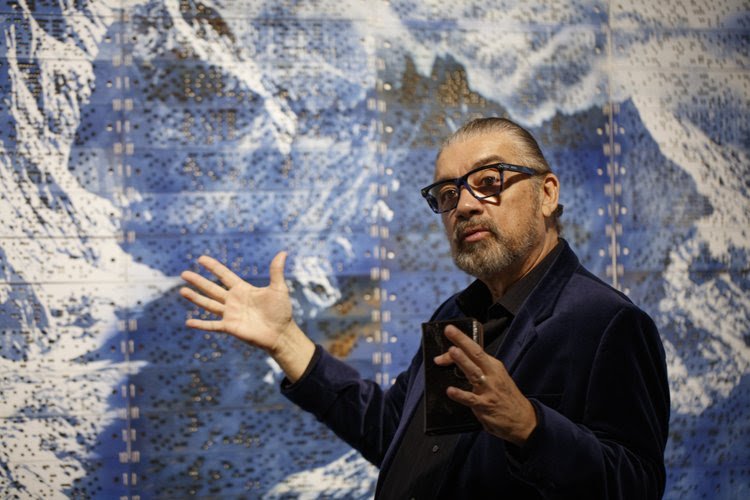
Guillermo Bert At William Turner Gallery
SURFACE TENSION: Focus Los Angeles - Opening Saturday 5-8PM

Surface Tension: Focus Los Angeles Opening February 28 5-8PM

Santa Monica, CA  - William Turner Gallery is pleased to present Surface Tension: Focus Los Angeles, a major group exhibition of West Coast artists, opening February 28, 5-8 PM, and on view through April 11, 2026.

Surface Tension: Focus Los Angeles explores surface as an active site of meaning, sensation, and perception. The exhibition foregrounds how contemporary practices use texture, layering, and materiality to shape visual and sensory experience. Bridging painting, sculpture, and works at their intersection, the featured artists employ materials ranging from pearlescent and pigmented acrylics to urethane, resin, industrial finishes, and etched line-work.

Together, the works reveal surface as a dynamic interface that captures light, depth, and movement while inviting sustained, close looking. Through extended material experimentation and technical refinement, each artist demonstrates a deep attunement to their chosen medium, using surface to generate tension between control and intuition, precision and discovery, all aimed at igniting a spark of heightened perception.

Featured artists: Dawn Arrowsmith, Casper Brindle, Alex Couwenberg, Shingo Francis, Frank Gehry, Jimi Gleason, James Hayward, Eric Johnson, Peter Lodato, Andy Moses, Ed Moses, Roland Reiss, Scot Heywood and Jennifer Wolf.

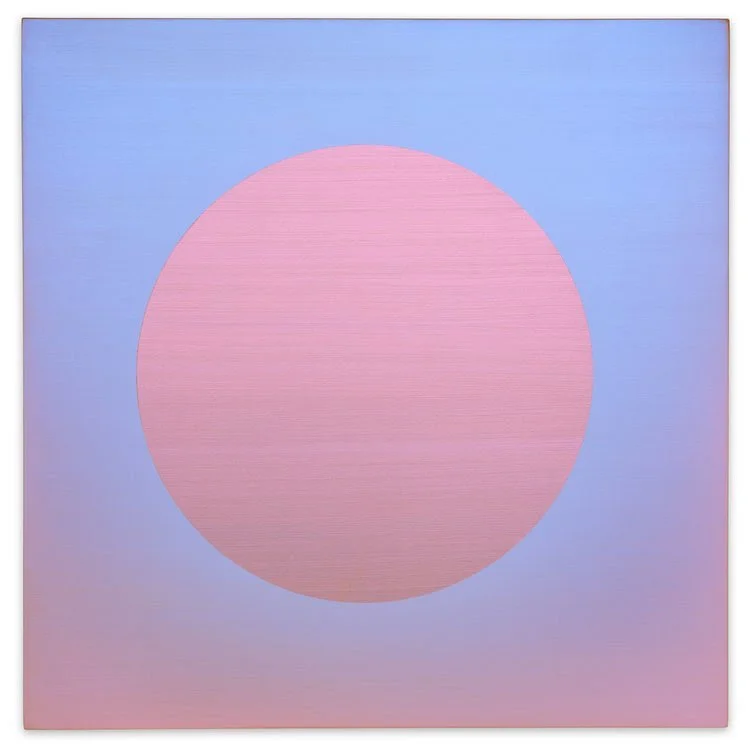
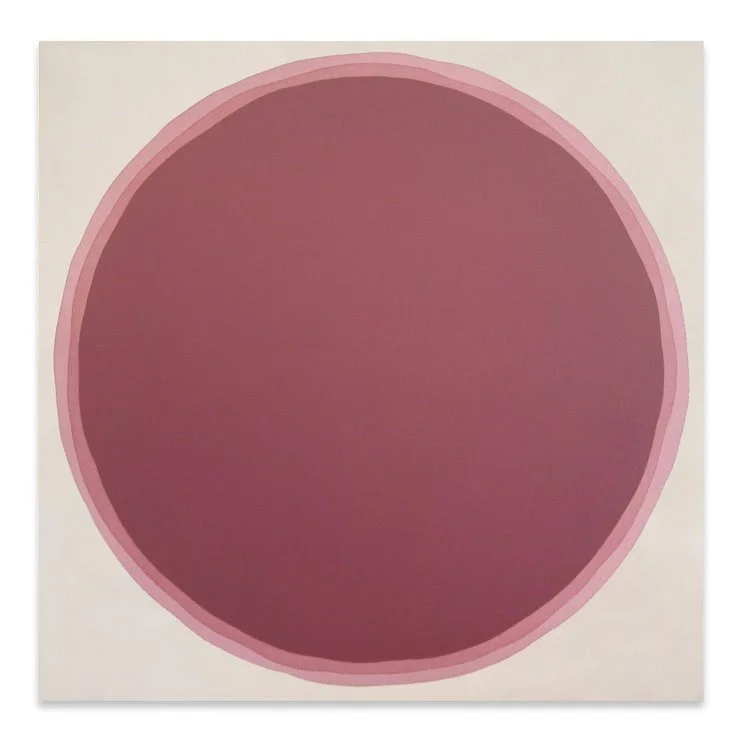
Dawn Arrowsmith, Plum Sienna, acrylic on canvas, 56" x 56"

Dawn Arrowsmith produces meditative, color-driven works informed by Buddhist philosophy and extensive travel. Her paintings appear minimal at first glance, gradually revealing optical shimmer and depth through prolonged viewing.

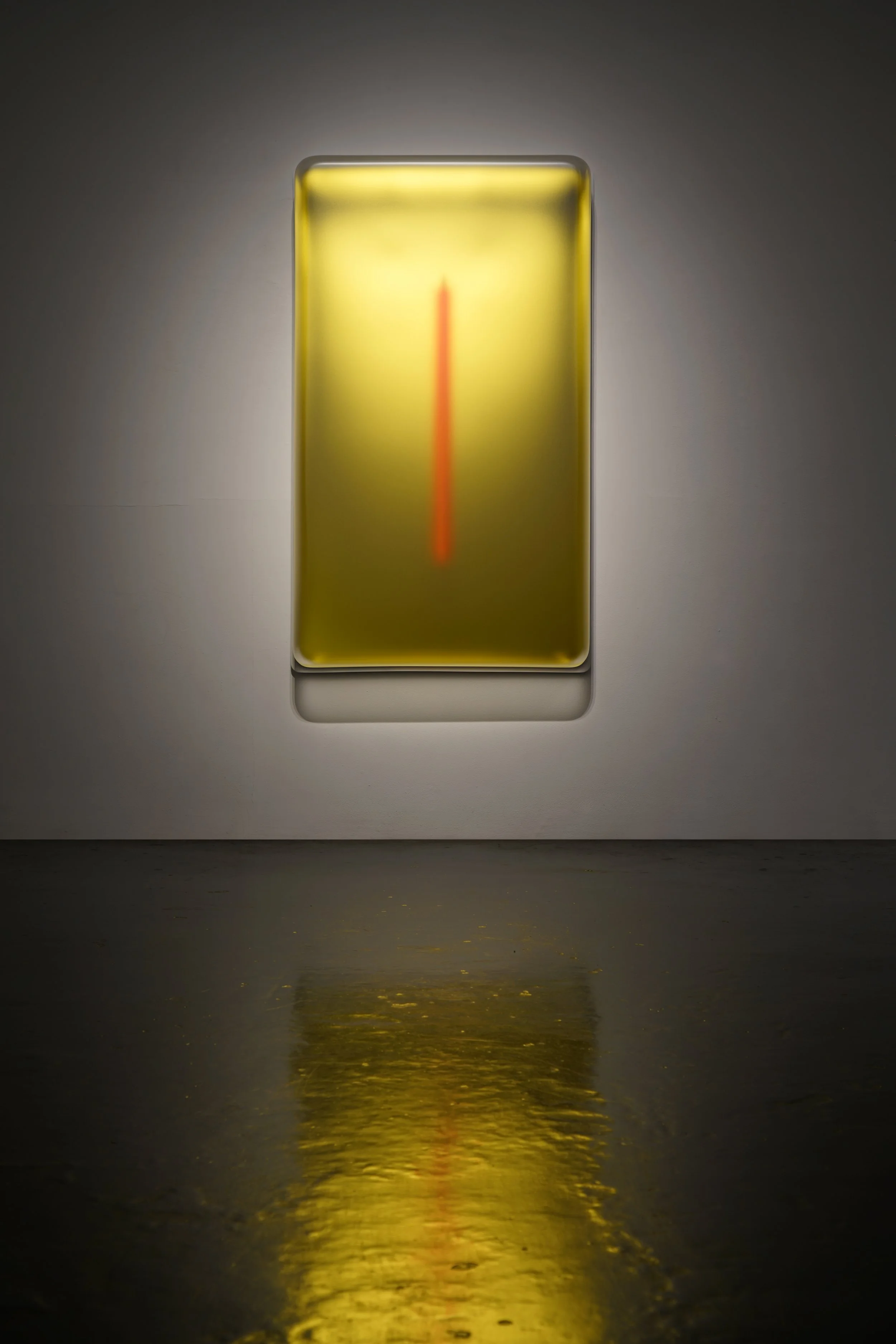
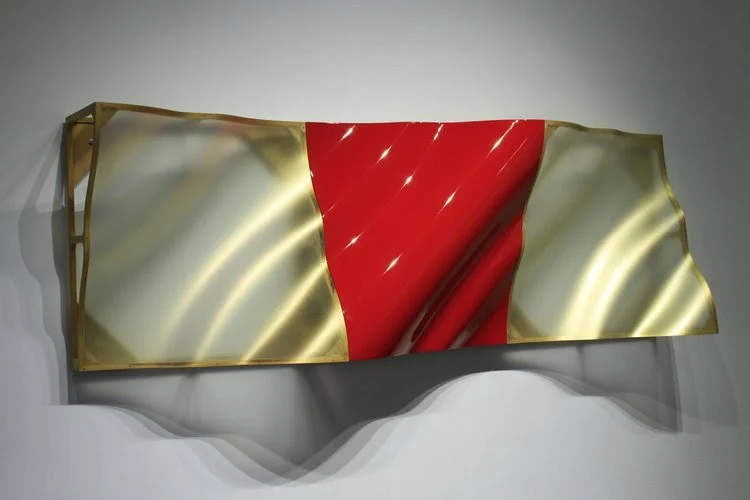
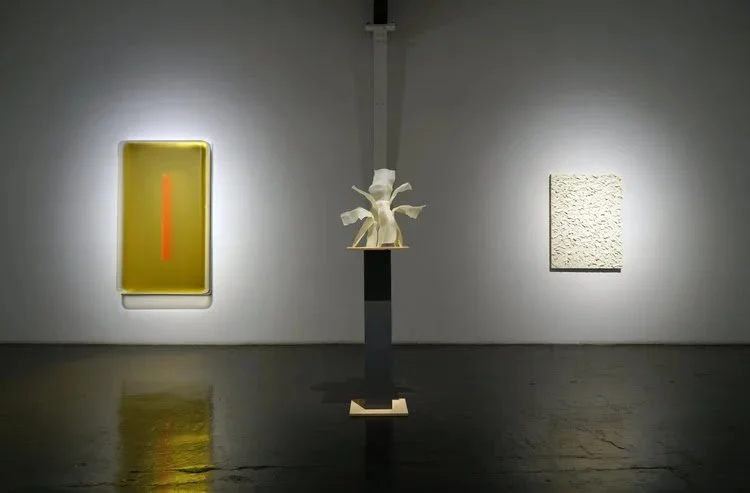
Casper Brindle, LIGHT GLYPH (YELLOW), 2026, VACUUMED FORMED PIGMENTED ACRYLIC

Casper Brindle creates paintings and sculptures that engage light through reflective, industrial materials including resin and automotive paint. His work shifts with the viewer’s movement, emphasizing perception and atmospheric depth.

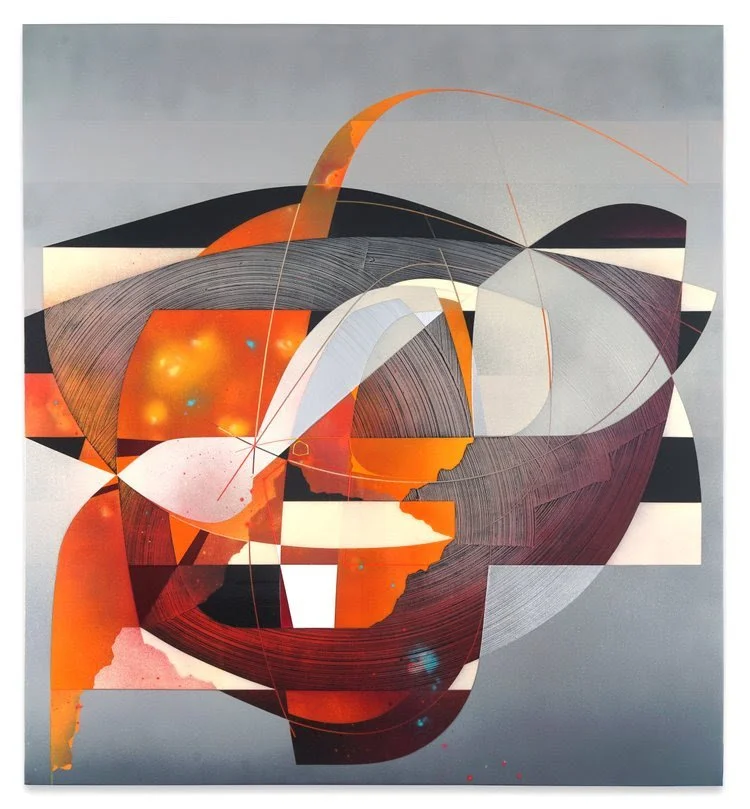
Alex Couwenberg,  Stranded (I’m), 2025, Acrylic & spray on canvas, 72” x 66”

Alex Couwenberg is a Southern California–based painter whose work draws from Los Angeles modernism and mid-century design. His sleek, glossy paintings are influenced by Hard-edge abstraction and Finish Fetish aesthetics.

Shingo Francis, Mystery to Explore, 2023, Oil on canvas, 24" x 24"

Shingo Francis creates paintings that shimmer and shift through the use of interference pigments that refract light. Influenced by Southern California’s Light and Space movement and his immersion in LA’s art scene, Francis’s works change with viewer position and lighting conditions.

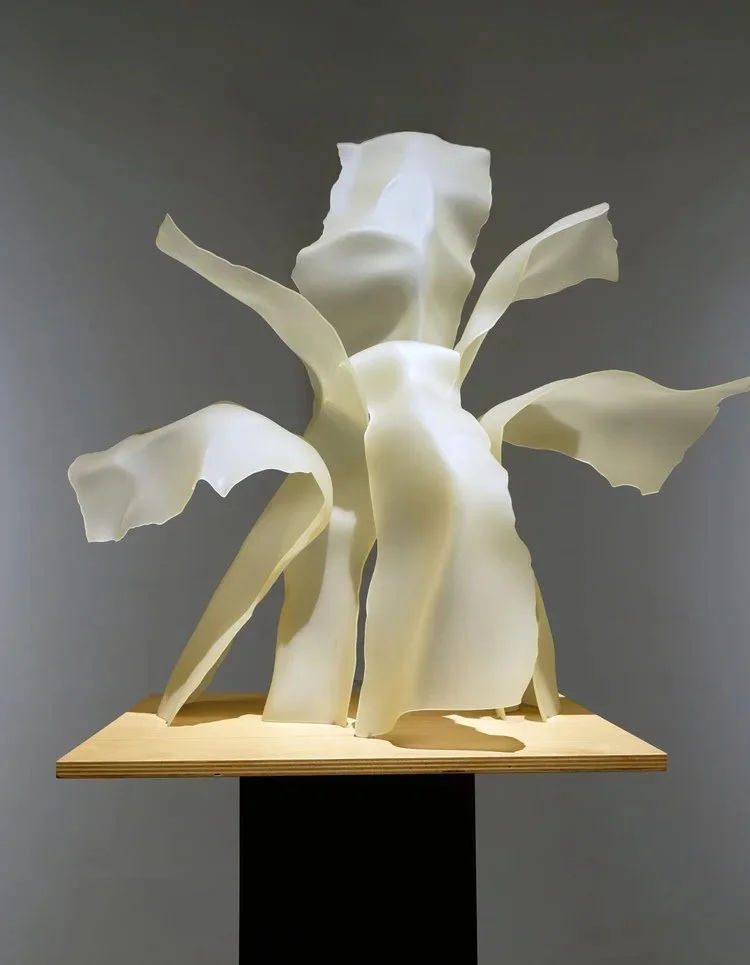
Frank Gehry, Memory of Sophie Calle’s Flower, 2012, Cast urethane with wood pedestal,
24” x 23” x 18”

Frank Gehry (1929–2025) Known for his de-constructivist approach and creative use of materials, Gehry’s buildings share an artist’s sensibility, where surface texture and dynamic form activate his structures. The undulating, curvilinear forms of his architecture are often echoed in the sculptures and drawings he created throughout his long career.

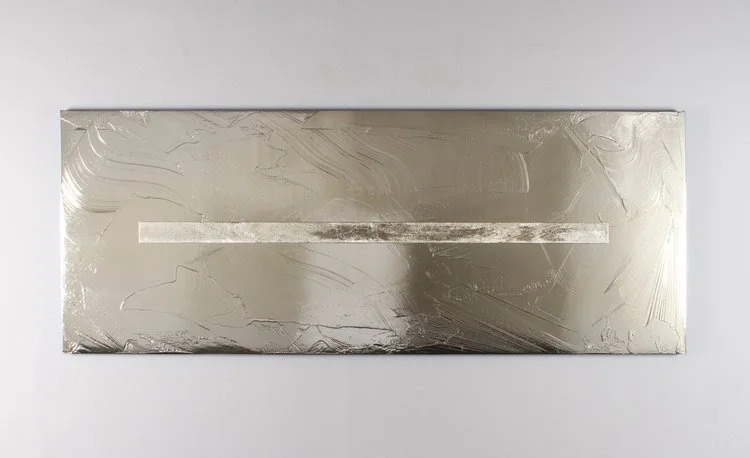
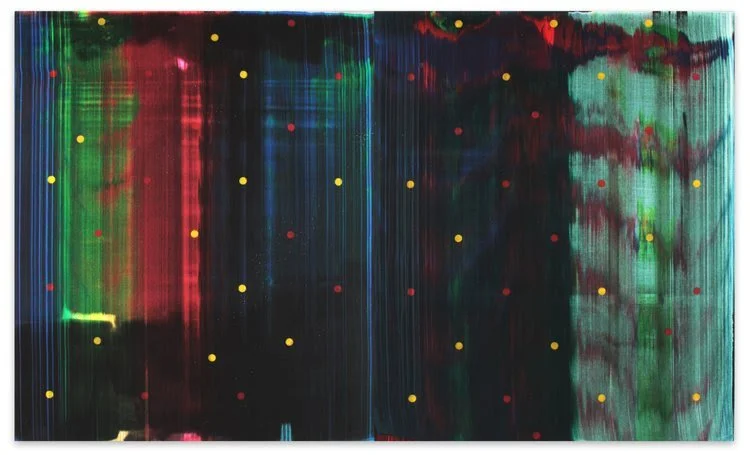
Jimi Gleason, Untitled, 2018, Silver nitrate & acrylic on canvas, 48” x 126”

Jimi Gleason explores the reflective and perceptual properties of light, using materials such as silver nitrate and pearlescent paint. His mirror-like surfaces shift with the viewer and environment, creating interactive, meditative experiences.

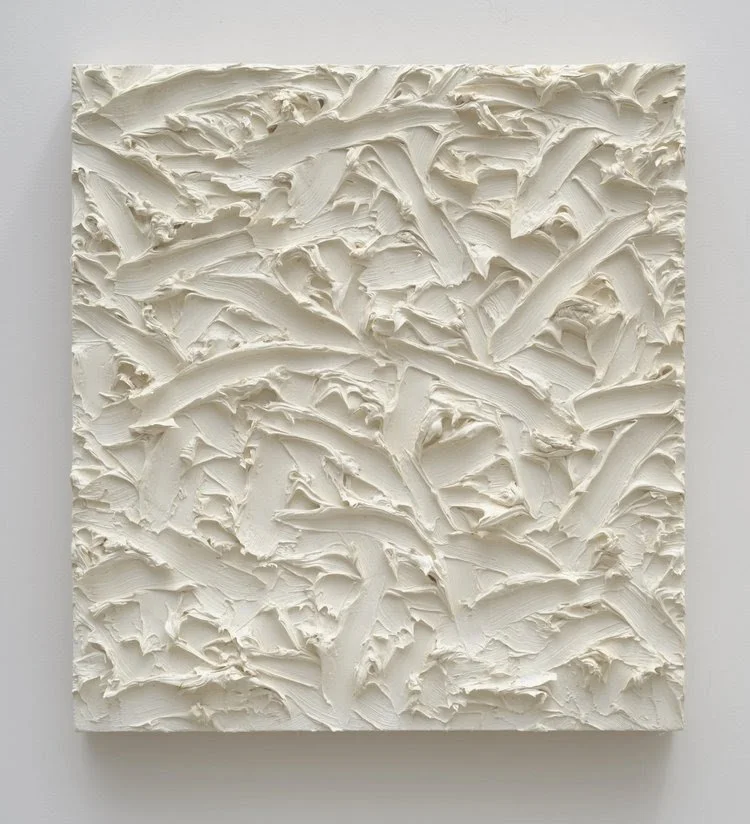
James Hayward, Abstract #247, 2023, Oil on canvas, 25” x 23”

James Hayward paints monochromes that celebrate the nuances of color and sensuality of texture. The surfaces are lavish cake icings of paint, almost daring the viewer to touch, lick, engage. Deft strokes of the artist’s hand remain as deep fissures in the surface, further exciting the senses to embrace their physicality.

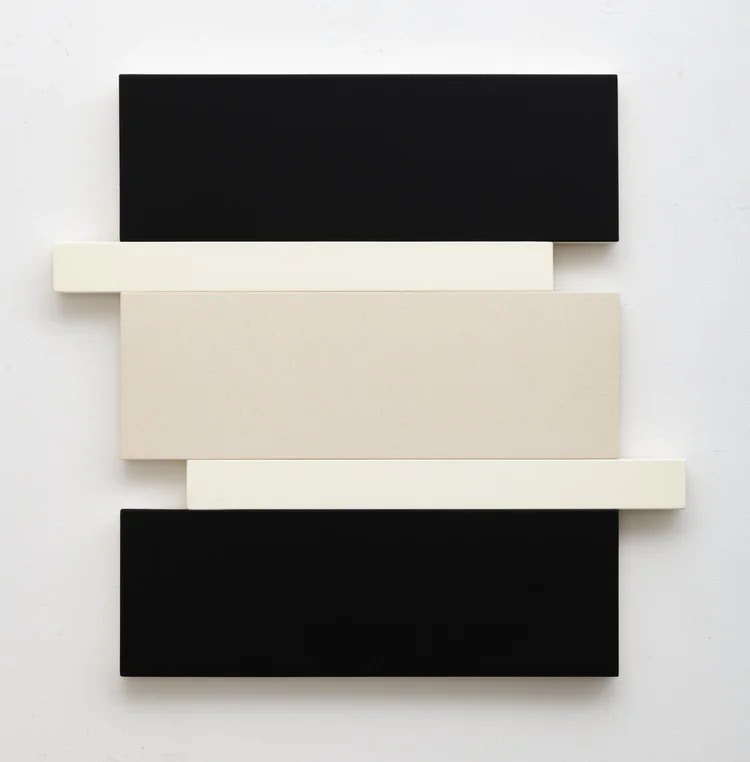
Scot Heywood, Stack - Black, White, Canvas, 2016, Acrylic on canvas, 70” x 74”

Scot Heywood’s works are indebted to the origins of geometric abstraction. Ranging in scale from intimate to encompassing, his paintings consist of multiple, colored canvases, connected in staggered, patchwork patterns, intentionally misaligned to create delightfully disruptive, staccato visual rhythms.

Eric Johnson, Altamira (Triptych), 1992, Composite, wood, & enamel, 40" x 120" x 18"

Eric Johnson creates resin-based sculptures that merge color, form, and structure, drawing from Southern California’s surf, automotive, and aerospace cultures. His works balance polished surfaces with exposed internal architectures, revealing both depth and construction.

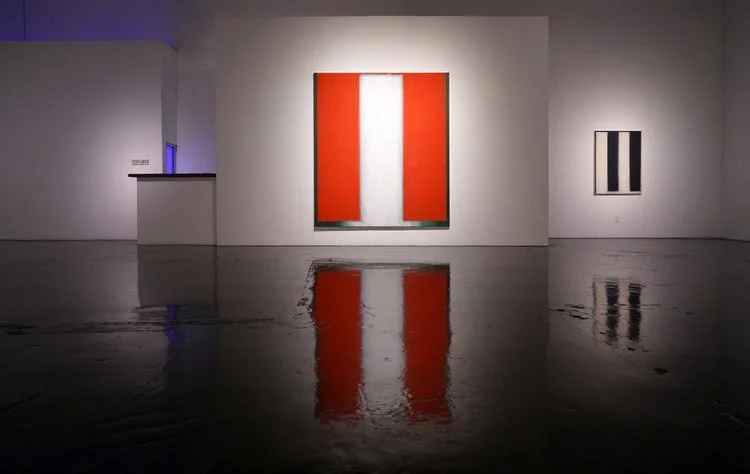
Peter Lodato, Vermilion Green & White, 2023, oil on canvas, 96" x 84"

Peter Lodato (1946–2025) emerged from the Light and Space movement, initially creating immersive light installations before translating perceptual effects into painting. His geometric compositions subtly dissolve through layered brushwork and color vibration, challenging visual certainty.

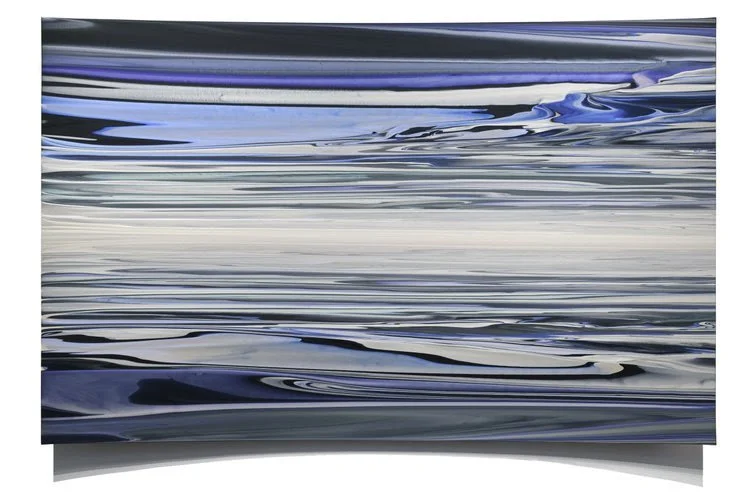
Andy Moses, Geomorphology 1608, 2023, Acrylic on canvas over concave wood panel,
57” x 90” x 5.5”

Andy Moses is known for his intensive exploration of paint’s alchemical properties. Through complex pouring and mixing processes, his luminous abstractions evoke natural forces rather than representational imagery.

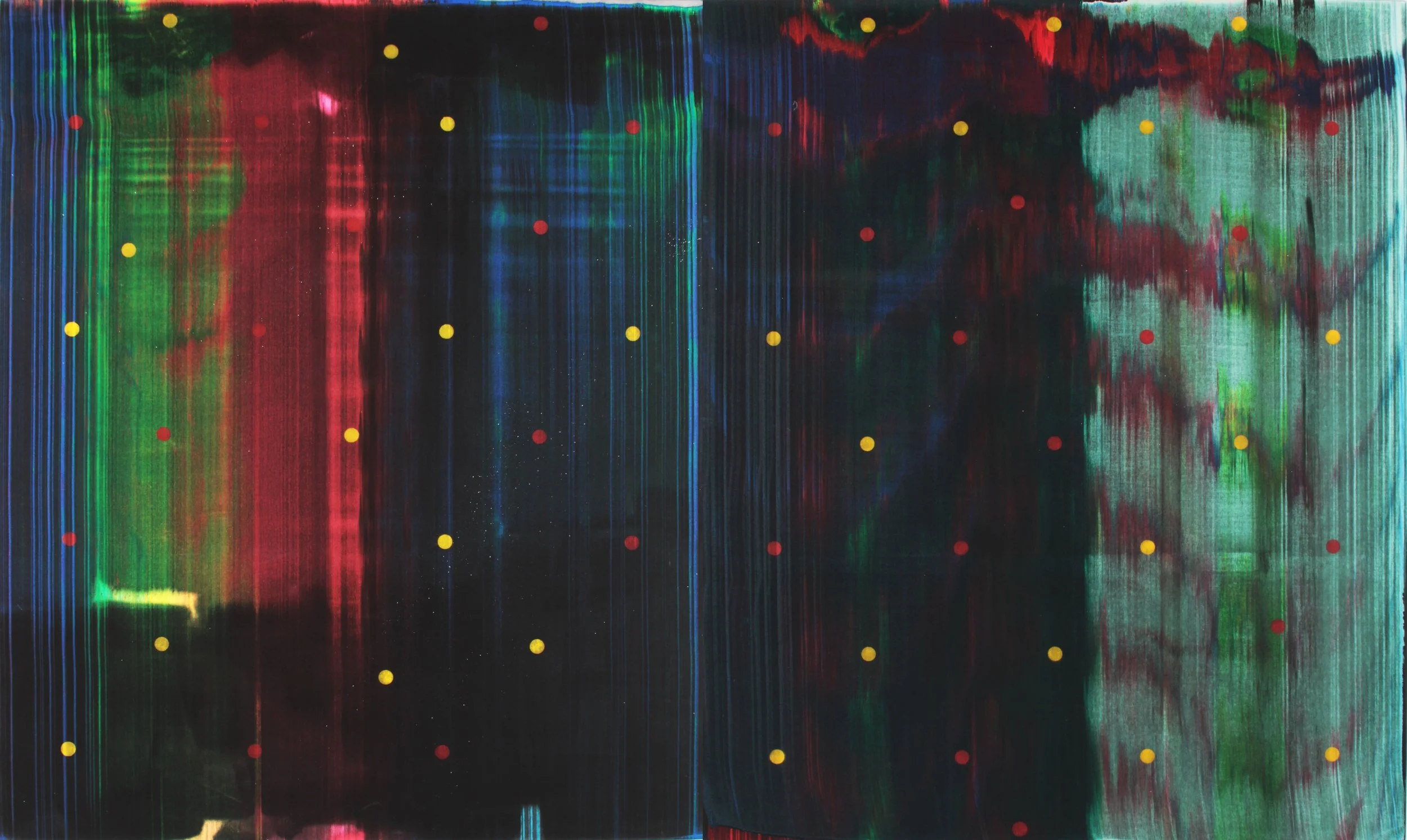
Ed Moses, Sato, 2008, acrylic on canvas, 72” x 120”

Ed Moses (1926–2018) was a pivotal figure in postwar Los Angeles abstraction and a core member of the Ferus Gallery circle. Known for his experimental, process-driven approach, Moses continuously redefined painting over a career spanning six decades.

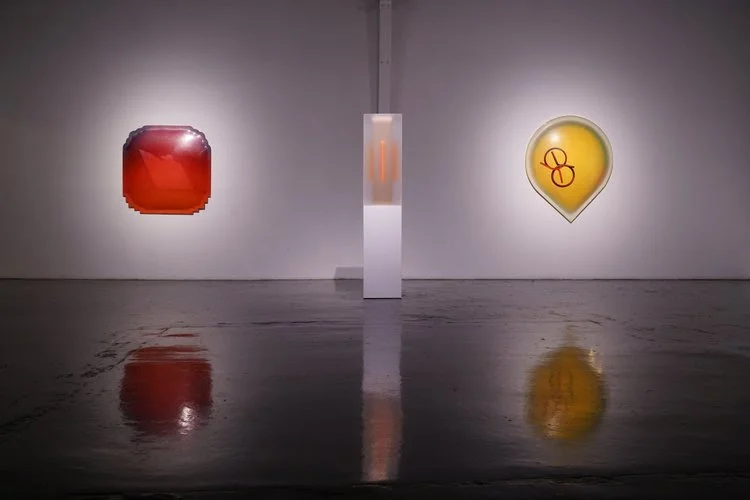
Left: Roland Reiss, Mirage, 1968, Fiberglass & resin, 46" x 46" x 6
Right: Roland Reiss, Conundrum, 1968, Acrylic, fiberglass, resin, & gelatin coat, 67" x 46.5" x 6"

Roland Reiss (1929-2020) played a significant role in the evolution of postwar West Coast abstraction. Moving from Abstract Expressionism through resin experimentation and conceptual inquiry, Reiss has consistently explored painting as an energetic, interactive field.

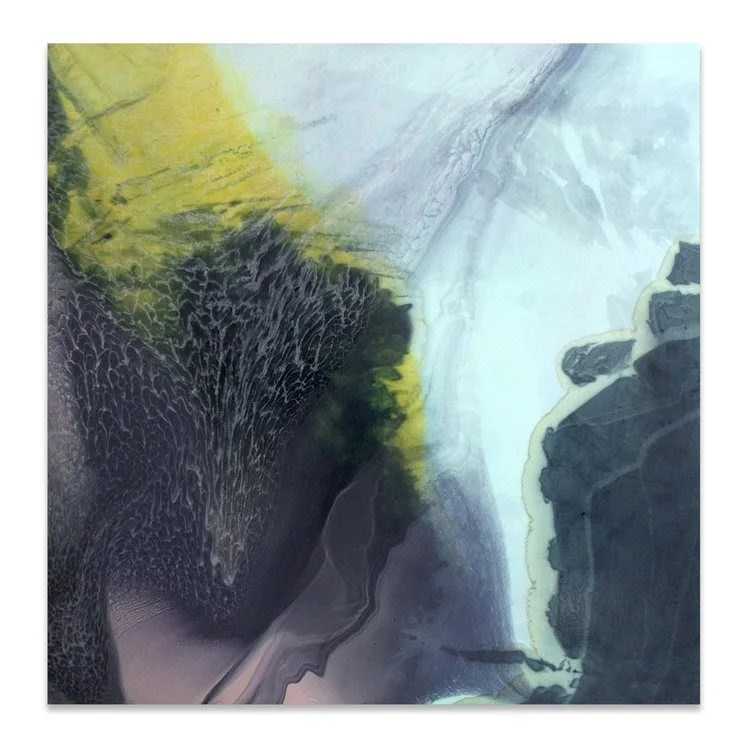
Jennifer Wolf, Dye Painting #2, 2021, Natural dyes and mineral pigments on silk with canvas on wood panel, 48” x 48”

Jennifer Wolf uses natural dyes and hand-ground pigments sourced from global expeditions to create subtly shimmering, immersive paintings. Her work explores the elemental qualities of color and surface through fluid, layered compositions that evoke natural environments.

Craft In America on PBS - Inspiration Episode - Mark Steven Greenfield

Mark Steven Greenfield talks about Simon Rodia and the Watts Towers in the Craft In America Inspiration episode on PBS. Also, please find the attached bonus video where Craft in America looks at the production of Mark’s piece Califia. Califia can be currently viewed at the gallery.

Its television series Craft in America includes more than 20 hour-long episodes. It is shown on PBS, and is a winner of the Peabody Award. In 2020, Craft in America was awarded the inaugural Decorative Arts Trust Prize for Excellence and Innovation, in connection with its plan to create a video dictionary of decorative arts tools, techniques, and materials.

Mark Steven Greenfield is a native Angelino, and son of a Tuskegee Airman, which led to spending the first part of his life abroad, living on military bases from Taiwan to Germany, until returning to LA at the age of ten. In high school Greenfield studied with revered Los Angeles artist, John T Riddle. Riddle quickly noted Greenfield’s talent, but saw that he was vulnerable to the influences and dangers confronting black youth at the time. Riddle remarked, "You could be a pretty good artist....if you live that long.” This got Greenfield’s attention and set him on the path that would define the course of his life. 

Greenfield went on to study with Charles White, at Otis Art Institute, and received his Bachelor’s degree in Art Education in 1973 from California State University, Long Beach and a Masters of Fine Arts degree in painting and drawing from California State University Los Angeles in 1987. Greenfield’s work has been exhibited extensively throughout the United States most notably with a comprehensive survey exhibition at the California African American Museum in Los Angeles in 2014, and in 2002 at the Museum of Contemporary Art of Georgia. Internationally, he has exhibited at the Chiang Mai Art Museum in Thailand; at Art 1307 in Naples, Italy; the Blue Roof Museum in Chengdu, China; 1333 Arts, Tokyo, Japan; and the Gang Dong Art Center in Seoul, South Korea. 

Mark Steven Greenfield, Califia, 2022, gold leaf and acrylic on wood panel, 30" x 56”

MARK STEVEN GREENFIELD

Greenfield is a recipient of the L.A. Artcore Crystal Award (2006) Los Angeles Artist Laboratory Fellowship Grant (2011), the City of Los Angeles Individual Artist Fellowship (COLA 2012), The California Community Foundation Artist Fellowship (2012), the Instituto Sacatar Artist Residency Fellowship in Salvador, Brazil (2013) and the McColl Center for Art + Innovation Residency in Charlotte, North Carolina (2016). He was a visiting professor at the California Institute of the Arts in 2013 and California State University Los Angeles in 2016. 

From 1993-2011, Greenfield worked for the Los Angeles Department of Cultural Affairs as director of the Watts Towers Arts Center, and later as director of the Los Angeles Municipal Art Gallery, Barnsdall Park. He has served on the boards of the Downtown Artists Development Association, the Armory Center for the Arts, the Black Creative Professionals Association, the Watts Village Theatre Company and was past president of the Los Angeles Art Association/Gallery 825. He currently teaches drawing and design at Los Angeles City College, and serves on the board of Side Street Projects.