Guillermo Bert's Upcoming Solo Show at the Museum of Latin American Ar

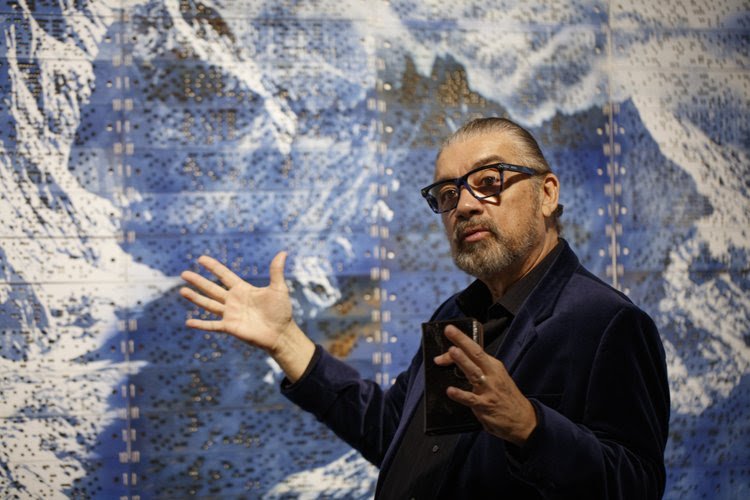
Congratulations to Guillermo Bert on his upcoming solo show, Techno-Empathy, opening at the Museum of Latin American Art on March 29.

This exhibition shows the Chilean-born artist Guillermo Bert bringing the two together in novel and powerful ways. He uses three principal tools, all of them uncommon in most art production: QR codes, 3-D imaging, and laser engraving. In the Encoded Textiles series, weavings include QR codes that literally embed the story of the weaver into the work so that anyone with a smartphone can see and hear them. Through 3-D imaging, the artist creates life-size images of workers whom he has met, allowing us also to meet them face to face from a unique perspective. Media images today often show migrants and refugees, but Bert uses laser engraving to transfer them onto unusual surfaces, such as wood panels that mimic the look of some of the earliest “high technology:” the rectangular panels that encoded instructions for the first mechanical looms in the 19th century.

Guillermo Bert At William Turner Gallery

Charles Arnoldi in The Hollywood Reporter

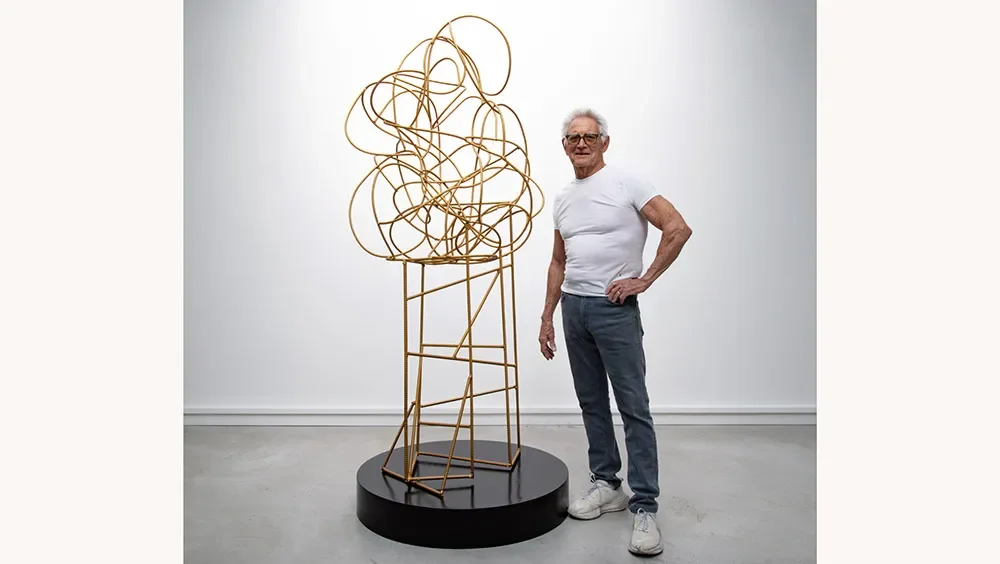
Congratulations to Charles Arnoldi for his recent feature in Michael Slenske's article "Guns and Glitter: How LA's Top Artists Reimagine the Oscar" for The Hollywood Reporter!

Charles Arnoldi

Slenske writes: For this portfolio, [Arnoldi] did something he almost never does: “I don’t really think about the Oscars, and I don’t make figurative work,” he says. “But there’s a human quality to this particular sculpture because it has legs and these morphing human forms. I guess you could say that’s a commentary on the chaos that accompanies the Oscars race every year.”

Read the full article at the link below!

SURFACE TENSION: Focus Los Angeles - Opening Saturday 5-8PM

Surface Tension: Focus Los Angeles Opening February 28 5-8PM

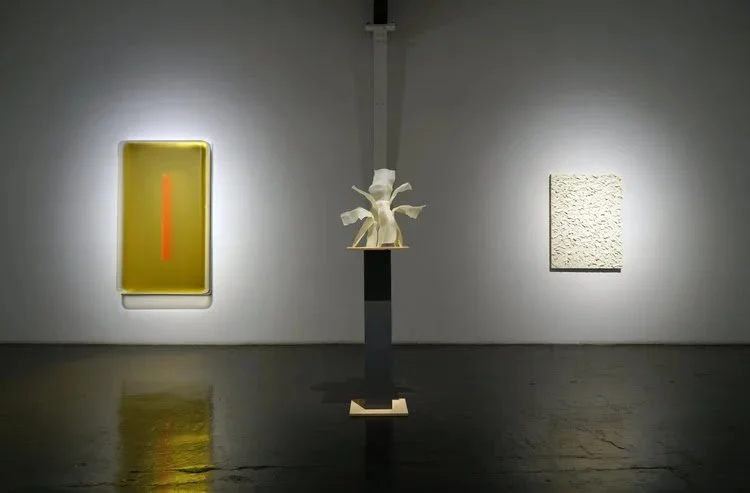
Santa Monica, CA  - William Turner Gallery is pleased to present Surface Tension: Focus Los Angeles, a major group exhibition of West Coast artists, opening February 28, 5-8 PM, and on view through April 11, 2026.

Surface Tension: Focus Los Angeles explores surface as an active site of meaning, sensation, and perception. The exhibition foregrounds how contemporary practices use texture, layering, and materiality to shape visual and sensory experience. Bridging painting, sculpture, and works at their intersection, the featured artists employ materials ranging from pearlescent and pigmented acrylics to urethane, resin, industrial finishes, and etched line-work.

Together, the works reveal surface as a dynamic interface that captures light, depth, and movement while inviting sustained, close looking. Through extended material experimentation and technical refinement, each artist demonstrates a deep attunement to their chosen medium, using surface to generate tension between control and intuition, precision and discovery, all aimed at igniting a spark of heightened perception.

Featured artists: Dawn Arrowsmith, Casper Brindle, Alex Couwenberg, Shingo Francis, Frank Gehry, Jimi Gleason, James Hayward, Eric Johnson, Peter Lodato, Andy Moses, Ed Moses, Roland Reiss, Scot Heywood and Jennifer Wolf.

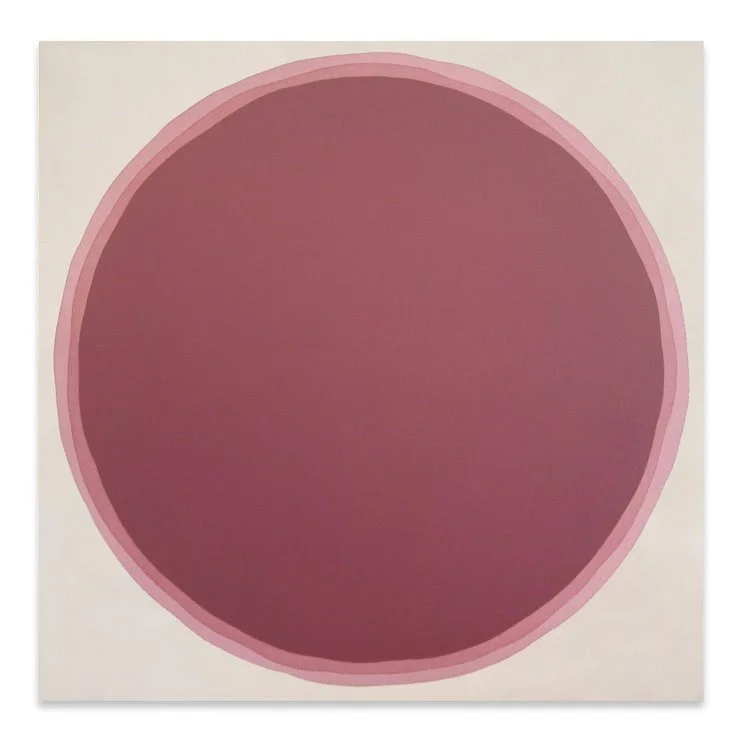
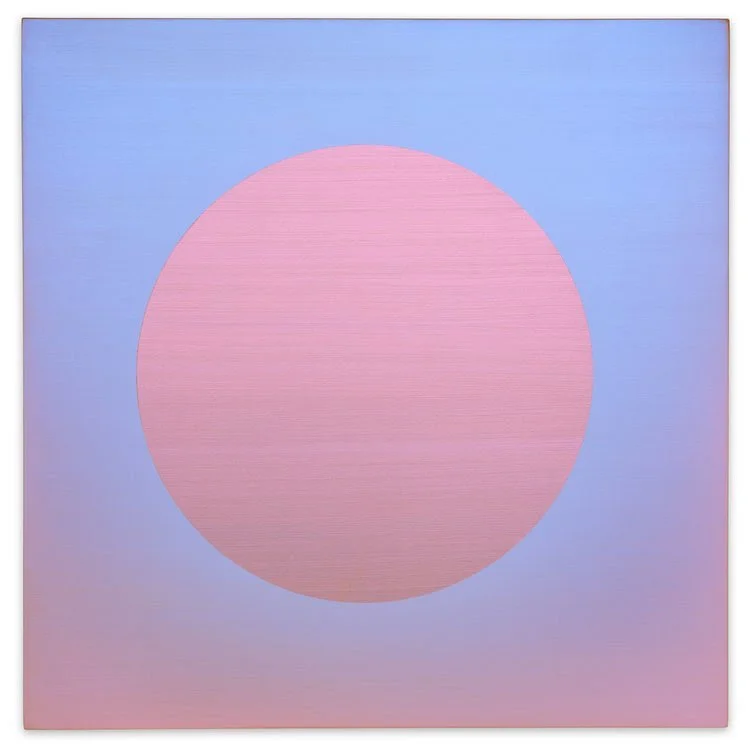
Dawn Arrowsmith, Plum Sienna, acrylic on canvas, 56" x 56"

Dawn Arrowsmith produces meditative, color-driven works informed by Buddhist philosophy and extensive travel. Her paintings appear minimal at first glance, gradually revealing optical shimmer and depth through prolonged viewing.

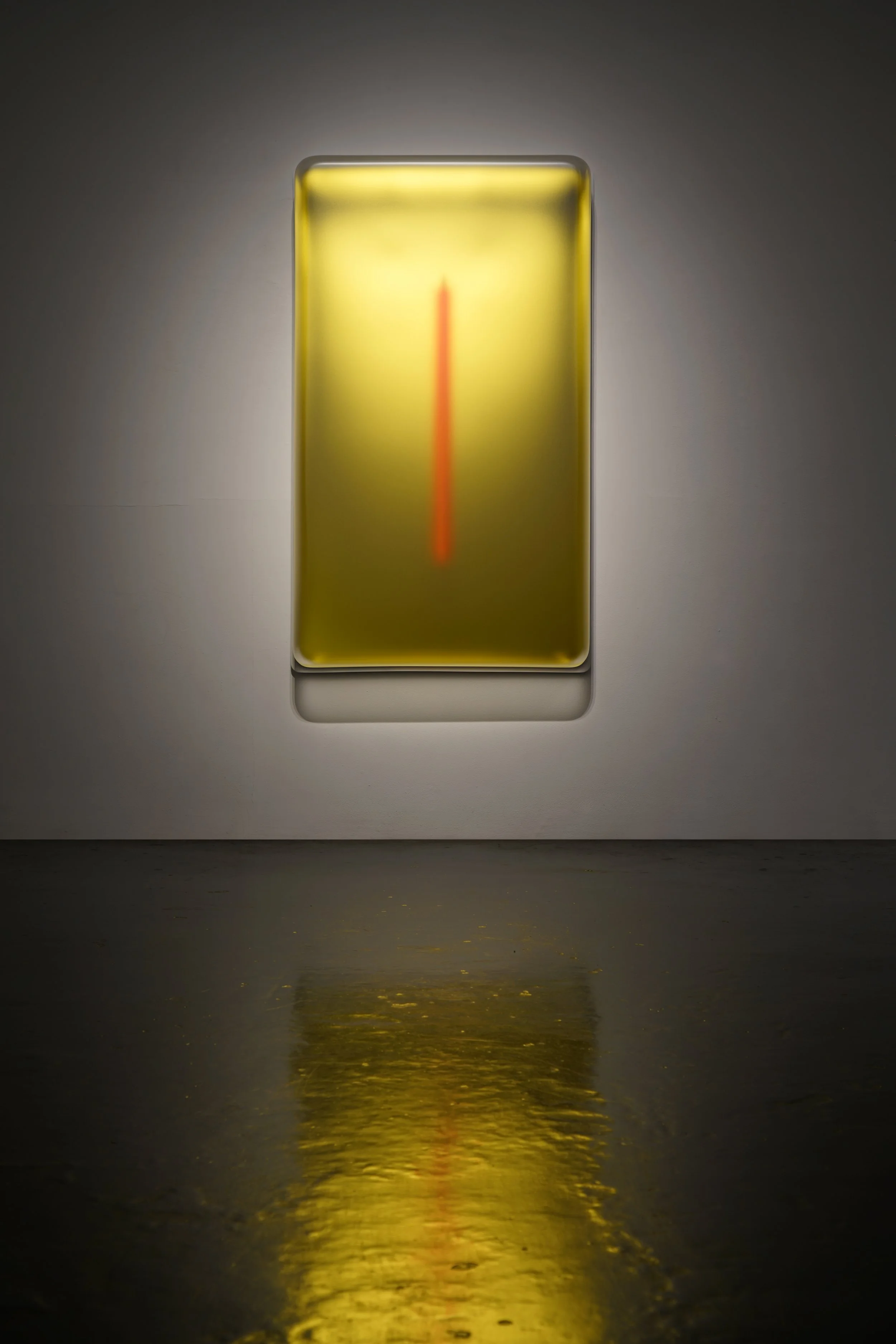
Casper Brindle, LIGHT GLYPH (YELLOW), 2026, VACUUMED FORMED PIGMENTED ACRYLIC

Casper Brindle creates paintings and sculptures that engage light through reflective, industrial materials including resin and automotive paint. His work shifts with the viewer’s movement, emphasizing perception and atmospheric depth.

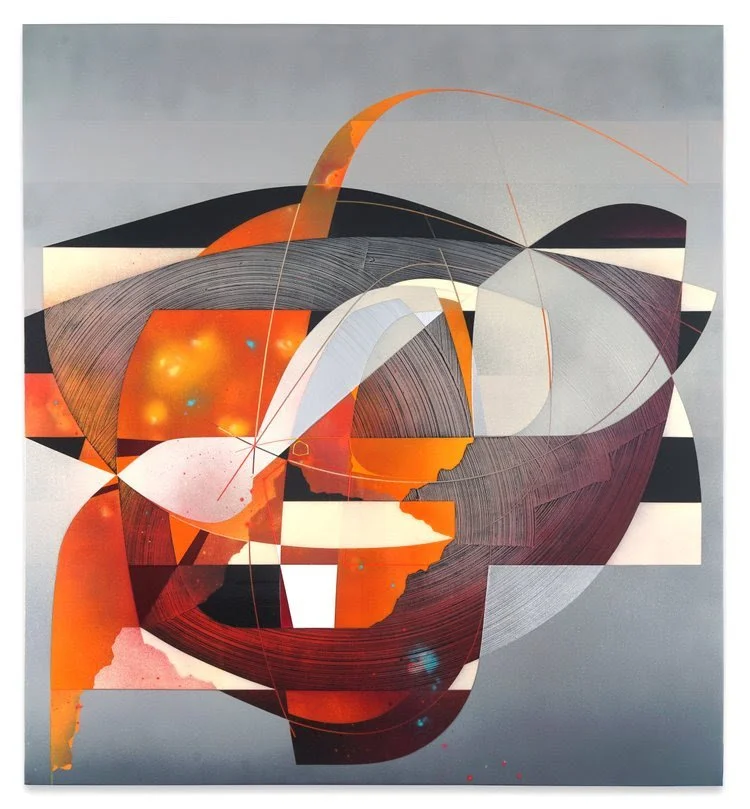
Alex Couwenberg,  Stranded (I’m), 2025, Acrylic & spray on canvas, 72” x 66”

Alex Couwenberg is a Southern California–based painter whose work draws from Los Angeles modernism and mid-century design. His sleek, glossy paintings are influenced by Hard-edge abstraction and Finish Fetish aesthetics.

Shingo Francis, Mystery to Explore, 2023, Oil on canvas, 24" x 24"

Shingo Francis creates paintings that shimmer and shift through the use of interference pigments that refract light. Influenced by Southern California’s Light and Space movement and his immersion in LA’s art scene, Francis’s works change with viewer position and lighting conditions.

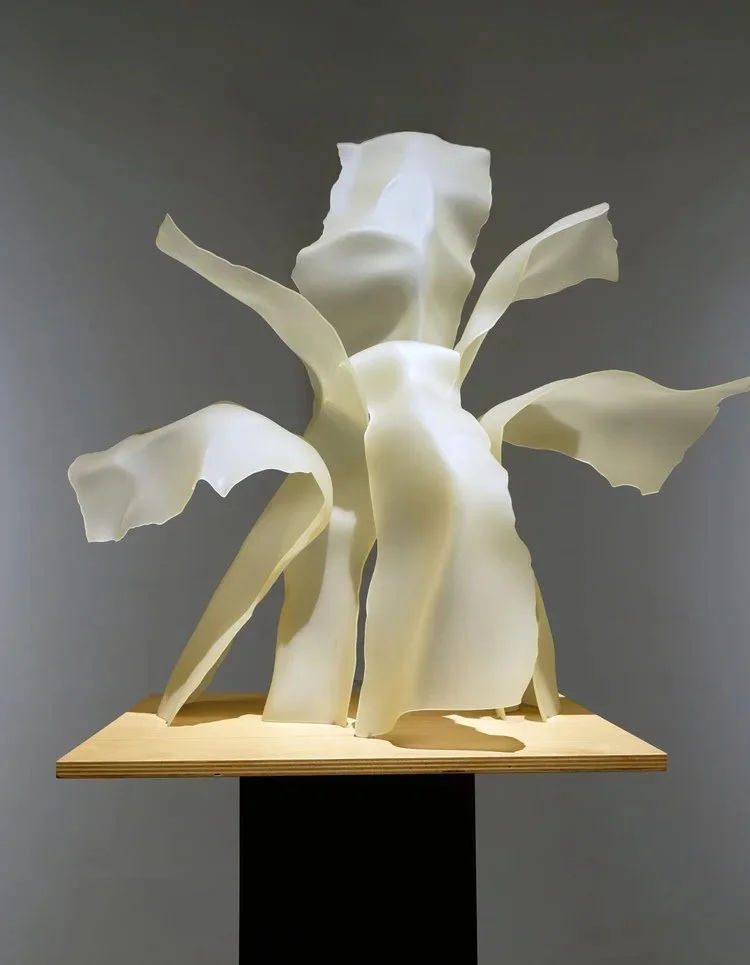
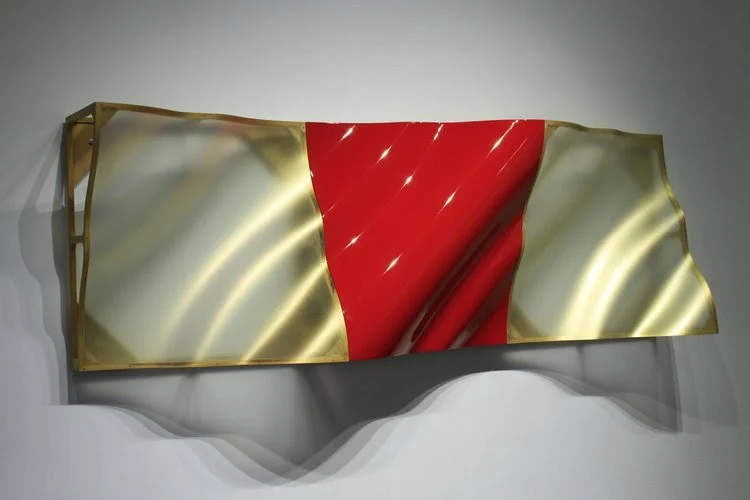
Frank Gehry, Memory of Sophie Calle’s Flower, 2012, Cast urethane with wood pedestal,
24” x 23” x 18”

Frank Gehry (1929–2025) Known for his de-constructivist approach and creative use of materials, Gehry’s buildings share an artist’s sensibility, where surface texture and dynamic form activate his structures. The undulating, curvilinear forms of his architecture are often echoed in the sculptures and drawings he created throughout his long career.

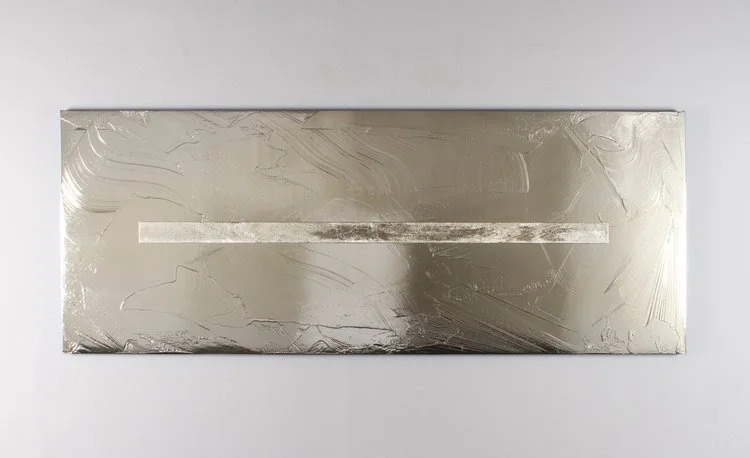
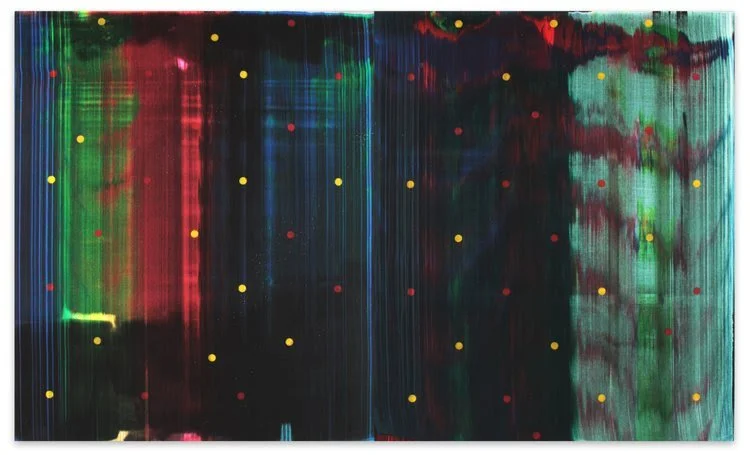
Jimi Gleason, Untitled, 2018, Silver nitrate & acrylic on canvas, 48” x 126”

Jimi Gleason explores the reflective and perceptual properties of light, using materials such as silver nitrate and pearlescent paint. His mirror-like surfaces shift with the viewer and environment, creating interactive, meditative experiences.

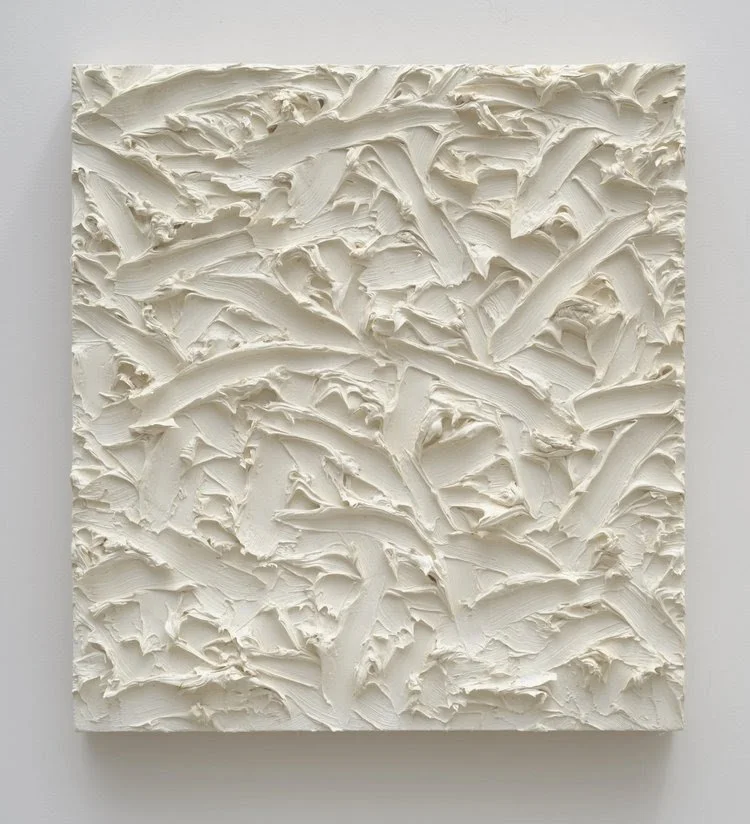
James Hayward, Abstract #247, 2023, Oil on canvas, 25” x 23”

James Hayward paints monochromes that celebrate the nuances of color and sensuality of texture. The surfaces are lavish cake icings of paint, almost daring the viewer to touch, lick, engage. Deft strokes of the artist’s hand remain as deep fissures in the surface, further exciting the senses to embrace their physicality.

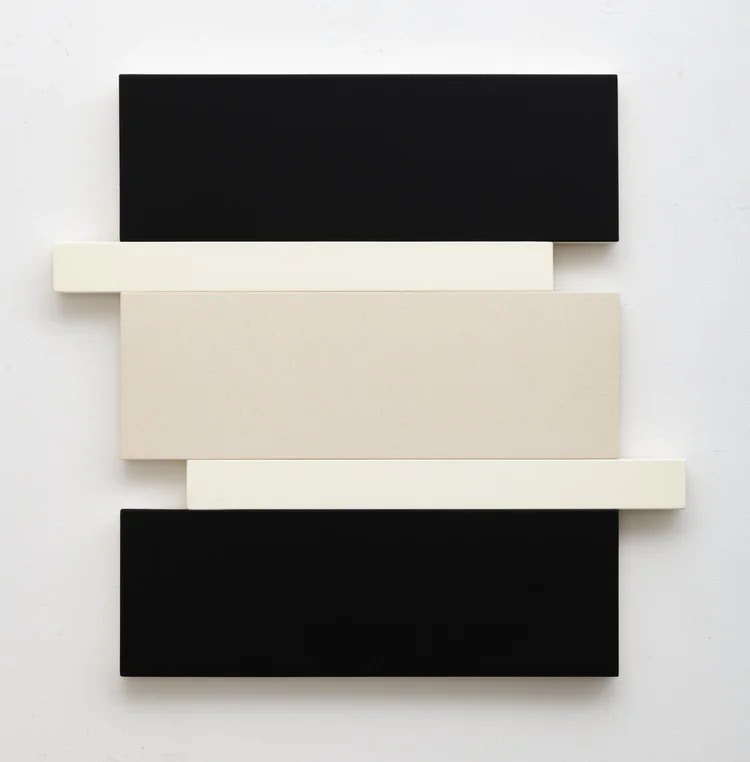
Scot Heywood, Stack - Black, White, Canvas, 2016, Acrylic on canvas, 70” x 74”

Scot Heywood’s works are indebted to the origins of geometric abstraction. Ranging in scale from intimate to encompassing, his paintings consist of multiple, colored canvases, connected in staggered, patchwork patterns, intentionally misaligned to create delightfully disruptive, staccato visual rhythms.

Eric Johnson, Altamira (Triptych), 1992, Composite, wood, & enamel, 40" x 120" x 18"

Eric Johnson creates resin-based sculptures that merge color, form, and structure, drawing from Southern California’s surf, automotive, and aerospace cultures. His works balance polished surfaces with exposed internal architectures, revealing both depth and construction.

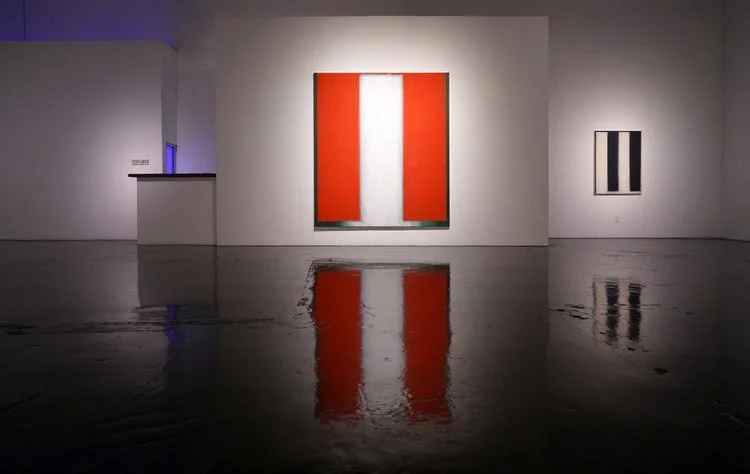
Peter Lodato, Vermilion Green & White, 2023, oil on canvas, 96" x 84"

Peter Lodato (1946–2025) emerged from the Light and Space movement, initially creating immersive light installations before translating perceptual effects into painting. His geometric compositions subtly dissolve through layered brushwork and color vibration, challenging visual certainty.

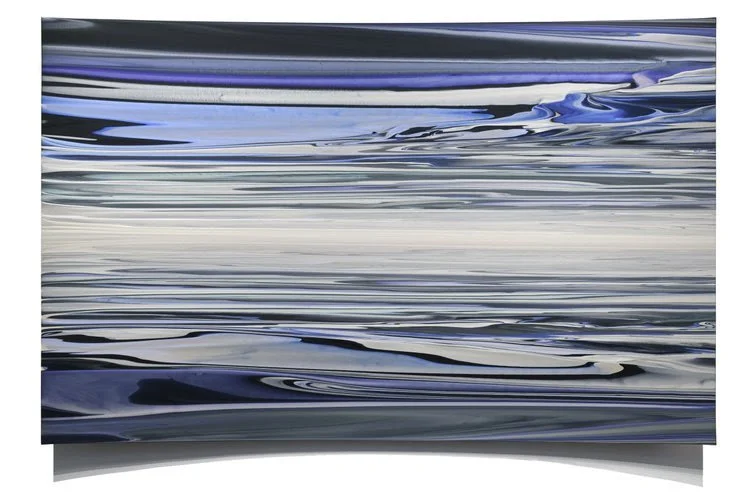
Andy Moses, Geomorphology 1608, 2023, Acrylic on canvas over concave wood panel,
57” x 90” x 5.5”

Andy Moses is known for his intensive exploration of paint’s alchemical properties. Through complex pouring and mixing processes, his luminous abstractions evoke natural forces rather than representational imagery.

Ed Moses, Sato, 2008, acrylic on canvas, 72” x 120”

Ed Moses (1926–2018) was a pivotal figure in postwar Los Angeles abstraction and a core member of the Ferus Gallery circle. Known for his experimental, process-driven approach, Moses continuously redefined painting over a career spanning six decades.

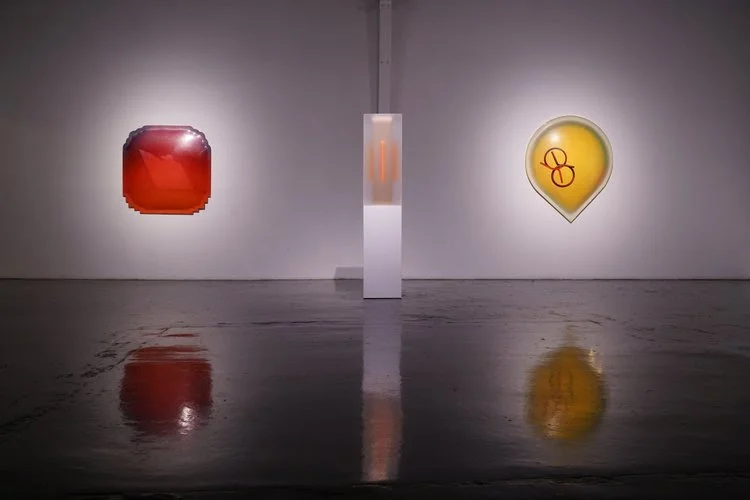
Left: Roland Reiss, Mirage, 1968, Fiberglass & resin, 46" x 46" x 6
Right: Roland Reiss, Conundrum, 1968, Acrylic, fiberglass, resin, & gelatin coat, 67" x 46.5" x 6"

Roland Reiss (1929-2020) played a significant role in the evolution of postwar West Coast abstraction. Moving from Abstract Expressionism through resin experimentation and conceptual inquiry, Reiss has consistently explored painting as an energetic, interactive field.

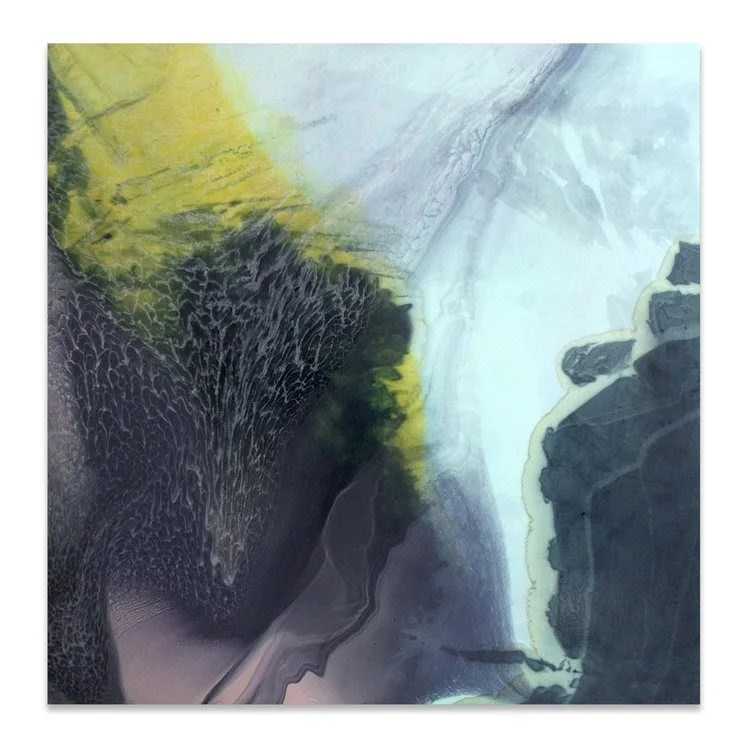
Jennifer Wolf, Dye Painting #2, 2021, Natural dyes and mineral pigments on silk with canvas on wood panel, 48” x 48”

Jennifer Wolf uses natural dyes and hand-ground pigments sourced from global expeditions to create subtly shimmering, immersive paintings. Her work explores the elemental qualities of color and surface through fluid, layered compositions that evoke natural environments.

HYPERMODALITY - Casper Brindle @ THE LUCKMAN - CAL STATE LA

Casper Brindle, Light Glyph, Light Glyph VF, 2022, pigmented acrylics, 44 x 74 x 12 in.

Curated by Mika Cho
On view September 29 through November 19, 2022
The Luckman Fine Arts Complex at Cal State LA

Artist Reception:
Saturday, October 8, 2022 at 5:00 pm


With great pleasure, I invite you to the exhibition “Hypermodality” which highlights the selected work of Casper Brindle. The exhibition opens on September 29, 2022, at the Luckman Gallery in the Luckman Fine Arts Complex at Cal State LA. Casper Brindle is well known and has long been admired for his aesthetical experiments on color, light, and form. The varied structural arrangements of his compositions, partly reminiscent of the Light and Space movement, transcend the circadian and engender metaphors that unfold various Interpretative and ontological values. The simplicity of Brindle’s work is impressive as it gives rise to mystery - a mystery that can only be called sublime.

Mika Cho, September 2022


“Brindle’s art turns our attention to its minimalist composition as much as despite its luminous, disembodied color and pristine, machine-tooled surfaces. He does not set our eyes afloat in unvariegated light, but thwarts such an optical free fall, deliberately compromising the “ganzfeld” – the surrounding light ambience – with strongly posited horizontal and/or vertical devices. These structural devices encourage our eyes to apprehend the visual field either as a recessional space or as a surface structure. Brindle does not set up an ongoing dialogue between vertical and horizontal works, or even between the verticals and the horizontals occurring in the same works; rather, he proposes the physical and metaphysical presence of each from the outset as contrasting discourses. This is not Light & Space; it is Light WITH Space.”

Peter Frank, September 2022

The Luckman Gallery | Public Viewing Hours
Wednesday through Saturday
11:00 am until 5:00 pm


The Luckman Fine Arts Complex at Cal State LA
5151 State University Dr, Los Angeles, CA 90032
(323) 343-6600
www.luckmanarts.org

ARTIST RECEPTION - SATURDAY, OCTOBER 8, 2022, 5 - 8 pm

SEPTEMBER 29 – NOVEMBER 19, 2022


PRESS: The Argonaut Reviews LIGHT | GLYPHS

Argonaut_4inch.jpg
Photograph courtesy Brent Broza Photography

Photograph courtesy Brent Broza Photography

Casper Brindle is convinced that he’s putting out some of his best work yet in his latest exhibition at William Turner Gallery in Santa Monica.

The artist, who began painting in the 1980s and is a disciple of the Light and Space art movement in Los Angeles, has woven a Southern California influence through all his work, whether the hot rod and surf culture found in his earlier work or the pure light in his latest exhibition.

“I think the light in LA is different than anywhere else in the world,” Brindle said. “This will be my best show yet. I’m really proud of this show.”
The show is called “Light | Glyphs” and will be on display through November 5. The series contains 25 pieces of which 15 will be shown at William Turner Gallery.

“Light is a huge part of my work in general and especially this body of work,” Brindle said. “I would say it is as important as the materials that I use, even more so. These works came to fruition just playing with light and seeing what happens with other materials. I started with light itself and manipulated the materials to do different things and bring different energies.”

Brindle, who was born in Toronto, moved to LA when he was 6 years old in the mid-1970s and he has lived there ever since. He was an apprentice to the Light and Space pioneer Eric Orr. He has exhibited on a regular basis at William Turner Gallery for more than 10 years and this is his 7th solo exhibition with the gallery.

A surfer, Brindle is constantly observing the play of light on water and how it expresses itself with color. Many of the works were done during the COVID lockdowns, something that Brindle said worked out to be a great thing for a lot of artists.

“Everything went on the backburner,” Brindle said. “You didn’t have to follow deadlines. You were kind of like, now it is time to really play with ideas and research and do the things that you can’t do when you have commitments and things like that.”

To create the works in this exhibit, Brindle used automotive paints, pigmented acrylic and metal leaf. The final works are 3 feet by 3 feet by 4 inches. He used translucent sculptural boxes which he air painted with diffused colors through the frosted surfaces.

The light in the colored background reflects in a quietly dramatic manner. In the center of each piece is a glyph, inspired by hieroglyphs that were ancient modes of communication, where symbols or marks were carved in relief to convey ideas.

Brindle’s glyph is a three-dimensional rectangle that intersects the center of the translucent box. The glyphs have been described as a beacon cutting through fog – quietly dramatic.
“I’m fascinated with hieroglyphs and how they used them to communicate,” Brindle said. “I use that as kind of a vehicle to do this newer work with glyphs. They go back awhile in the paintings.

There is just something that a spirit bigger than us is speaking to us. When I look at just a single glyph, it is speaking to that bigger power. I found that fascinating to use in the work.”

With Brindle’s use of gold and silver leaf to create the glyphs, he feels they really lend themselves to telling a story and he wanted to further the investigation into glyphs with these paintings.

Casper Brindle, Light-Glyph II, 2021, pigmented acrylic, 74” x 44” x 12”

Two different processes went into creating the works in this exhibit. With the glyphs, he did a lot of preparation, research and models. The decision-making process was very conscious as from the start he had an idea of where he wanted to go with them.
The paintings, on the other hand, had a more Zen approach. Brindle would find himself in a meditative state, a state of calmness where he let the work take over.

“It is a meditative state where all of a sudden at the end of the day, you’re like, ‘What just happened?’” Brindle said. “It’s that kind of thing when you’re driving and then all of a sudden, you’re at your destination and you don’t remember how you got there. That’s the same feeling I get when I make the works. The day starts and then it is 8 p.m. and I’ve got to go home.”

Brindle said he doesn’t typically have a preconceived idea of what he is going to do with the paintings. He lets them paint themselves.

“It’s a constant trance-like state of making right and wrong decisions along the way,” Brindle said. “I don’t say I’m going to do a blue painting. I just start and make a number of decisions along the way and just kind of paint these paintings.”

Throughout the years and with individual paintings, his choice of materials has always changed and shifted, evolving until he gets to where he is now.

“That’s part of the process,” Brindle said. “The best part about making art is the process. Things are changing all the time until you get to a place where you are like, now I have it. I know what this is about.”

The trance-like state is one that he shares with those that experience his work. Brindle said he’s had a lot of reactions to his art, but the most common one is a sense of lightness and calm — a sense of their bodies decompressing and entering a meditative state.

He stressed the importance of seeing his three-dimensional work in person. It’s the only way to experience its depth and the way the light shimmers and moves. The large paintings shift as a person walks by them, inviting viewers to pause, to explore perception.

This is Brindle’s first major show since the pandemic delayed an earlier showing at the William Turner Gallery in 2020. He invites patrons to come and lose themselves in his meditative works, to let art minister to their hungry souls.”