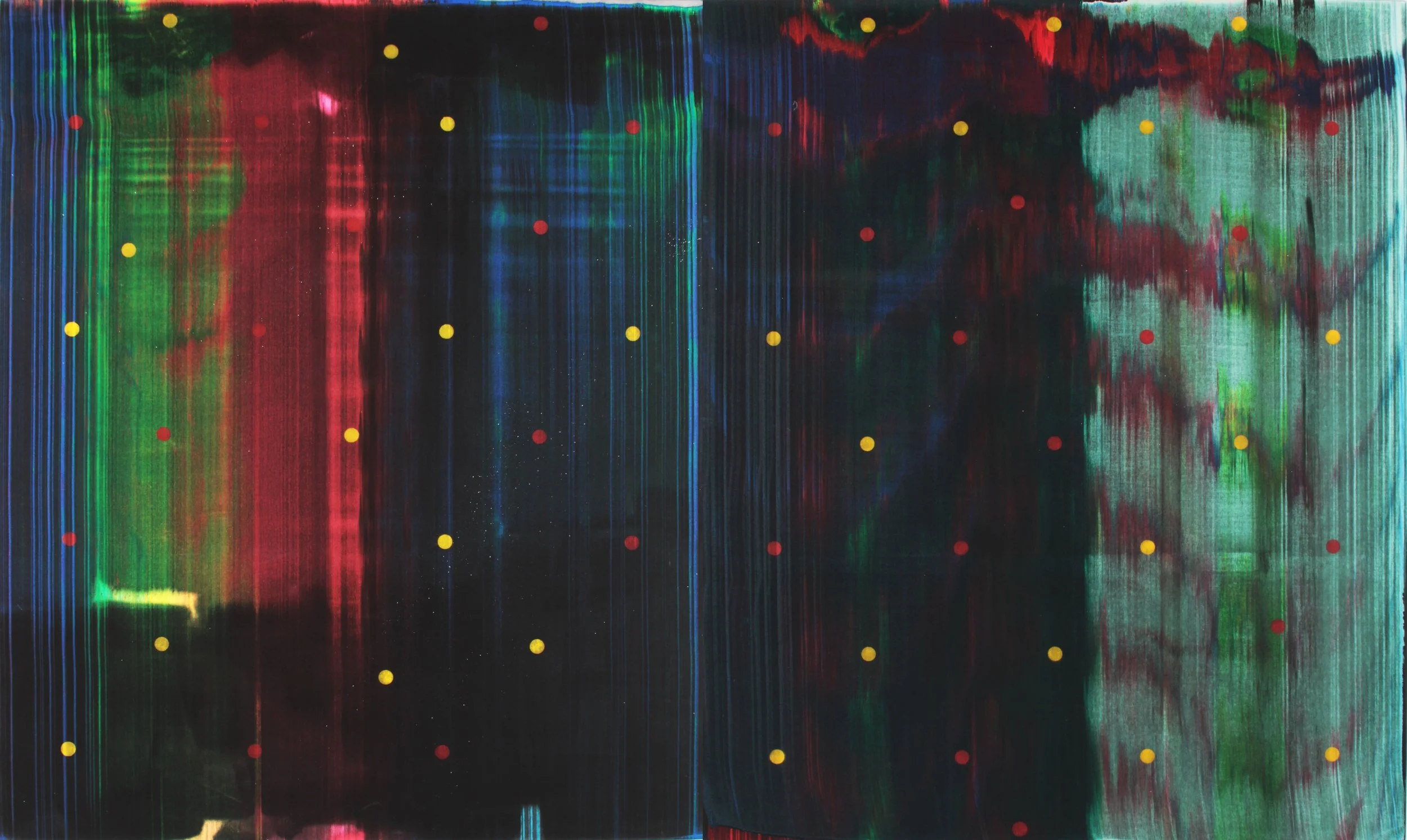
Roland Reiss: Unrepentant Beauty Opening

Santa Monica, CA  - William Turner Gallery is pleased to present Roland Reiss: Unrepentant Beauty, an exhibition of late paintings by Roland Reiss (1929–2020), opening April 25, 5-8PM and on view through June 20, 2026.
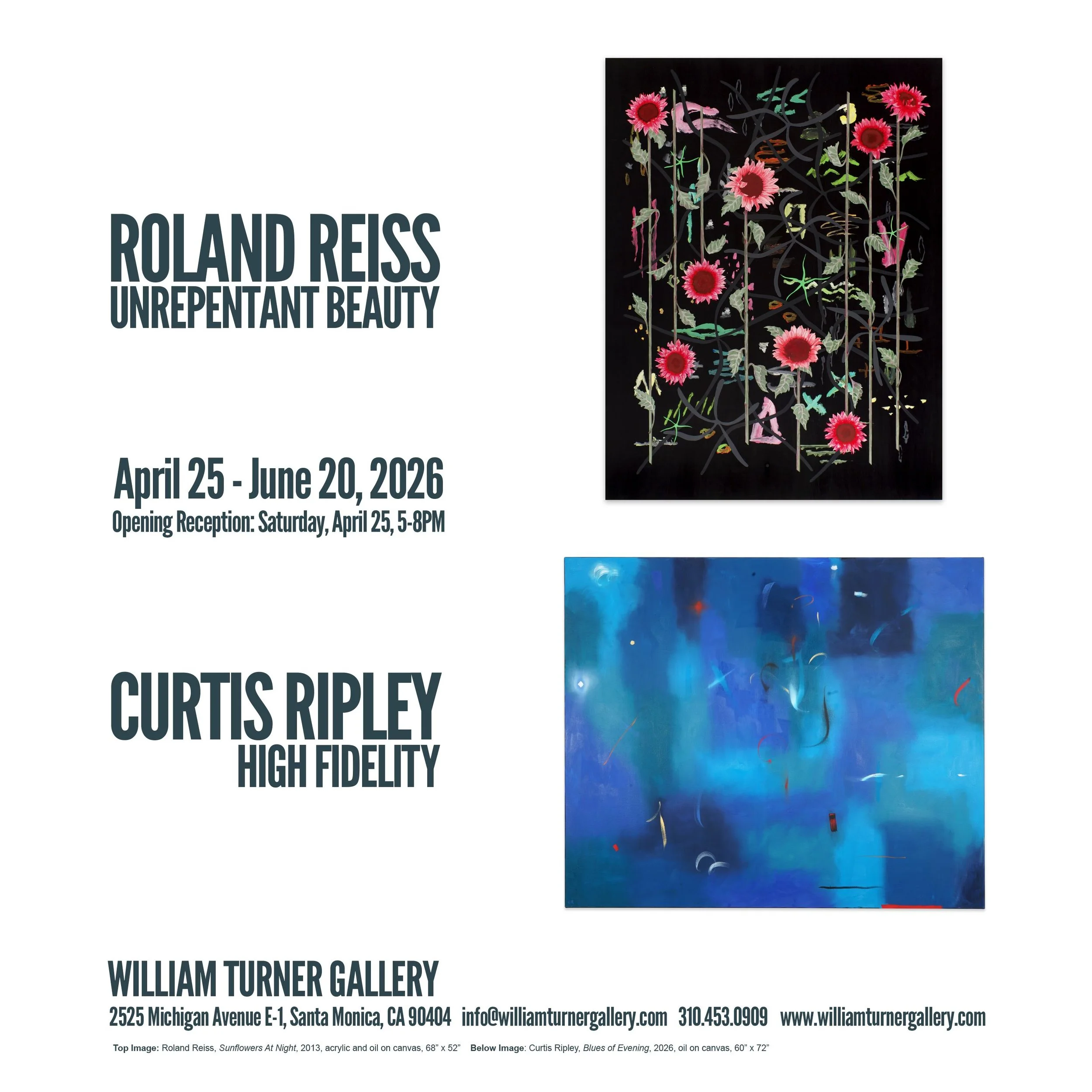
A pioneering figure in postwar American art, Reiss spent more than six decades redefining the possibilities of painting. From his early explorations of abstraction and representation to his groundbreaking sculptural works and miniature environments, his practice consistently expanded the boundaries of the medium.

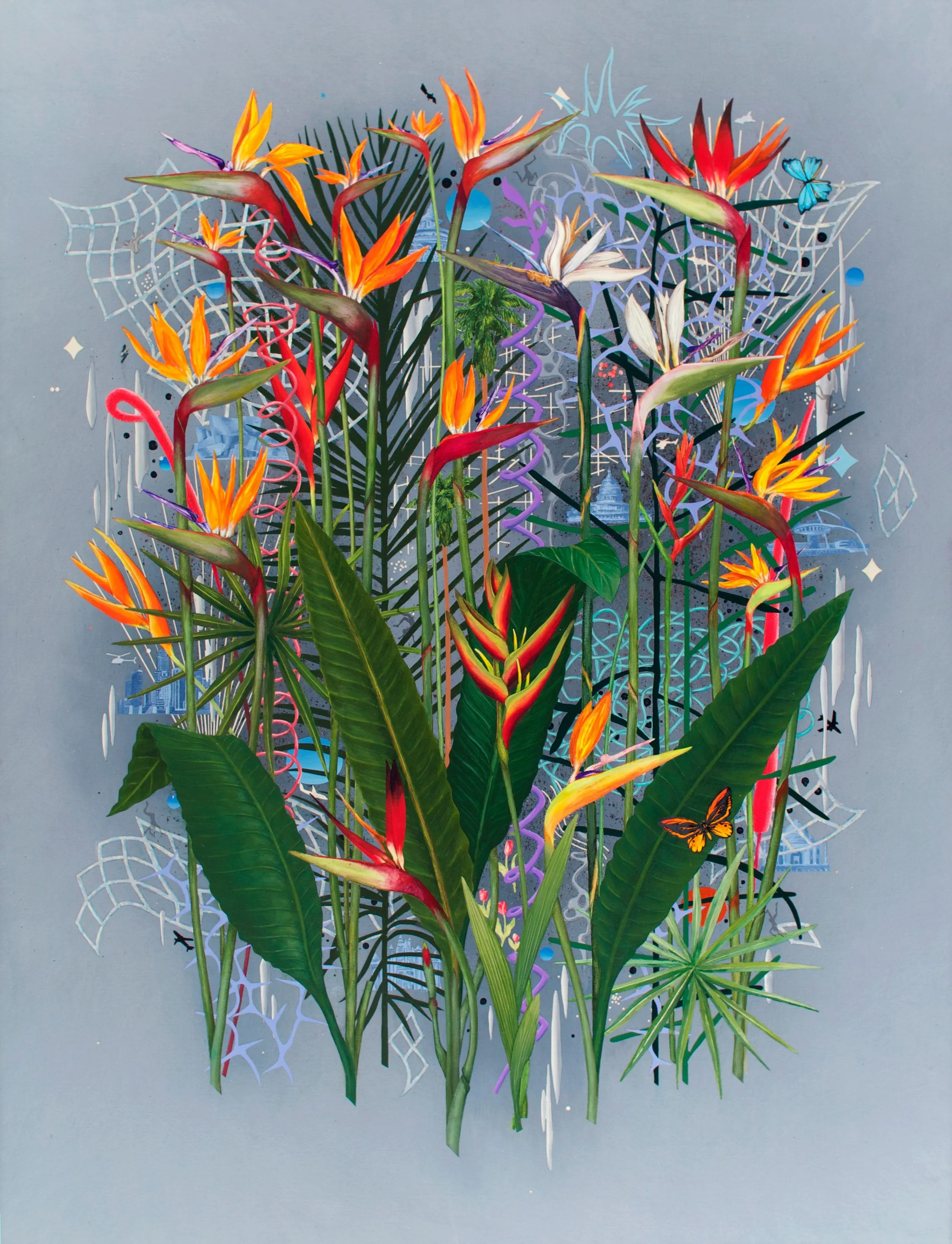
This exhibition focuses on a remarkable development in his final decades: a series of vibrant, dynamic flower paintings that challenge long-standing assumptions about beauty and subject matter in contemporary art. Historically regarded as decorative or peripheral, the motif of the flower becomes, in Reiss’ hands, a site of formal and conceptual innovation. The artist approached these works with full awareness of their cultural baggage, describing the act of painting flowers as requiring “a leap of faith.”
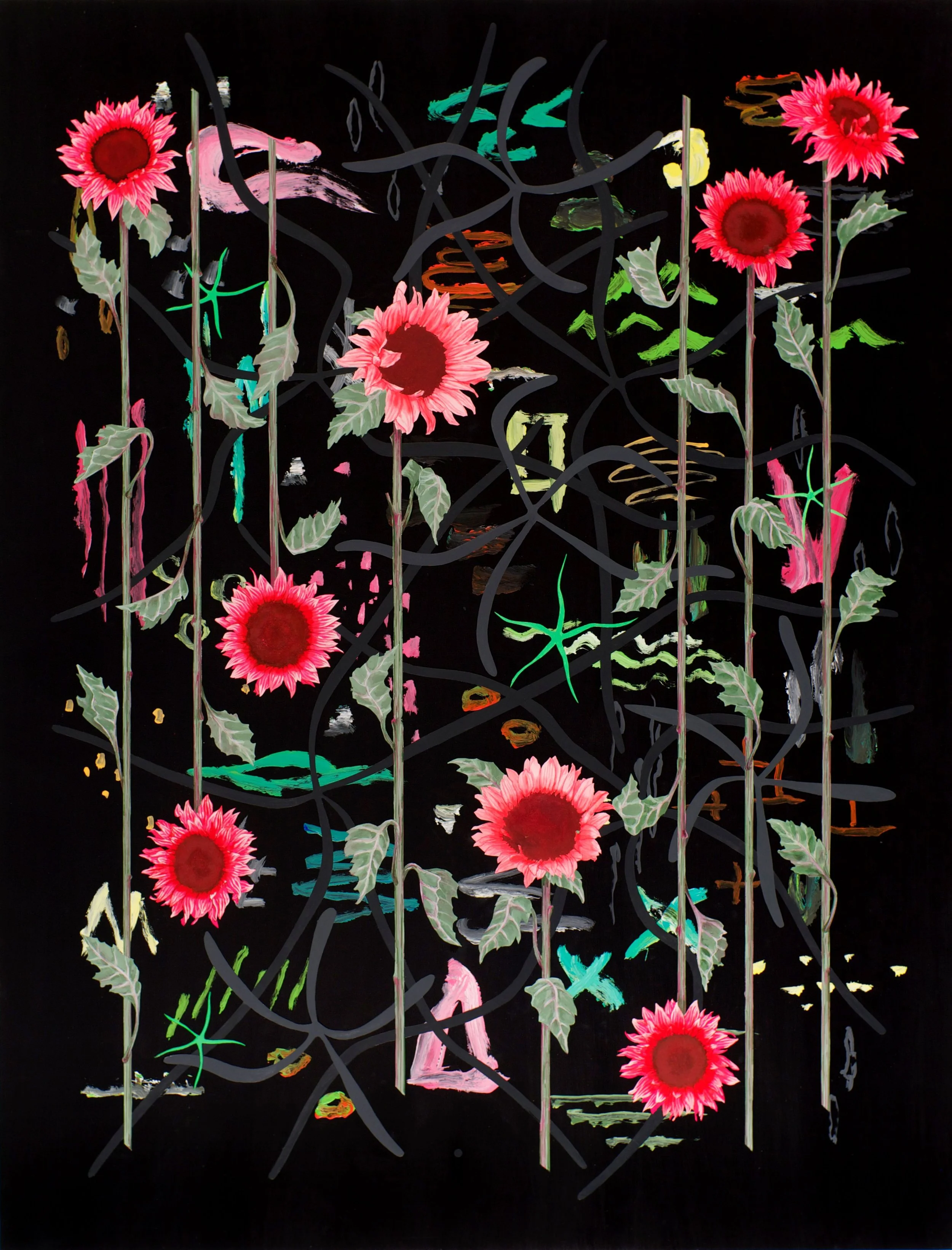
About these paintings Reiss stated, “Flowers are the vehicle for putting everything I have learned about painting into my work.” The resulting paintings move fluidly between abstraction and figuration, combining bold color, gestural energy, and spatial complexity. Rather than depicting flowers, Reiss uses them as a framework for exploring perception, materiality, and the enduring power of visual experience.

The title Unrepentant Beauty reflects the artist’s unapologetic embrace of beauty as both subject and strategy. In contrast to earlier generations for whom beauty was often viewed with suspicion, Reiss’ late work asserts its relevance with clarity and conviction.

At the end of a long and influential career, Reiss produced a body of work that is at once playful, rigorous, and deeply resonant—offering a powerful reconsideration of what painting can be.
Roland Reiss studied at the American Academy of Art, Mount San Antonio College and at UCLA. He taught at UCLA, the University of Colorado, and Claremont Graduate University, where he served as Chair for 30 years, from 1971 to 2001. In 2009 he received the College Art Association Award for the Distinguished Teaching of Art. At CGU he held the Benezet Chair in the Humanities and in 2010 an endowed chair in art was established in his name. He was also the director of The Painting's Edge residency at Idyllwild Arts.

Reiss was the recipient of four N.E.A. grants and of numerous prizes and awards. His work is included in many important public and private collections, such as the Whitney Museum of American Art, Museum of Contemporary Art, Los Angeles, the Los Angeles County Museum of Art, and the Hammer Museum, among others.

PETER LODATO: DIAMONDS/DIVISIONS/VOIDS - Exhibition Catalog Now Available

Santa Monica, CA - William Turner Gallery is pleased to present, solo exhibition of exceptional new works by Peter Lodato, opening  January 13th, 2024. 

Peter Lodato’s (b. 1946) artistic journey reflects an evolution, from immersive light installations, to captivating paintings that explore the complexities of human perception over the course of his six decade-long career. In addition, Lodato would himself influence a number of artists, teaching Art History at Art Center in Pasadena, and University of California Irvine with notable students such as James Turrell and Chris Burden.

His initial foray into art consisted of environmental light installations,  characteristic of the West Coast's Light and Space movement in the 1960’s, which sought to transform physical spaces into immersive experiences for viewers. He credits the Roman Pantheon’s oculus for his interest in interpreting his experience. This body of work led to his inclusion in the 1981 Whitney Biennial.

As Lodato transitioned back to painting, he carried forward his fascination with perception, creating works that initially appear as austere, geometric abstractions but upon closer inspection, reveal layers, brushstrokes, and vibrant colors that play with space and depth. The dichotomy of vision—its capacity to both reveal and conceal—serves as a thematic cornerstone in Lodato's artistry. His reductive compositions, often featuring divided forms and bold colors, engage viewers in a visual dialogue between simplicity and complexity. Inspired by the Abstract Expressionist’s Mark Rothko and Barnett Newman, Lodato's use of vertical bands of color draws viewers into the canvas, inviting them to experience the artwork both physically and transcendentally. Hard edges feather out into diaphanous atmospheric vapors, creating luminous, Color-field suspensions floating on a colored ground– the formal consequences appear to both recede and project, dematerializing the art object and simultaneously constructing a void of flat, hard-edge, matted pigment. The artists hand is evident in the textural materialization of paint executed with an expert hand. In reasserting the picture plane in favor of the flat form, the abstractions are not in fact “subjectless”, regardless of their  reductive nature, they are intended to elicit a deep emotional response and expose the paradoxical nature of human perception.   

Informed in part by Eastern philosophy, Lodato’s palette observes the color schema assigned to the various corporeal chakras and their corresponding color assignments. Red for example symbolizes the root chakra at the base of the spine, characterizing strength and vitality, whilst white on the other end of the spectrum, illustrates the crowning light of spiritual wisdom.    

Embed Block
Enter a valid embed URL or code.

Lodato holds a Graduate degree from California State University. His artistic contributions have been recognized through a solo retrospective curated by the Frederick Weisman Foundation (2000), and exhibitions at prestigious institutions such as PS1 in New York City (1978), Whitney Museum of American Art’s Biennial (1981), the Museum of Contemporary Art in Los Angeles, and the Los Angeles County Museum of Art. His works grace esteemed collections in various public and private institutions, including the Brooklyn Museum, the Seattle Art Museum, the Dallas Museum of Art, and the San Diego Museum of Contemporary Art. This extensive presence in renowned collections underscores the impact and significance of Lodato's artistic vision within the realm of contemporary art. He lives and works in Venice, California.