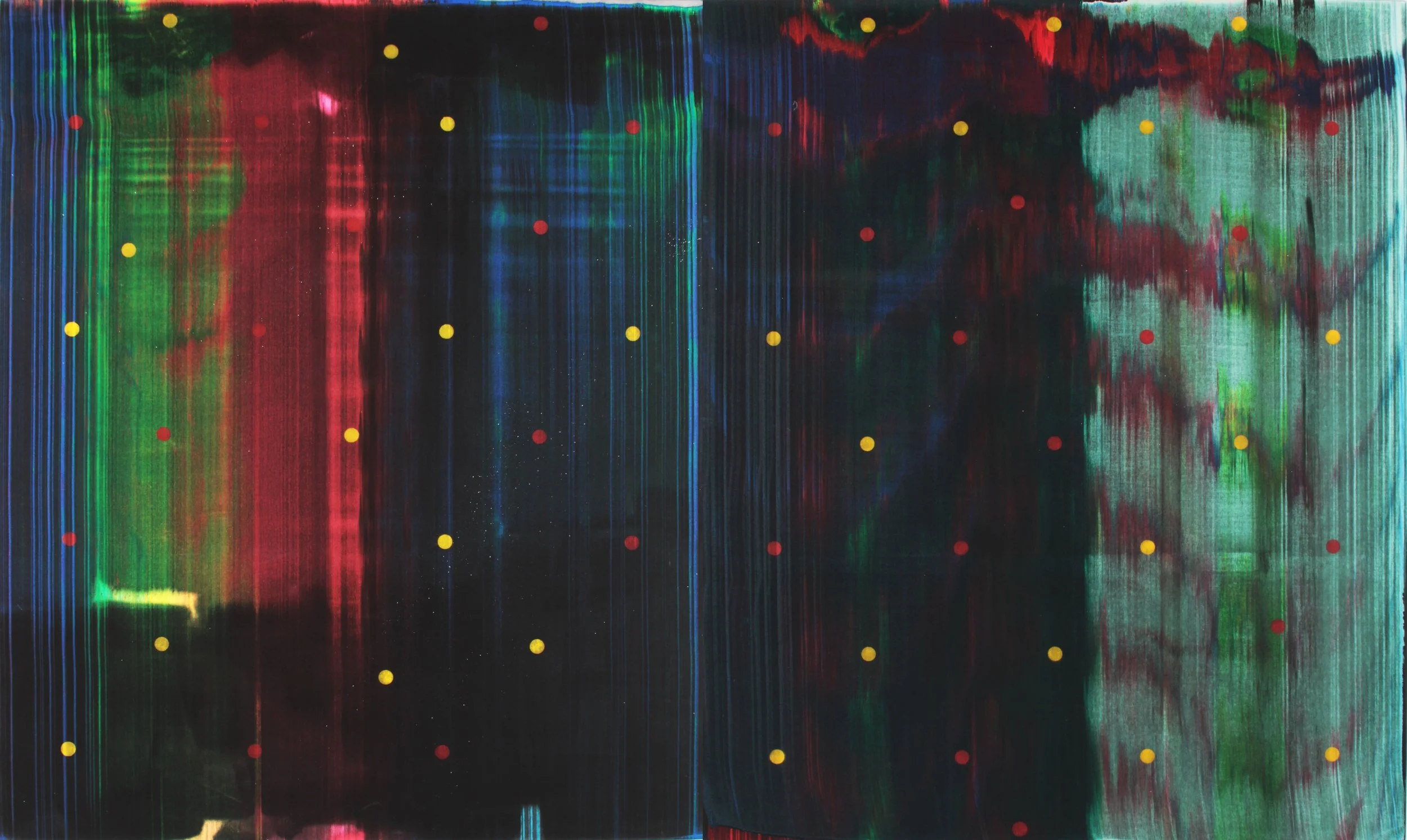
MOSES@100 - ED MOSES: A CENTENNIAL EXHIBITION


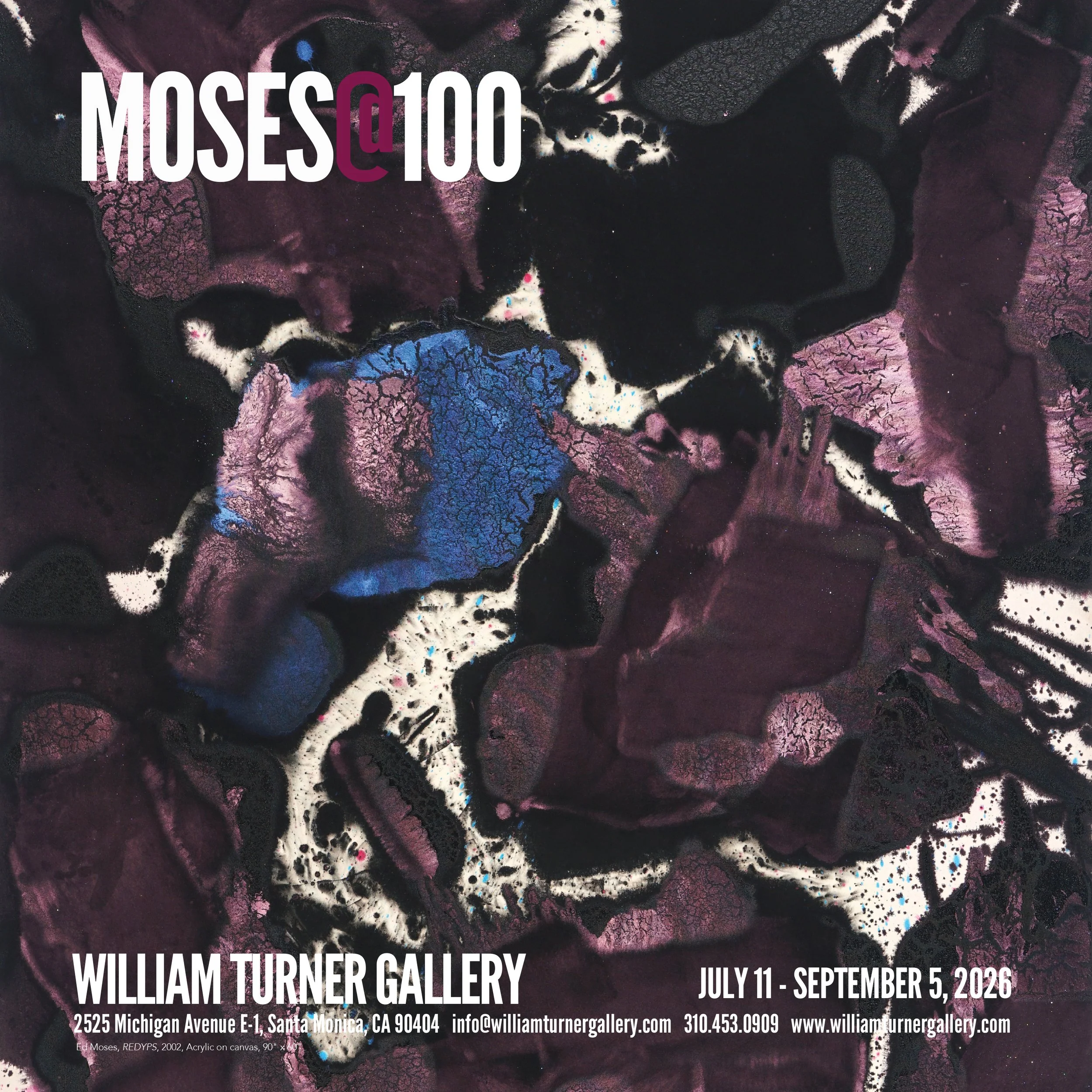
Santa Monica, CA — William Turner Gallery is pleased to present Moses @ 100, an exhibition of works by Ed Moses marking the centennial year of the artist’s birth. Opening Saturday, July 11 from 5–8 PM and on view through September 5, 2026, the exhibition brings together a focused selection of works that underscore the restless experimentation and continual reinvention that defined Moses’ practice for more than six decades.

Moses @ 100 offers an opportunity to reconsider the enduring relevance of a practice rooted in experimentation, intuition, and constant renewal. At a moment when contemporary painting continues to grapple with questions of process, authorship, and materiality, Moses’ work remains strikingly relevant: a testament to an artist who never stopped searching.

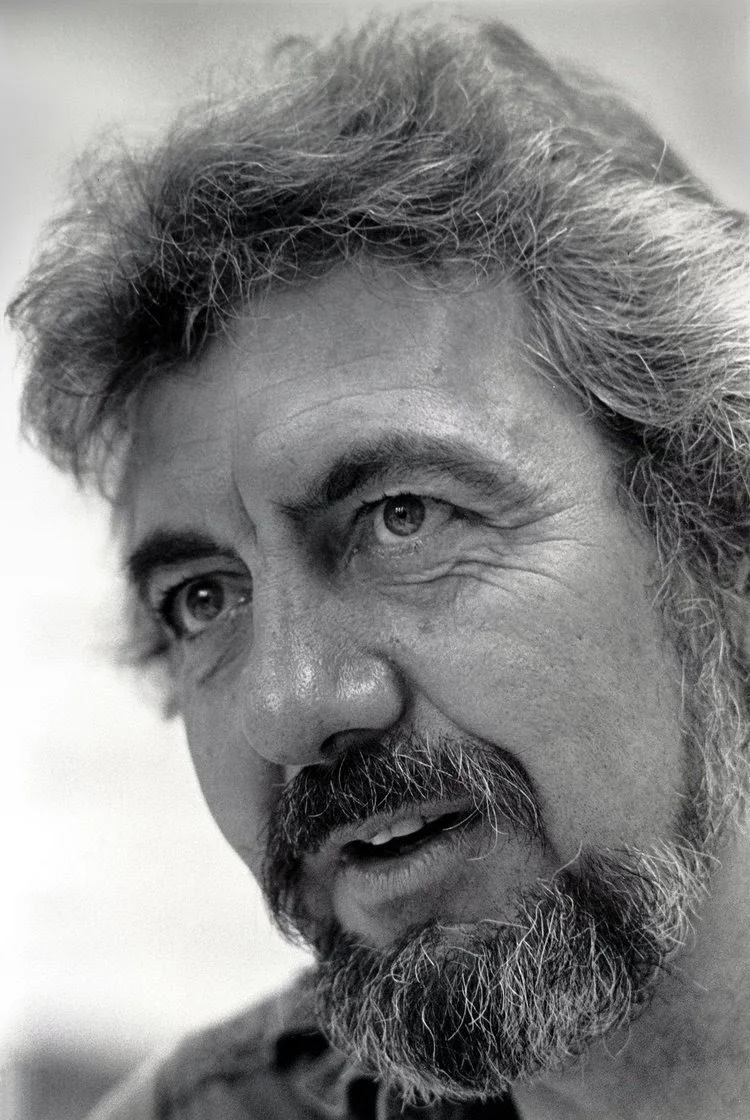
Born in Long Beach in 1926, Moses did not initially set out to become an artist. After serving as a surgical technician during World War II, he enrolled in a pre-med program with the intention of becoming a doctor. A chance encounter with painting altered the course of his life. He entered UCLA’s MFA program, where he met Craig Kauffman and was introduced to Walter Hopps, ultimately becoming part of the legendary Ferus Gallery circle. Alongside Robert Irwin, Billy Al Bengston, Ken Price, Ed Ruscha, Larry Bell, John Altoon, Wallace Berman, and Edward Kienholz, Moses helped shape the emerging Los Angeles art scene at a time when virtually no contemporary art infrastructure existed in the city.

Moses often referred to himself as a “mutator,” driven less by self-expression than by an insatiable curiosity to discover. Never content to remain within a singular visual language, he moved freely between styles and techniques, producing bodies of work that ranged from intense graphite drawings to an astonishing array of painterly styles and visual languages. The titles he gave these series—Roses, Wedges, Grids, Jabberwockys, Edges, Magmas, Waterfalls, Sponges, and Crackles, among many others—offer a glimpse into the restless range of his imagination. His refusal to settle into a recognizable signature style became one of the defining aspects of his legacy.

A Buddhist practitioner since the 1970’s, Moses viewed painting as both a metaphysical and experiential act, remarking that “the point is not to be in control, but to be in tune.” Preferring the descriptions “painter” or “mark maker” to that of “artist,” he believed paintings should be evidence of a journey rather than manifestations of a preconceived idea.

His influence extended well beyond the studio. Architect Frank Gehry, one of Moses’ closest friends, reflected on the artist’s impact: “He opened a lot of doors for me, doors of thinking, to a way of looking at life, of thinking about work and creativity and freedom and expressing oneself—taking chances.”

Moses remained remarkably vital and productive until his death in 2018 at age ninety-one. Even into his nineties, he painted daily in his Venice studio, pursuing the unknown with the same intensity that had defined his earliest years. As Michael Govan observed on the occasion of Moses’ 2015 exhibition at LACMA, “Ed Moses has been central to the history of art making in Los Angeles for more than half a century.”

Moses’ work is included in the collections of the Los Angeles County Museum of Art, Museum of Contemporary Art, Hammer Museum, San Francisco Museum of Modern Art, Whitney Museum of American Art, The Museum of Modern Art, New York, The Broad, The Frederick R. Weisman Art Foundation, and the Norton Simon Museum, among many others.

One hundred years after his birth, Ed Moses remains one of the most original and influential figures in American art. Moses @ 100 celebrates a lifetime devoted to discovery, honoring an artist who embraced uncertainty, resisted complacency, and continually reinvented himself. For more than six decades, Moses pursued the unknown with unwavering intensity—a pursuit that continued until his final days and remains vividly present in the work he left behind.
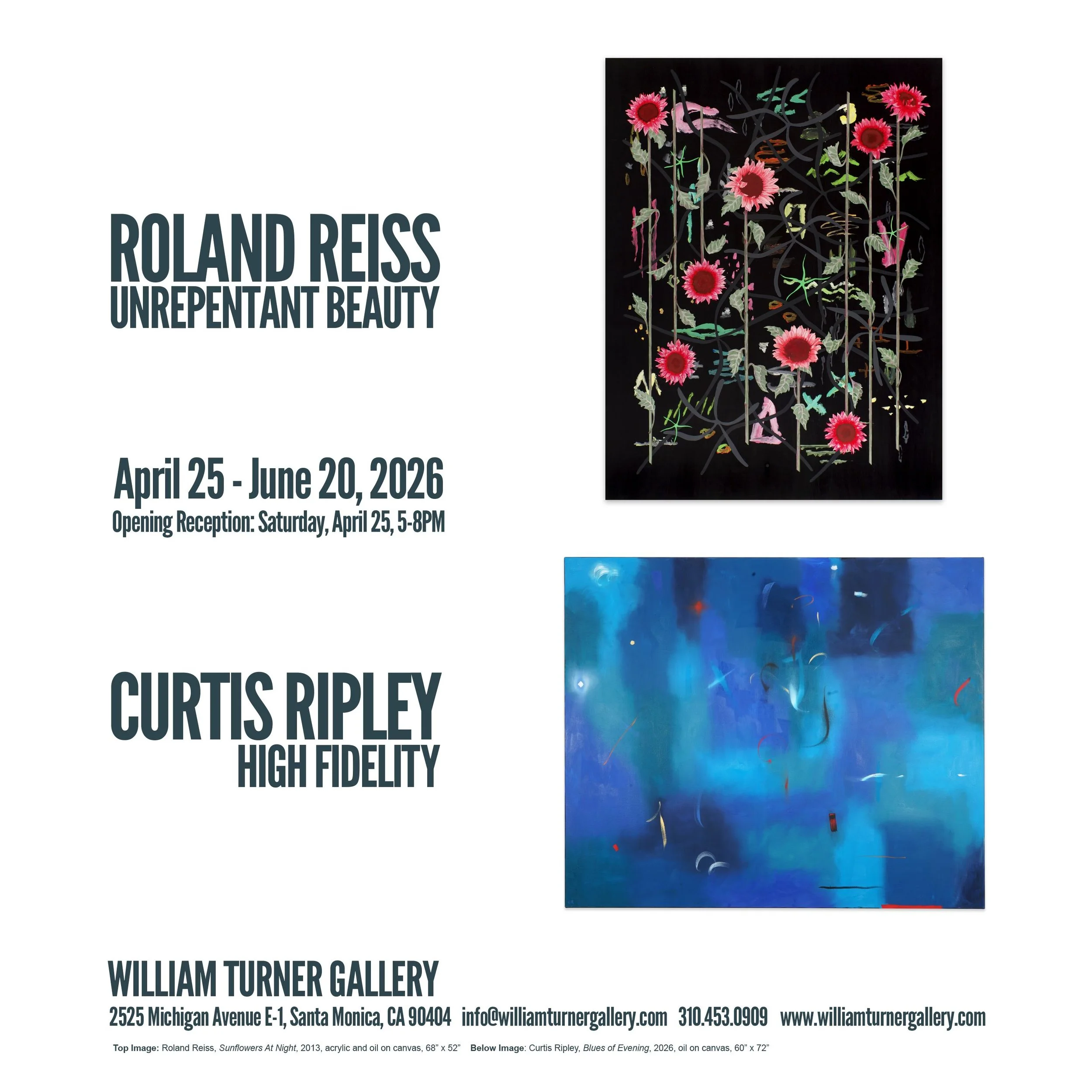
Curtis Ripley: High Fidelity Opening

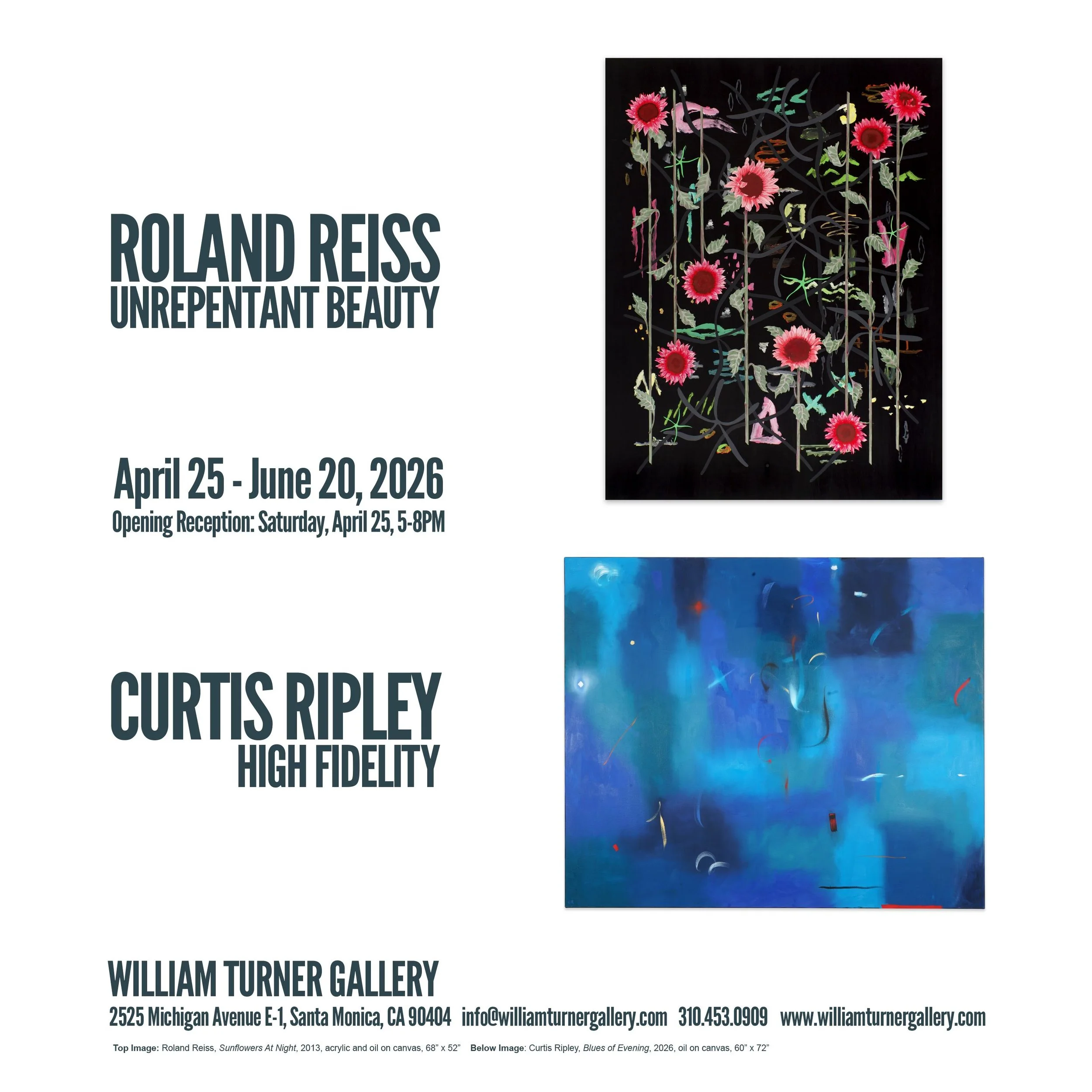
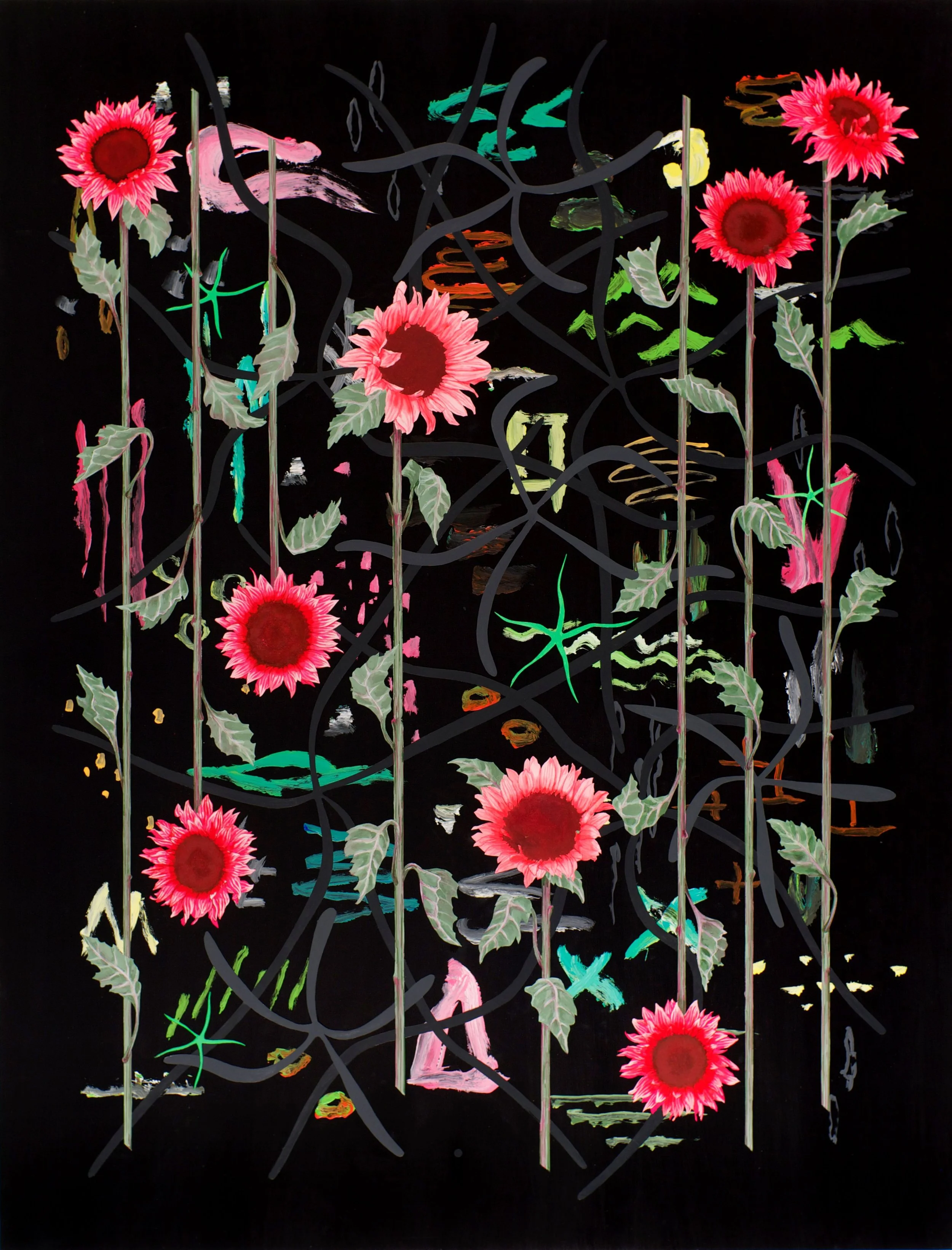
Santa Monica, CA - William Turner Gallery is pleased to present Curtis Ripley: High Fidelity, an exhibition of new paintings by Curtis Ripley opening April 25, 5-8 PM, and on view through June 20, 2026. The exhibition unfolds as a visual composition: lyrical, atmospheric, and finely attuned to the rhythms of perception.

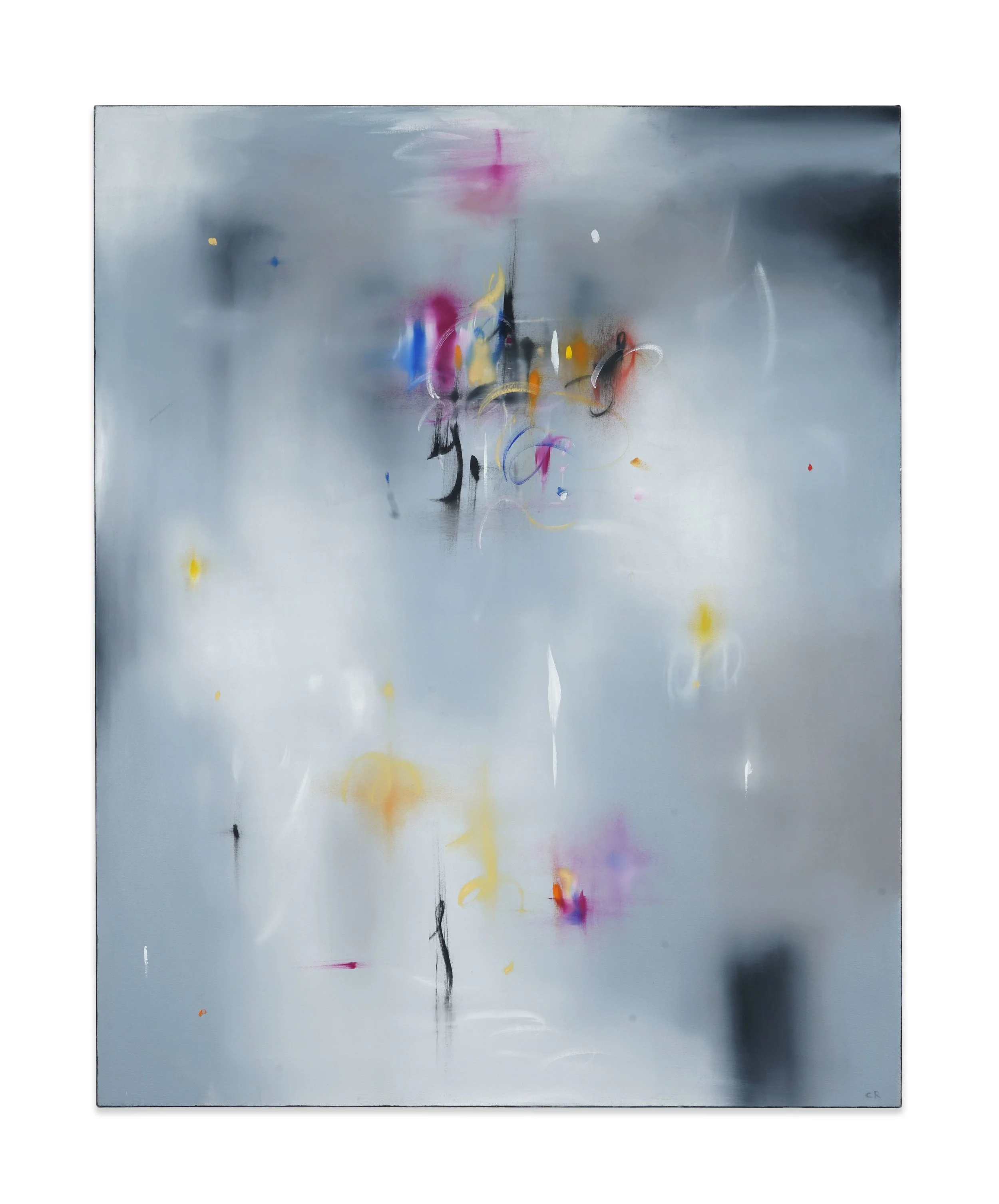
In Ripley’s paintings, glimmers of paint flicker and flare across darkened grounds, activating the surface with a sense of movement and light. Gestural curls and swirls interact with lines and dashes that guide the viewer’s eye in a choreographed passage across the picture plane. These marks are not merely expressive—they are structural, establishing a sense of tempo and poetic cadence that gives each work its internal coherence.

Forms in Ripley’s work do not resolve immediately. They hover, coalesce, and dissolve, shifting in and out of focus as the viewer’s attention lingers. Color behaves similarly: shapes emerge from the ground only to recede again, creating a continuous interplay between presence and disappearance.

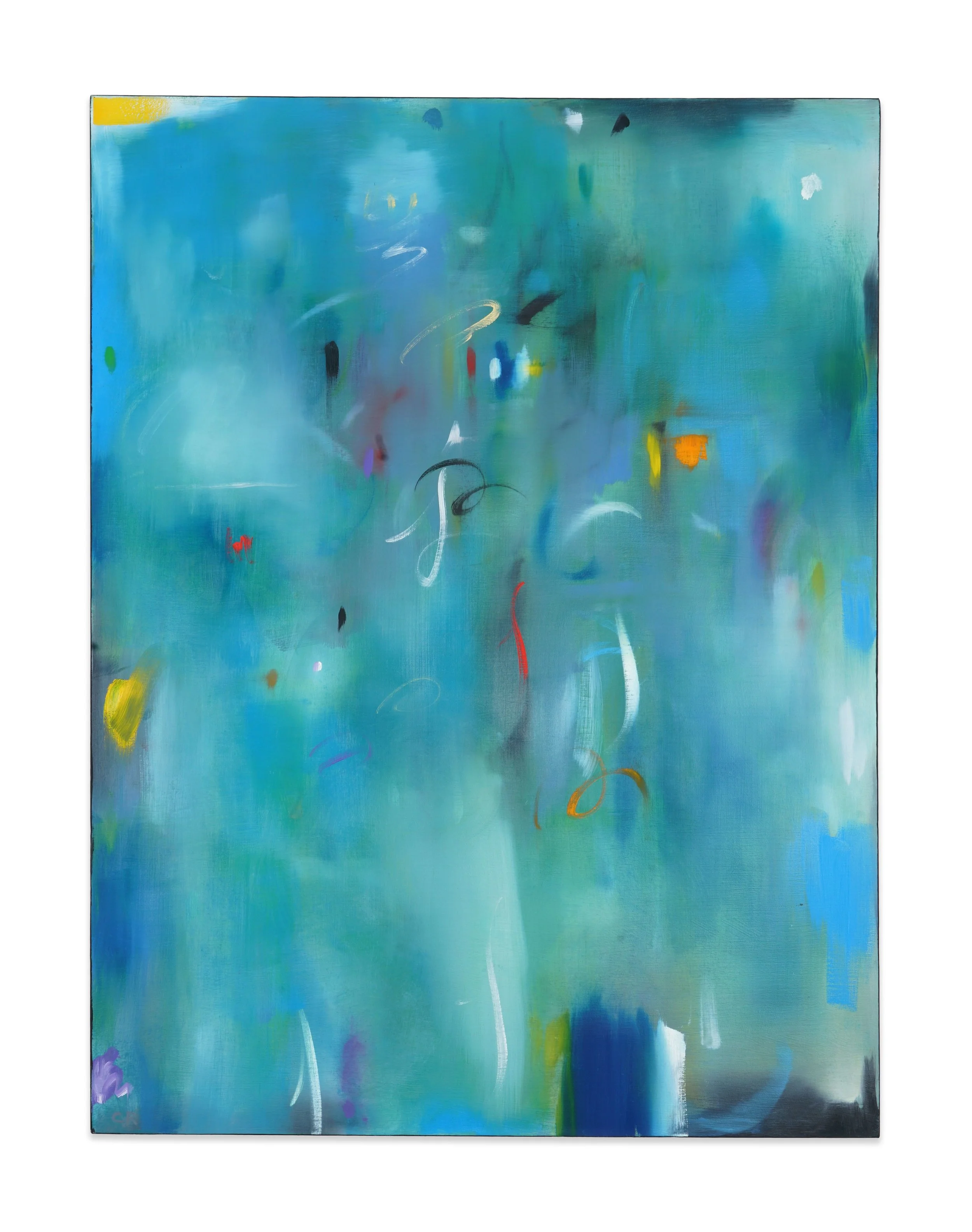
Curtis Ripley, Dreaming in Color, 2026, oil on canvas, 40 x 30”.

The result is a dynamic tension between flatness and depth that remains deliberately unsettled. This instability gives rise to a pronounced sense of atmosphere. Gestural forms drift across layered fields of tone, while Ripley’s palette moves between moments of luminous intensity and expanses of saturated darkness. Subtle gradations of color produce fleeting effects — recalling distant light, reflective shimmer, or the charged stillness of a landscape at dusk. The paintings unfold perceptually, revealing themselves over time rather than at a glance.

Ripley’s practice occupies a space between the gestural immediacy of Abstract Expressionism and the immersive chromatic sensibility of Color Field painting. His work synthesizes these traditions into a contemporary language grounded in process, layering, and revision. While resonant with historical explorations of light and atmosphere, his paintings remain distinctly present—open-ended, responsive, and experiential.

Curtis ripley, Silver Springs, 2026, oil on canvas, 60” x 48

Presented concurrently with Unrepentant Beauty by Roland Reiss, High Fidelity offers a complementary approach to perception—one grounded not in constructed illusion, but in painterly sensation and temporal experience.

Throughout a career spanning more than four decades, Curtis Ripley has exhibited nationally and internationally, with an extensive record of solo exhibitions. Born in Lubbock, Texas in 1949, he received his MFA from the University of Wisconsin, Madison in 1975.

Roland Reiss: Unrepentant Beauty Opening

Santa Monica, CA  - William Turner Gallery is pleased to present Roland Reiss: Unrepentant Beauty, an exhibition of late paintings by Roland Reiss (1929–2020), opening April 25, 5-8PM and on view through June 20, 2026.

A pioneering figure in postwar American art, Reiss spent more than six decades redefining the possibilities of painting. From his early explorations of abstraction and representation to his groundbreaking sculptural works and miniature environments, his practice consistently expanded the boundaries of the medium.

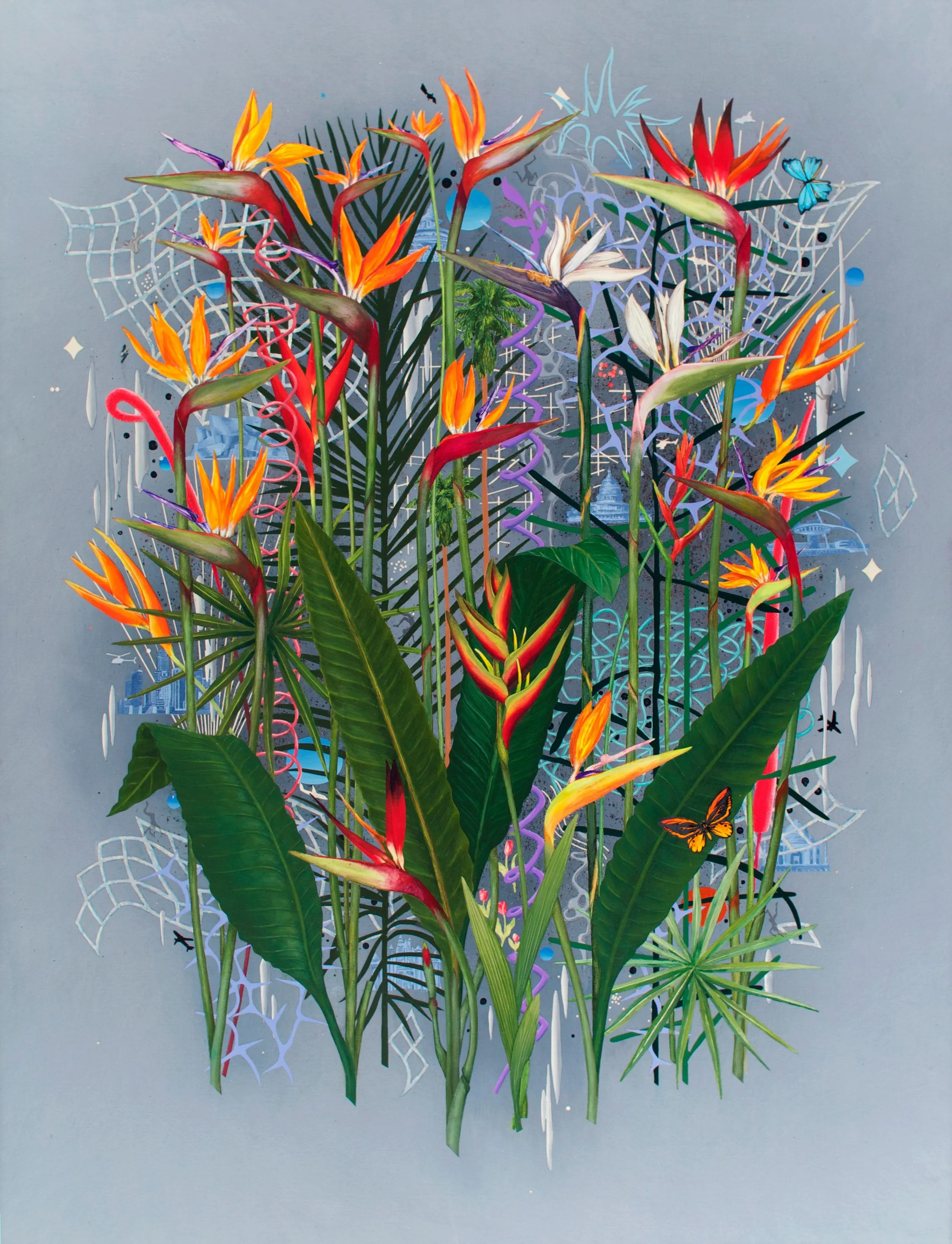
This exhibition focuses on a remarkable development in his final decades: a series of vibrant, dynamic flower paintings that challenge long-standing assumptions about beauty and subject matter in contemporary art. Historically regarded as decorative or peripheral, the motif of the flower becomes, in Reiss’ hands, a site of formal and conceptual innovation. The artist approached these works with full awareness of their cultural baggage, describing the act of painting flowers as requiring “a leap of faith.”

About these paintings Reiss stated, “Flowers are the vehicle for putting everything I have learned about painting into my work.” The resulting paintings move fluidly between abstraction and figuration, combining bold color, gestural energy, and spatial complexity. Rather than depicting flowers, Reiss uses them as a framework for exploring perception, materiality, and the enduring power of visual experience.

The title Unrepentant Beauty reflects the artist’s unapologetic embrace of beauty as both subject and strategy. In contrast to earlier generations for whom beauty was often viewed with suspicion, Reiss’ late work asserts its relevance with clarity and conviction.

At the end of a long and influential career, Reiss produced a body of work that is at once playful, rigorous, and deeply resonant—offering a powerful reconsideration of what painting can be.

Roland Reiss studied at the American Academy of Art, Mount San Antonio College and at UCLA. He taught at UCLA, the University of Colorado, and Claremont Graduate University, where he served as Chair for 30 years, from 1971 to 2001. In 2009 he received the College Art Association Award for the Distinguished Teaching of Art. At CGU he held the Benezet Chair in the Humanities and in 2010 an endowed chair in art was established in his name. He was also the director of The Painting's Edge residency at Idyllwild Arts.

Reiss was the recipient of four N.E.A. grants and of numerous prizes and awards. His work is included in many important public and private collections, such as the Whitney Museum of American Art, Museum of Contemporary Art, Los Angeles, the Los Angeles County Museum of Art, and the Hammer Museum, among others.

Now Representing Roland Reiss

William Turner Gallery is honored to announce our representation of the estate of Roland Reiss (1929–2020), one of the most distinctive and intellectually rigorous voices in postwar American art. This partnership reflects the gallery's commitment to championing significant legacies in contemporary art history and ensuring that Reiss's pioneering body of work continues to reach new audiences.

Though widely celebrated for his miniature tableaux, Reiss was first and foremost a painter whose more than sixty-year career left an indelible mark on the Los Angeles and Southern California art scenes. He was included in the 1975 Whitney Biennial and Documenta 7 in 1982, and received fourteen solo museum exhibitions over the course of his career, including The Dancing Lessons: 12 Sculptures (1977) at LACMA. He also received survey exhibitions at the Pasadena Museum of Contemporary Art (2011–2012) and exhibited at the Hirshhorn Museum and Sculpture Garden in Washington, D.C., and the Nelson-Atkins Museum of Art in Kansas City. A retrospective of his work was mounted at the Los Angeles Municipal Art Gallery in 1991.

ROLAND REISS, Paradisium, 2009, oil and acrylic on canvas, 68” x 52”

Reiss studied at the American Academy of Art, Mount San Antonio College, and UCLA, graduating with an MA in 1957. He taught at the University of Colorado, UCLA, and Claremont Graduate University, where he chaired the art department for thirty years. In 2009, he received the College Art Association Award for Distinguished Teaching of Art. At CGU he held the Benezet Chair in the Humanities, and in 2010 an endowed chair in art was established in his name. He was also director of The Painting’s Edge residency at Idyllwild Arts.

Reiss received four NEA grants and numerous prizes and awards. His work is held in many significant public and private collections, including the Museum of Contemporary Art, Los Angeles, the Los Angeles County Museum of Art, the Whitney Museum of American Art, the Hammer Museum, Santa Barbara Museum of Art, Palm Springs Art Museum, UC Irvine Langson Orange County Museum of Art, Laguna Art Museum, Benton Museum of Art, Claremont Lewis Museum of Art, and Oakland Museum of California.

Guillermo Bert's Upcoming Solo Show at the Museum of Latin American Ar

Congratulations to Guillermo Bert on his upcoming solo show, Techno-Empathy, opening at the Museum of Latin American Art on March 29.

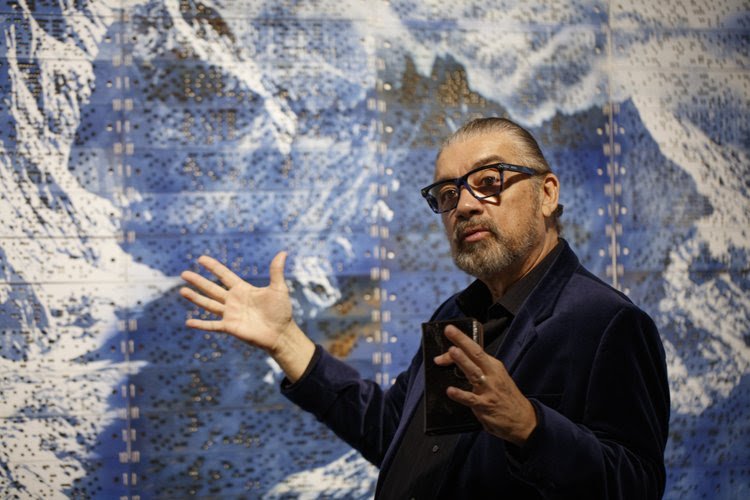
This exhibition shows the Chilean-born artist Guillermo Bert bringing the two together in novel and powerful ways. He uses three principal tools, all of them uncommon in most art production: QR codes, 3-D imaging, and laser engraving. In the Encoded Textiles series, weavings include QR codes that literally embed the story of the weaver into the work so that anyone with a smartphone can see and hear them. Through 3-D imaging, the artist creates life-size images of workers whom he has met, allowing us also to meet them face to face from a unique perspective. Media images today often show migrants and refugees, but Bert uses laser engraving to transfer them onto unusual surfaces, such as wood panels that mimic the look of some of the earliest “high technology:” the rectangular panels that encoded instructions for the first mechanical looms in the 19th century.

Guillermo Bert At William Turner Gallery

LAGUNA ART MUSEUM PRESENTS - ANDY MOSES: INTO THE LIGHT

LAGUNA ART MUSEUM PRESENTS
ANDY MOSES: INTO THE LIGHT

March 21 - September 20, 2026

Location Laguna Art Museum is located at 307 Cliff Drive in Laguna Beach, on the corner of Coast Highway and Cliff Drive.
Hours Tuesday-Sunday: 10 a.m. - 5 p.m.


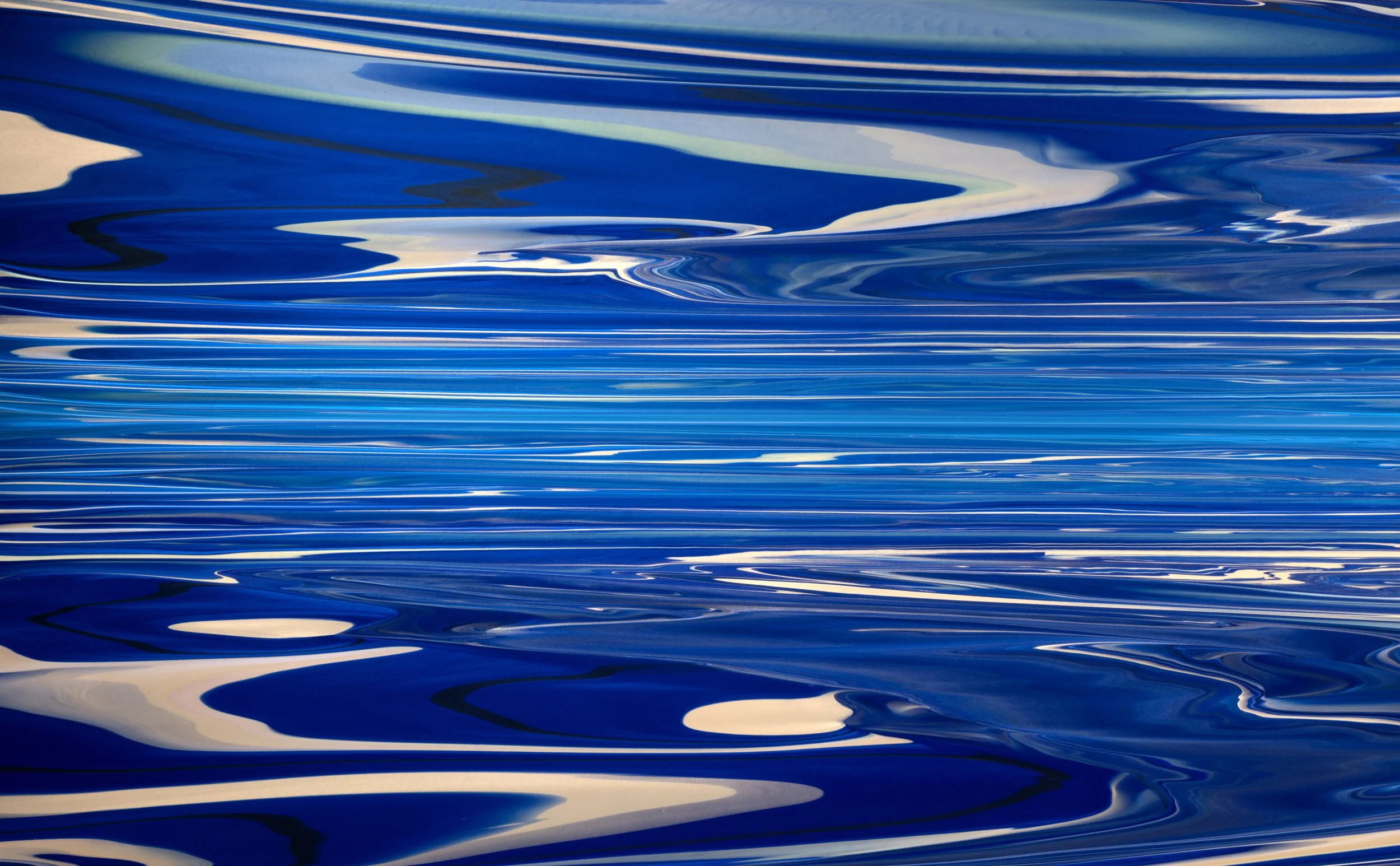
Andy Moses' mysterious and alluring paintings pose a subtle challenge: do we read them as landscapes, enveloping the eye as they do with forms both aqueous and mountainous? Or should we regard them as abstractions, pure plays of light and form, color and contour, literally bent into physical space? Moses welcomes either comprehension or both. This is art born of visual transcendence, seeking to find a bit of the glory of nature in the properties of paint.  

Moses grew up in coastal Los Angeles, mesmerized almost from birth by the brilliant vagaries of marine light. When he moved east after college, he immersed himself in the booming New York art scene of the 1980s and 1990s, launching his career and determining how to explore both subject matter and material. But on his return to Venice, he found himself immersed again in the plangent light of his youth. Ever since he has striven to invest every painting with such meditative luminosity, even building round and curved (mostly concave) surfaces to envelope the eye.  

Such perceptual manipulation may be related to the Light & Space movement (whose participants have been Moses’ neighbors his whole California life), but in its reliance on paint it evinces associations with the abstract impressionism of Mark Rothko and the color field canvases of Morris Louis. Ultimately, Moses follows in the footsteps of Claude Monet and JMW Turner, whose contemplations of urban and rural spaces were pretext to a hunt for light itself.  

This exhibition surveys Andy Moses’ work of the last two decades, evincing his increasingly expansive commitment to a kind of painting that at once displays and obscures imagery. This work forces you to decide what it is doing to you, what it is showing you, if and how it is tricking your eyes or playing to their strengths. It’s a kind of magic. 

Andy Moses: Into the Light is organized by Laguna Art Museum and curated by Peter Frank.

About Laguna Art Museum

Founded by local artists in 1918, Laguna Art Museum has celebrated California art and culture at the heart of the community for over a century. The museum offers a welcoming space for artists, donors, members and visitors, each bringing unique energy that drives its mission forward. As “Your Museum,” Laguna Art Museum builds on a legacy of inspiring creativity, sustainability and reflection on California’s natural environment through exhibitions, events and educational programs. The museum presents exhibitions that highlight the California experience and is home to the annual Art + Nature. With each visit, Laguna Art Museum invites people from near and far to join in its journey of community, art and environmental awareness. For more information, please visit LagunaArtMuseum.org and follow the museum on social media:

Facebook: @LagunaArtMuseum

Instagram: @LagunaArtMuseum

X: @LagunaArtMuseum

Laguna Art Museum is located at 307 Cliff Drive in Laguna Beach, on the corner of Coast Highway and Cliff Drive.

Museum Hours: Tuesday-Sunday: 10 a.m. - 5 p.m.

InConversation: Alex Couwenberg (LA) Mark Zimmermann (NY) Talk All Things Art

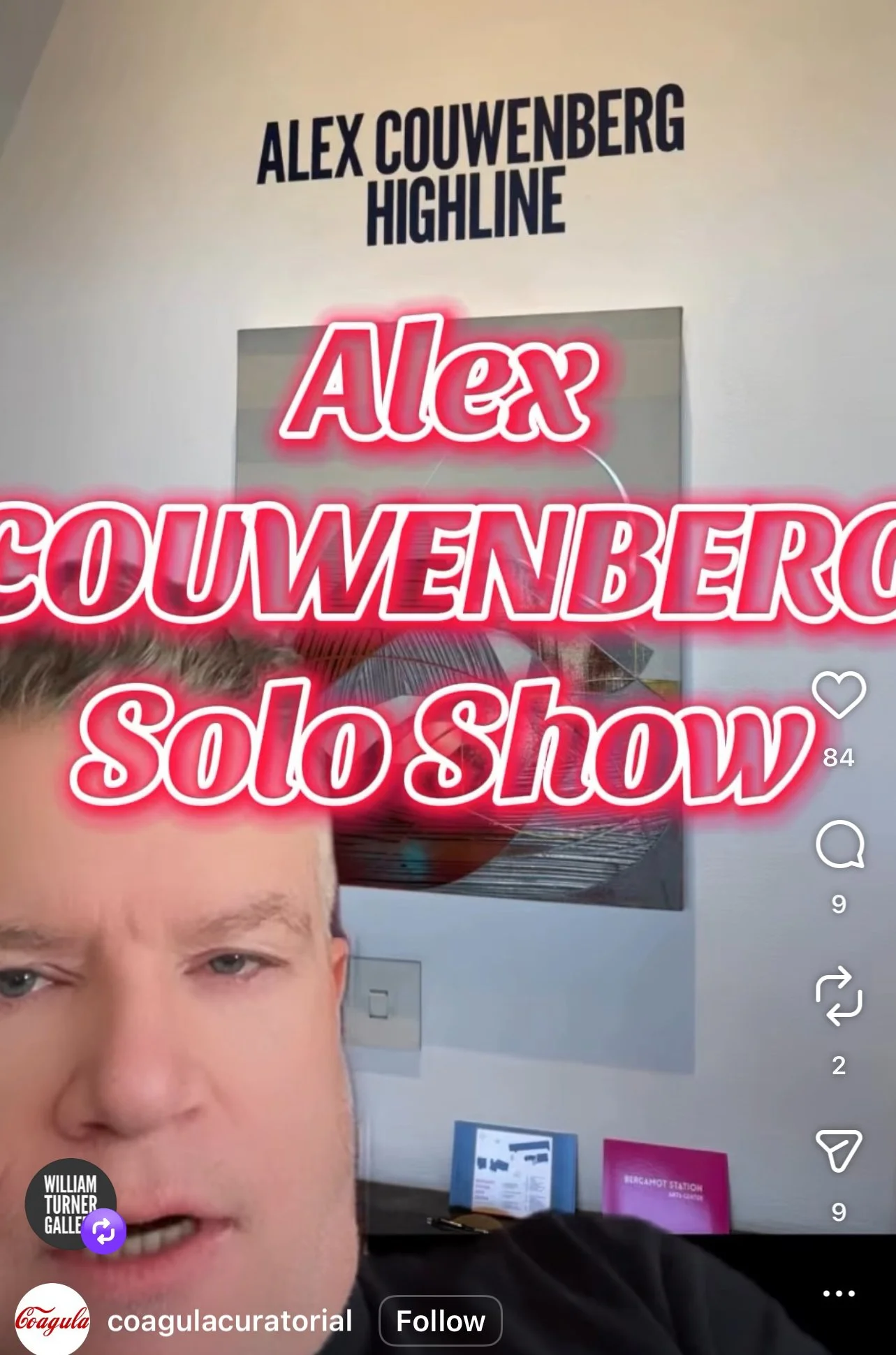
In a newly shared video interview, artist Alex Couwenberg discusses his art practice and latest show with fellow artist Mark Zimmermann. Couwenberg’s solo show, “Highline” opened at William Turner Gallery on September 13. The show was recommended on social media by art critic Mat Gleason who said, “Couwenberg is at the top of his game… [his paintings] seem improvisational and yet are rigorously constructed and thought out”. You can view the digital catalog for “Highline” at the link below.


COAGULA Curatorial Reviews Alex Couwenberg: HIGHLINE

Coagula Curatorial

Mat Gleason founder of Coagula Curatorial reviews Alex Couwenberg’s exhibition Highline that closed at the gallery November 8.

View the catalog for this important exhibition by clicking HERE. You can view the instagram reel review of Highline by clicking the image or the button below.


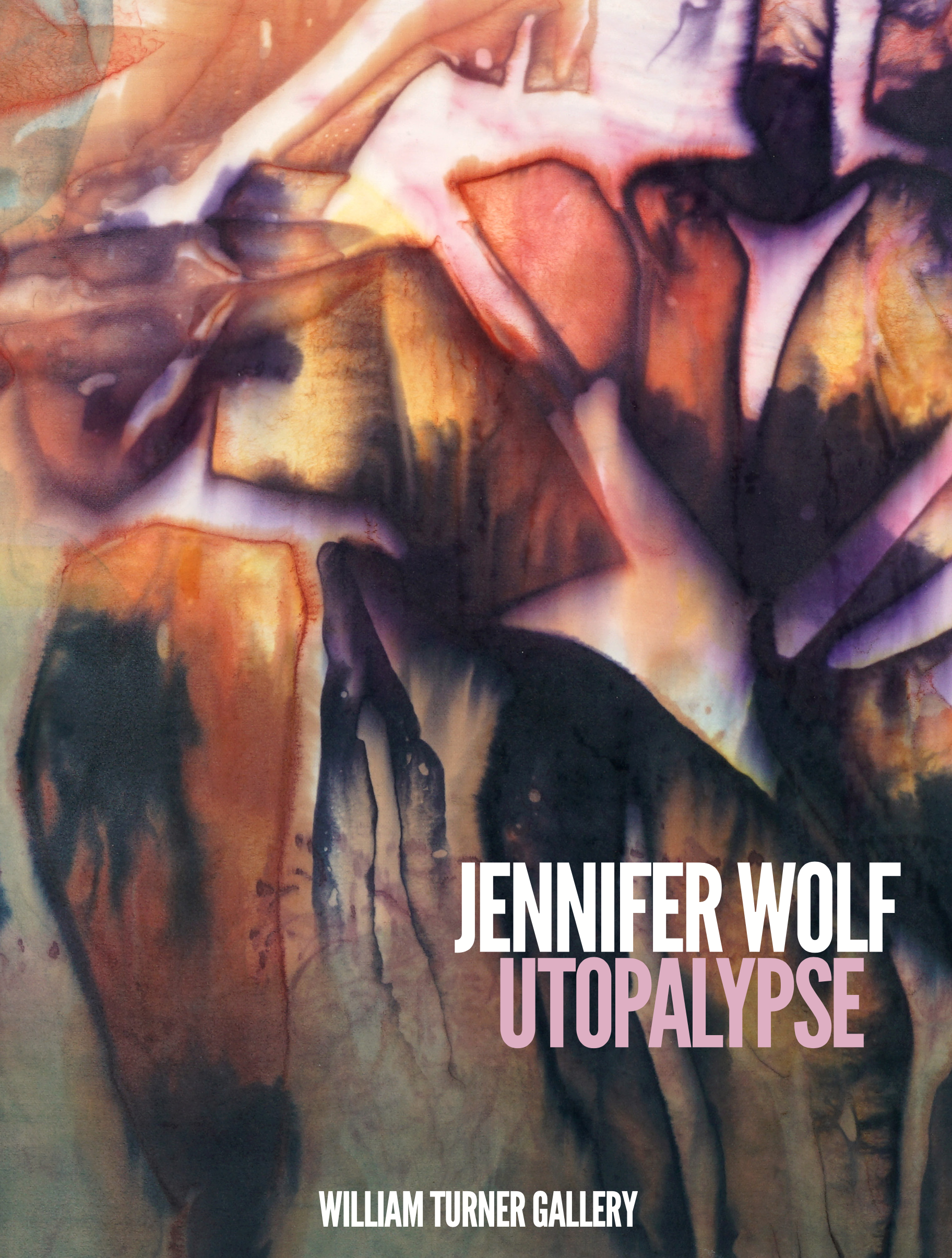
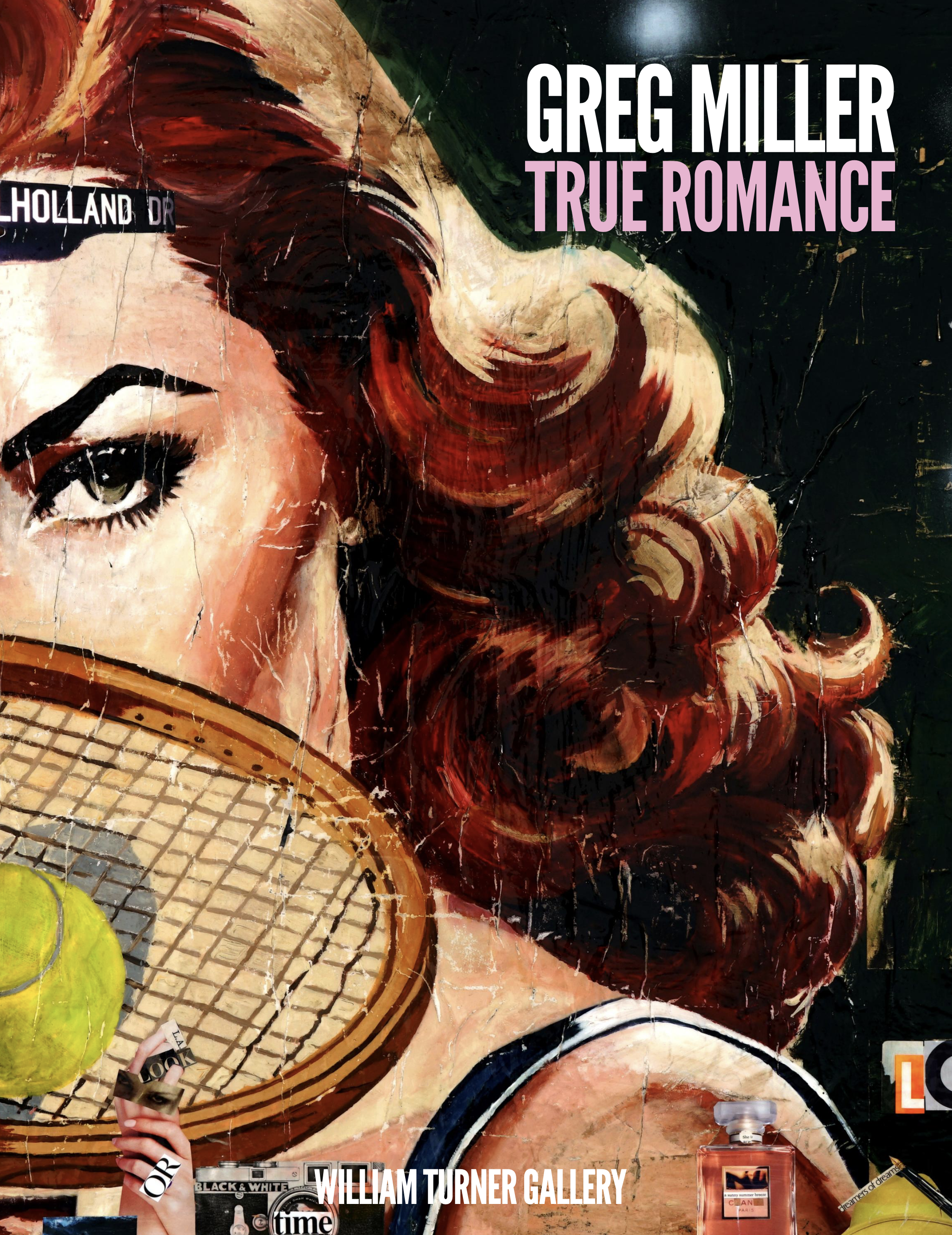
Digital Exhibition Catalogs for Greg Miller: True Romance & Jennifer Wolf: Utopalypse

William Turner Gallery currently has two solo shows on view: "Greg Miller: True Romance" and "Jennifer Wolf: Utopalypse". Jennifer Wolf’s art practice is deeply rooted in her personal connection to the Southern Californian landscape: she makes her own dyes and pigments, combining organic materials with state-of-the-art acrylic mediums. Her latest series –  “Utopalypse” – consists of highly evocative abstract pieces on silk mounted on wood. Greg Miller combines layered collages of ephemera collected from the 1950’s and 1960’s with large-scale, photorealistic paintings styled after the golden age of advertising and Americana. Much like an archaeologist delving into the layers of the earth to uncover fragments of the past, Miller digs into the layers of images and text to uncover hidden clues and meanings. Both “True Romance” and “Utopalypse” are ongoing through Saturday, August 16, and digital catalogs are available to view on the William Turner Gallery website.

Jennifer Wolf holds a BA in Art History from UCLA and an MFA from Otis College of Art and Design. A lifelong California resident, she has exhibited widely and has collaborated with William Turner Gallery since her first solo show in 2004.


Greg Miller (b. 1951) was born in Sacramento, California and holds a Master of Arts Degree from San Jose University. Once a long-time Venice, California resident, he currently resides in LA, CA & Austin, Texas. His work is featured in numerous museum and private collections, including those of: the San Jose Museum of Art, Newport Harbor Museum, Crocker Museum of Art, Los Angeles County Museum of Art, Laguna Art Museum, Riverside Art Museum,  Frederick R. Weisman Foundation and Charles Saatchi Foundation.  Greg Miller was the first exhibition at William Turner Gallery in 1991.  

EXPO 2025 - JAPAN PAVILION - A Creator’s Vision - Artist Shingo Francis

Fleeting Colors in Transition and a Circle Symbolizing Circulation

I believe my decision to become a painter was greatly influenced by my parents and my early environment. My father is American, my mother is Japanese, and I lived in Japan until I was 12 before moving to the United States to live with my father. My father was an abstract painter, and my mother was a video artist. Many of their friends were also artists, and they would often gather at our home or in studios, passionately discussing their works and creative processes. Interestingly, my first interest in artistic expression wasn’t painting — it was words. While browsing my father’s bookshelf filled with poetry collections, I became inspired to write my own poems and essays. By the time I was about 15, I discovered William Blake, the English poet and painter, which encouraged me to start adding illustrations to my poetry. Whenever I returned to Japan, my mother would take me to galleries in Tokyo. I remember being amazed by the diverse range of artistic expression — intriguing objects, sound installations, and more — which opened my eyes to the fascinating and expansive world of art.

At university, I studied traditional techniques like croquis, but I soon realized that faithfully reproducing what I saw in front of me wasn’t my strength. Instead, I became more focused on expressing what I felt in my heart. One of the turning points in my life came when I studied abroad in Florence. During that time, I had the opportunity to interact with Joan Mitchell, a friend of my father and an abstract expressionist artist. Upon seeing my work, she immediately urged me to “invent your own way of painting.” Her words were a wake-up call — lines, colors, shapes, depth, techniques, and processes should all be uniquely mine; no one else could express what I wanted to create. That encounter made me seriously reflect on how to translate my inner visions into paintings. Through much exploration, I eventually arrived at the layering technique that I still use today. By building up layers, light, shadow, and depth emerge naturally, revealing a sense of presence. This approach reflects my fascination with the fleeting beauty of light within darkness, much like the world depicted in Junichiro Tanizaki’s In Praise of Shadows. It’s this delicate balance — the interplay of light and shadow — that continues to inspire my work.

I was deeply shocked when I heard a curator say they made all their curation decisions solely through social media, without ever seeing the actual artworks. To me, art is something you must experience with your own eyes — it’s only through that direct encounter that emotions are stirred and a dialogue with the work begins. Sharing space with an artwork and observing it firsthand carries profound meaning. Reflecting on this idea led me to create this series. In these paintings, the colors shift depending on the viewer’s position and the angle of the light, much like a butterfly’s wings or the iridescent patterns of a jewel beetle. The pigments, which include mica, reflect light in a way that alters the visual tone. One of the key themes of this series is the awareness of one’s own physical presence — an invitation to reconnect with the act of seeing through the senses.

When creating abstract paintings, I make a conscious effort to focus on my own awareness. Being fully present in the “here and now” is incredibly challenging, yet I find constant inspiration in Zen philosophy. One particularly memorable experience was a Zen training session I attended at Tōfuku-ji Temple in Kyoto when I was 17. For about ten days, we practiced meditation from early morning until night, sitting in zazen and focusing solely on our breathing. At first, I struggled to concentrate — my mind kept racing with thoughts and memories, like a mental carousel spinning endlessly. The frustration was intense, but by the fifth or sixth day, my chaotic thoughts gradually began to settle. Then, about a week in… it happened — just for a brief moment. Everything before me — the stones and trees in the garden, the monk sitting beside me, and even myself — seemed to merge into one. It was an indescribable sensation, as if I had transcended my physical senses. That fleeting moment of connection has stayed with me ever since.

Throughout my artistic journey, I’ve explored various themes, but it was around 2021 — when I moved to Kamakura — that the circle became a central motif in my work. I see the circle as the simplest yet most powerful symbol of cycles — the endless loop of life and death, the changing of seasons, and the flow of time itself. Kamakura has a remarkably slow pace of life, surrounded by rich nature. Compared to Los Angeles, where I used to live — a place with little sense of seasonal change — I now feel much more attuned to the rhythms of nature and the passage of time. The abundance of temples and shrines here has also been a source of inspiration for my work. On a side note, I recently learned about Ensō, a Zen painting by Sengai Gibon, a monk and artist from the Edo period. In his famous work ○△□, some interpret the circle as symbolizing “nature,” the square as “humanity,” and the triangle as “the universe.” I find that perspective fascinating — another beautiful reflection of interconnected cycles.

Born in Santa Monica, California in 1969, Shingo Francis is an artist based in Los Angeles and Kamakura. His work explores the expansiveness of space and spirituality in painting. Francis has participated in numerous solo and group exhibitions both in Japan and internationally, including at the DIC Kawamura Memorial DIC Museum of Art (2012), the Durst Organization (2013), the Sezon Museum of Modern Art (2018), the Martin Museum of Art (2019), Ginza Maison Hermès Le Forum (2023), and the Chigasaki City Museum of Art (2024). His works are held in collections such as the JPMorgan Chase Art Collection, Banco de España, the Frederick R. Weisman Foundation, the Mori Art Collection, the Sezon Museum of Modern Art, the Oketa Collection, the Tokyo American Club, the Ueshima Collection, and Tiffany & Co.

JIMI GLEASON: Vapor Wave - Digital Exhibition Catalog

Santa Monica, CA - William Turner Gallery is pleased to present Vapor Wave, a solo exhibition by Jimi Gleason,  opening April 5 and running through May 31, 2025.

Vapor Wave is Jimi Gleason’s most ambitious body of work to date. Utilizing a rich vocabulary of materials and styles, Gleason has built up gossamer thin layers of iridescent paint to create a series of paintings that are engagingly enigmatic. They confirm an artist at the height of his talent, confidently exploring the power of nuance and understated expression.

In this new series, vaporous ribbons of color play across lustrous surfaces that morph and shift as one engages them. The effect elicits a sense of unexpected revelry - much like the kind one might experience gazing across a lake in a predawn moment, captivated by the growing light as it caresses and undulates across the water’s surface.

And like water, Gleason’s surfaces are quietly in motion, their iridescent paints subtly shifting in hue as light plays across them. In some of the canvases, sharp diagonals bifurcate the compositions, providing dramatic structural rifts to these ethereal surfaces. The effect is a hypnotic and prismatic visual structure, where light, color and form intersect in ever-changing play. Gleason has a uniquely personal connection to water: he grew up surfing, and took up rowing in college. When he talks about his work he also talks about, “the way the light looks underwater,” and early mornings rowing when the calm water reflects the sky at dawn. 

Like many artists working in the Light and Space arena, materials and their catalytic visual effects are essential to their work. In Gleason’s case, he employs silver nitrate and pearlescent paints to activate his surfaces, which catch and reflect surrounding light, further engaging one’s sense of the surrounding space. Gleason is a leader in that next generation of Southern California artists to work in the Light and Space ethos, carrying the dialogue forward and using his work of art to explore the phenomenological properties of perception.

Born in Newport Beach, CA, Gleason received his BA from UC Berkeley in 1985. He studied printmaking at the San Francisco Art Institute before relocating to New York City, where he worked as a photo assistant and technician. Returning to California, Gleason was employed in the studio of Ed Moses for five years. Combining the disparate technical and compositional skills developed during his exposure to printmaking, photography and mixed media painting, Gleason is now the subject of considerable curatorial and critical attention. 

Gleason’s work is exhibited in significant public institutions, including the Hammer Museum, the Frederick R. Weisman Foundation, the Long Beach Museum, the Seattle Art Museum, and the Tucson Museum of Art.The artist’s paintings are actively collected by a growing number of major public and private collections around the world.

CASPER BRINDLE: NUMINA DIGITAL CATALOG IS NOW AVAILABLE

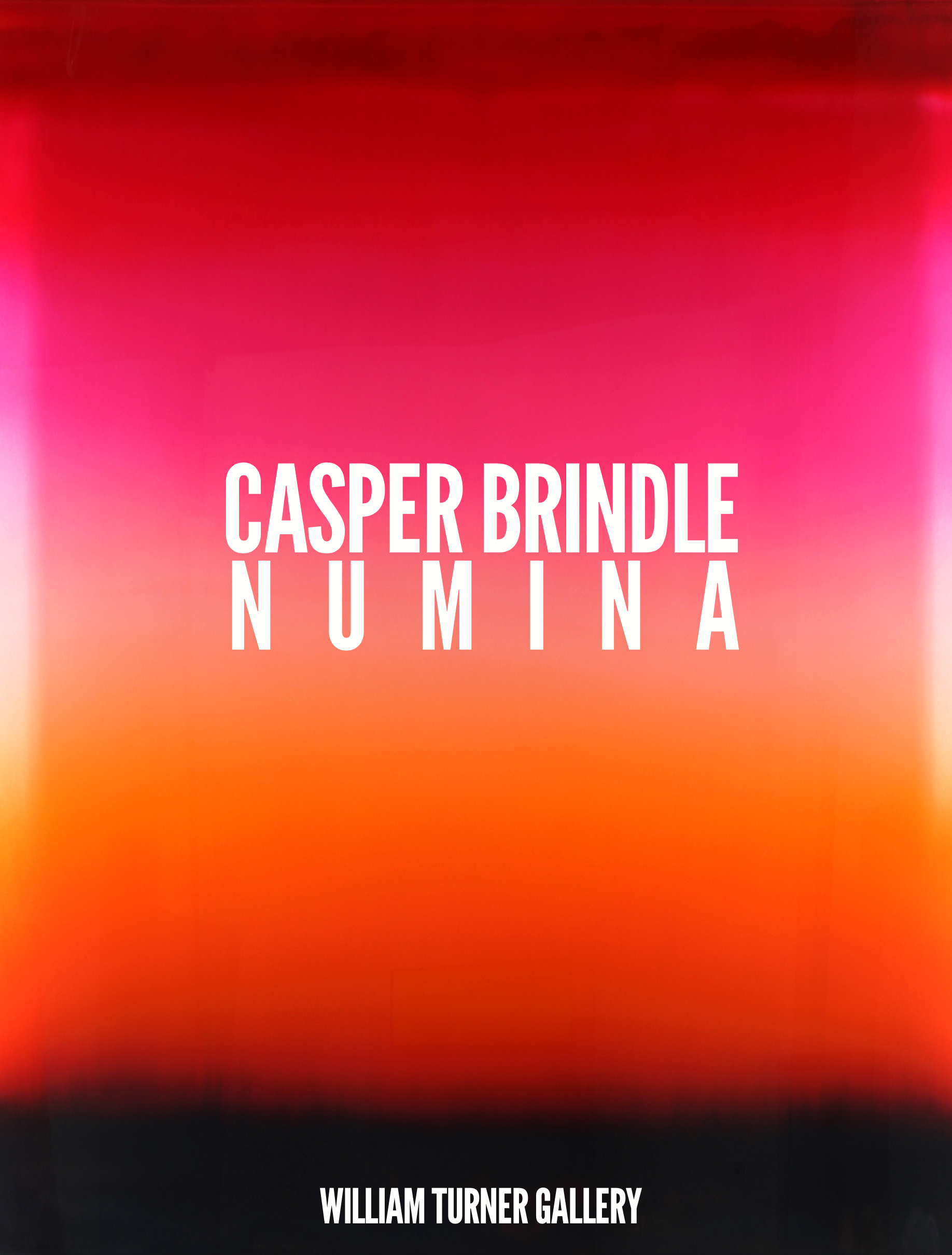
Santa Monica, CA - William Turner Gallery is pleased to present the exhibition catalog for Numina, Casper Brindle’s first solo exhibition at the gallery in four years. In the interim, Brindle has had numerous national and international exhibitions, including an extensive exhibition in 2022 at The Luckman Gallery, Cal State LA. Numina will run from January 25 - March 22, 2025.

Numina, presents two bodies of work, Light Glyphs and Veils, each of which involve dramatic investigations into light, color and the fluid, ever shifting nature of perception.  The exhibition ranges from painting to sculpture, and exemplifies Brindle’s restless experimentation and evolving modes of expression. The works are poetic, sensual and spatially dynamic. Utilizing automotive paints and pigmented acrylic, Brindle has created works that reflect and diffuse light in ways that are nuanced and engaging. 

A printed copy of the book will be available in either soft cover or in a limited edition hard cover. For information regarding obtaining a printed copy of the book please contact us via email.

The Frederick R. Weisman Art Foundation & William Turner Gallery Present A Frieze Weekend Celebration

The Frederick R. Weisman Art Foundation & William Turner Gallery look forward to your joining us for a special evening celebrating Frieze Art Fair and Casper’s Brindle’s stunning solo exhibition, Numina, with cocktails, music & hors d’oeuvres, Friday, February 21, 2025, 5:30 - 7:30 PM at William Turner Gallery. 

The Frederick R. Weisman Art Foundation is renowned for their exceptional collection and preservation of art by some of the 20th Century’s most beloved artists. Currently, under the direction of Billie Milam Weisman, the Foundation continues to make the collection available through loans to museums worldwide, docent tours at the Los Angeles estate, exhibitions in public-art venues, and the funding of several art museums.

Kindly RSVP Here