CHROMESTHESIA Catalog Now Available for Online Viewing

Exhibition Catalog

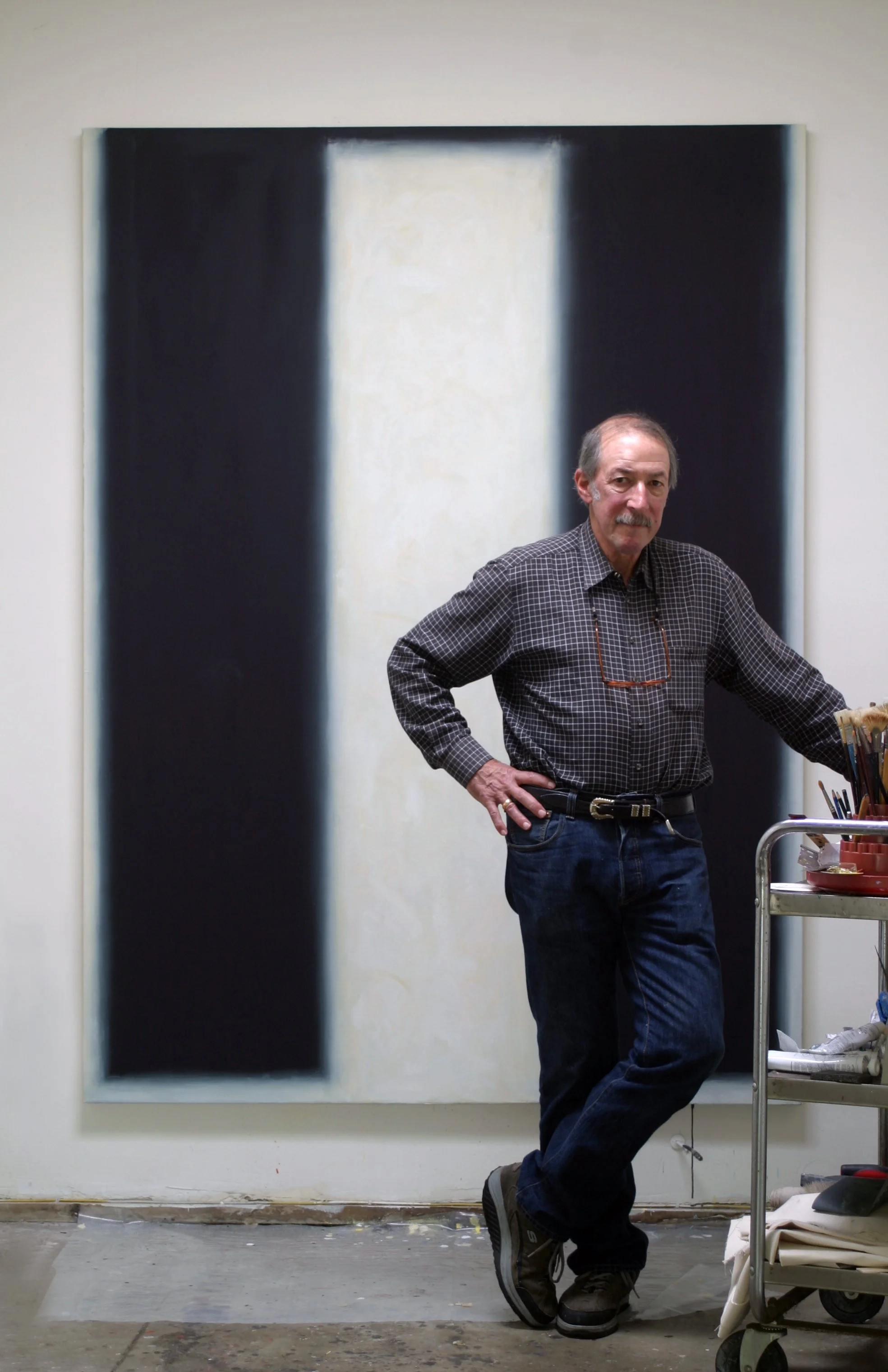
William Turner Gallery is pleased to present Curtis Ripley’s most recent investigations into abstraction Chromesthesia. The exhibit is on view February 19, through April 16, 2022.

How does one visually qualify the sound of color, or conversely, the color of sound? Chromesthesia is a neurological phenomenon experienced in the synthesis of binary sensorial modalities (synesthesia) where sound and color converge into a joint perception. In his painterly choreographies, Ripley interprets this ephemeral phenomena where light dances and shadows play in concert, whilst color is given musical agency. He often cites music as a departure point in his process, evidenced in the working titles. The canvases are gestural expressions of events conducted into orchestrations of lyrical harmony as the eye traverses through fields of color.

Activating the canvas’ surface through visceral gesticulations, he employs a vast repertoire of painterly techniques to amplify the dynamism of the viscous medium. In the tradition of the Old Master’s, veil’s of glazed oils are washed upon washes whilst opaque pigments dissolve into gauzy vapors, simultaneously revealing and obfuscating. One’s gaze is drawn in-and-out as a lens’ aperture renders depth-of-field. The transient nature of the corporeal world is described through lingering films of atmospheric haze interlacing with solid volumes rendered in highly saturated pigments; this tension is achieved through varied processes of application and deletion. Vibrations are deftly strung from his palette as colors rhapsodize in polychrome hums and variegated tremors. Expressionistic drips dapple indiscriminately here, automatic splatters chance to rupture spontaneously there… calligraphic strokes animatedly reach to articulate into attenuated arabesques. Rhythmically the paintings pulse into sublimely syncopated interventions of color, light, space and motion.

Boundless forms are liberated into ambiguous spatial fields through intuitive placement. Improvisatory bits of miscellaneous paraphernalia - such as scraps of sheet music - are occasionally embedded in the paintings, imbuing a whimsical element of surprise. Void of academic hierarchies, he refrains from privileging space, favoring the spontaneity of improvisational arrangements. Resistant to strict interpretation, the paintings are nonobjective distillations informed by Ripley’s relationship with his environment. Inevitably there are loose associations employing a pictorial vocabulary, not limited to: sound, ambient light, landscape, seasons, sky, and architecture which are then dematerialized into symphonic arrangements of reductive forms and undulating color harmonies.

Breaking from traditional modes where the canvas is detached from its audience, these are rather, environments intended to engulf the spectator. Ripley instinctively unifies the subjective phenomena of color and sound into atmospheric poems intended to actively translate into an intimate experience uniquely spirited by individual perception.

Curtis Ripley was born in 1949 in Lubbock, Texas. He attended the University of the Americas, México D.F. in 1969; Texas Tech University, earning a Bachelor of Fine Arts degree in 1971; and the University of Wisconsin, Madison, where he earned a Master of Fine Arts degree in 1975. Ripley served as a lecturer in 1975 at the University of Wisconsin, Madison; an Assistant Professor at Purdue University, West Lafayette, Indiana from 1975 to 1977; an Associate Professor at the Virginia Commonwealth University, Richmond, Virginia from 1977 to 1985; an Associate Professor at California State University, San Bernardino from 1985 to 1986; and a lecturer at California State University, Long Beach from 1986 to 1987. His awards include a National Endowment for the Arts Artists Fellowship, 1979, and Juror’s Award, Zeichnung Heute, Kunsthalle, Nurnberg in 1983. He has had numerous solo exhibitions throughout the United States, has participated in a wide-variety of group exhibitions, and has works in several collections such as those of the Fine Art Museums of San Francisco, California; J.P. Morgan Chase, New York; Federal Reserve Bank, Richmond VA; HSBC Private Bank, New York; Chemical Bank, New York City; Yokohama Royal Park Hotel, Japan; and The Ambassador Hotel, Taipei. The artist lives and works in Los Angeles, California.

OPENING THIS SATURDAY 4-7PM - WILLIAM TURNER GALLERY

CURTIS RIPLEY
CHROMESTHESIA
Opening Reception: Saturday February 19, 4-7pm

William Turner Gallery is pleased to present Curtis Ripley’s most recent investigations into abstraction Chromesthesia. The exhibit is on view February 19, through April 16, 2022.

How does one visually qualify the sound of color, or conversely, the color of sound? Chromesthesia is a neurological phenomenon experienced in the synthesis of binary sensorial modalities (synesthesia) where sound and color converge into a joint perception. In his painterly choreographies, Ripley interprets this ephemeral phenomena where light dances and shadows play in concert, whilst color is given musical agency. He often cites music as a departure point in his process, evidenced in the working titles. The canvases are gestural expressions of events conducted into orchestrations of lyrical harmony as the eye traverses through fields of color.

Activating the canvas’ surface through visceral gesticulations, he employs a vast repertoire of painterly techniques to amplify the dynamism of the viscous medium. In the tradition of the Old Master’s, veil’s of glazed oils are washed upon washes whilst opaque pigments dissolve into gauzy vapors, simultaneously revealing and obfuscating. One’s gaze is drawn in-and-out as a lens’ aperture renders depth-of-field. The transient nature of the corporeal world is described through lingering films of atmospheric haze interlacing with solid volumes rendered in highly saturated pigments; this tension is achieved through varied processes of application and deletion. Vibrations are deftly strung from his palette as colors rhapsodize in polychrome hums and variegated tremors. Expressionistic drips dapple indiscriminately here, automatic splatters chance to rupture spontaneously there… calligraphic strokes animatedly reach to articulate into attenuated arabesques. Rhythmically the paintings pulse into sublimely syncopated interventions of color, light, space and motion.

Boundless forms are liberated into ambiguous spatial fields through intuitive placement. Improvisatory bits of miscellaneous paraphernalia - such as scraps of sheet music - are occasionally embedded in the paintings, imbuing a whimsical element of surprise. Void of academic hierarchies, he refrains from privileging space, favoring the spontaneity of improvisational arrangements. Resistant to strict interpretation, the paintings are nonobjective distillations informed by Ripley’s relationship with his environment. Inevitably there are loose associations employing a pictorial vocabulary, not limited to: sound, ambient light, landscape, seasons, sky, and architecture which are then dematerialized into symphonic arrangements of reductive forms and undulating color harmonies.

Breaking from traditional modes where the canvas is detached from its audience, these are rather, environments intended to engulf the spectator. Ripley instinctively unifies the subjective phenomena of color and sound into atmospheric poems intended to actively translate into an intimate experience uniquely spirited by individual perception.

Curtis Ripley was born in 1949 in Lubbock, Texas. He attended the University of the Americas, México D.F. in 1969; Texas Tech University, earning a Bachelor of Fine Arts degree in 1971; and the University of Wisconsin, Madison, where he earned a Master of Fine Arts degree in 1975. Ripley served as a lecturer in 1975 at the University of Wisconsin, Madison; an Assistant Professor at Purdue University, West Lafayette, Indiana from 1975 to 1977; an Associate Professor at the Virginia Commonwealth University, Richmond, Virginia from 1977 to 1985; an Associate Professor at California State University, San Bernardino from 1985 to 1986; and a lecturer at California State University, Long Beach from 1986 to 1987. His awards include a National Endowment for the Arts Artists Fellowship, 1979, and Juror’s Award, Zeichnung Heute, Kunsthalle, Nurnberg in 1983. He has had numerous solo exhibitions throughout the United States, has participated in a wide-variety of group exhibitions, and has works in several collections such as those of the Fine Art Museums of San Francisco, California; J.P. Morgan Chase, New York; Federal Reserve Bank, Richmond VA; HSBC Private Bank, New York; Chemical Bank, New York City; Yokohama Royal Park Hotel, Japan; and The Ambassador Hotel, Taipei. The artist lives and works in Los Angeles, California.

PETER LODATO featured in GOOD VIBRATIONS @ INTERSECT PALM SPRINGS

Intersect Palm Springs is a boutique fair that brings together a dynamic mix of more than 50 emerging and established contemporary and modern art and design galleries. An Opening Night Preview on Thursday, February 10 will be followed by General Admission from Friday, February 11 through Sunday, February 13.

Good Vibrations, organized by Shana Nys Dambrot (Arts Editor, LA Weekly) and Hunter Drohojowska-Philp (Author, Rebels in Paradise: The Los Angeles Art Scene and the 1960s), offers

an expanded view of geometric abstraction as it has evolved in Southern California from the 1950s to include the properties of light and the emotional and transcendent uses of color. Lorser Feitelson, Karl Benjamin, John Miller, Peter Lodato, Jim Isermann, Patrick Wilson, Dani Tull, Yunhee Min, Knowledge Bennett, Mary Anna Pomonis, and Jen Stark are among the artists to be included in this multi-generational show.

Location

Palm Springs Convention Center 277 N Avenida Caballeros
Palm Springs, CA 92262

Mark Steven Greenfield @ Historic Broadway Station - Timelapse Video

MARK STEVEN GREENFIELD - A Survey 2001 - 2021
Currently On View at MOAH

Learn more


Mark Steven Greenfield is a native Angeleno. Born into a military family, he spent his early years in Taiwan and Germany, returning to Los Angeles at the age of 10. Entering into an American adolescence after being abroad gave Greenfield a unique look at the negative stereotyping of African Americans like himself, sparking his interest in the complexities of the Black experience both historically and in contemporary society. Greenfield’s creative process is based on research that delves into topics of Black genealogy, heritage, and cultural representation. His artwork is anchored in aspects of Black history that have been buried, forgotten, or omitted. 

Mark Steven Greenfield studied at what is now the Otis College of Art and Design and went on to receive a Bachelor’s degree in Education from California State University, Long Beach in 1973. To support his artistic practice, he held various positions as a visual display artist, park director, graphic design instructor, and police sketch artist before returning to school to earn his Master of Fine Arts degree in painting and drawing from California State University, Los Angeles in 1987. Since then, Greenfield has been a significant figure in the Los Angeles arts scene, serving as arts administrator for the Los Angeles Department of Cultural Affairs, director of the Watts Towers Arts Center and the Towers of Simon Rodia, director of the Los Angeles Municipal Art Gallery, and as a board member for the Downtown Arts Development Association, the Korean Museum, and The Armory Center for the Arts — to name a few. Greenfield has been teaching painting and design courses at Los Angeles City College since 1997.

MARK STEVEN GREENFIELD A Survey, 2001-2021 this Saturday at MOAH

Balthazar, 2021, Acrylic and Gold Leaf on Wood Panel, 20" X 16"

Mark Steven Greenfield is a native Angeleno. Born into a military family, he spent his early years in Taiwan and Germany, returning to Los Angeles at the age of 10. Entering into an American adolescence after being abroad gave Greenfield a unique look at the negative stereotyping of African Americans like himself, sparking his interest in the complexities of the Black experience both historically and in contemporary society. Greenfield’s creative process is based on research that delves into topics of Black genealogy, heritage, and cultural representation. His artwork is anchored in aspects of Black history that have been buried, forgotten, or omitted. 

Mark Steven Greenfield studied at what is now the Otis College of Art and Design and went on to receive a Bachelor’s degree in Education from California State University, Long Beach in 1973. To support his artistic practice, he held various positions as a visual display artist, park director, graphic design instructor, and police sketch artist before returning to school to earn his Master of Fine Arts degree in painting and drawing from California State University, Los Angeles in 1987. Since then, Greenfield has been a significant figure in the Los Angeles arts scene, serving as arts administrator for the Los Angeles Department of Cultural Affairs, director of the Watts Towers Arts Center and the Towers of Simon Rodia, director of the Los Angeles Municipal Art Gallery, and as a board member for the Downtown Arts Development Association, the Korean Museum, and The Armory Center for the Arts — to name a few. Greenfield has been teaching painting and design courses at Los Angeles City College since 1997.

MARK STEVEN GREENFIELD A Survey, 2001-2021

MUSEUM OF ART & HISTORY
665 W. Lancaster Blvd. Lancaster, CA 93534
Opening Saturday, January 22, 2022 4-6PM

Mark Steven Greenfield
Black Madonna Exhibition

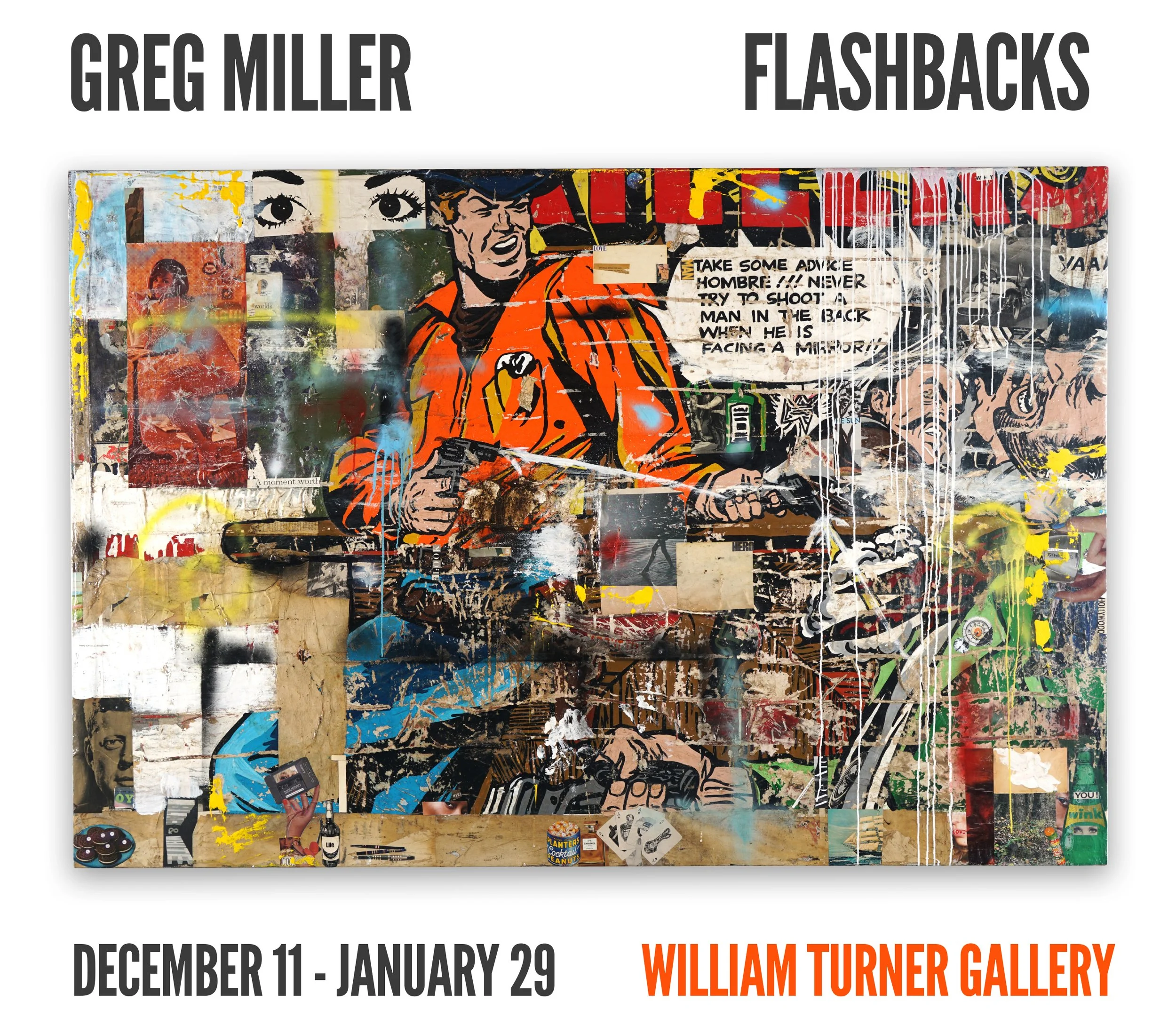
OPENING SATURDAY - GREG MILLER: FLASHBACKS

GREG MILLER
FLASHBACKS

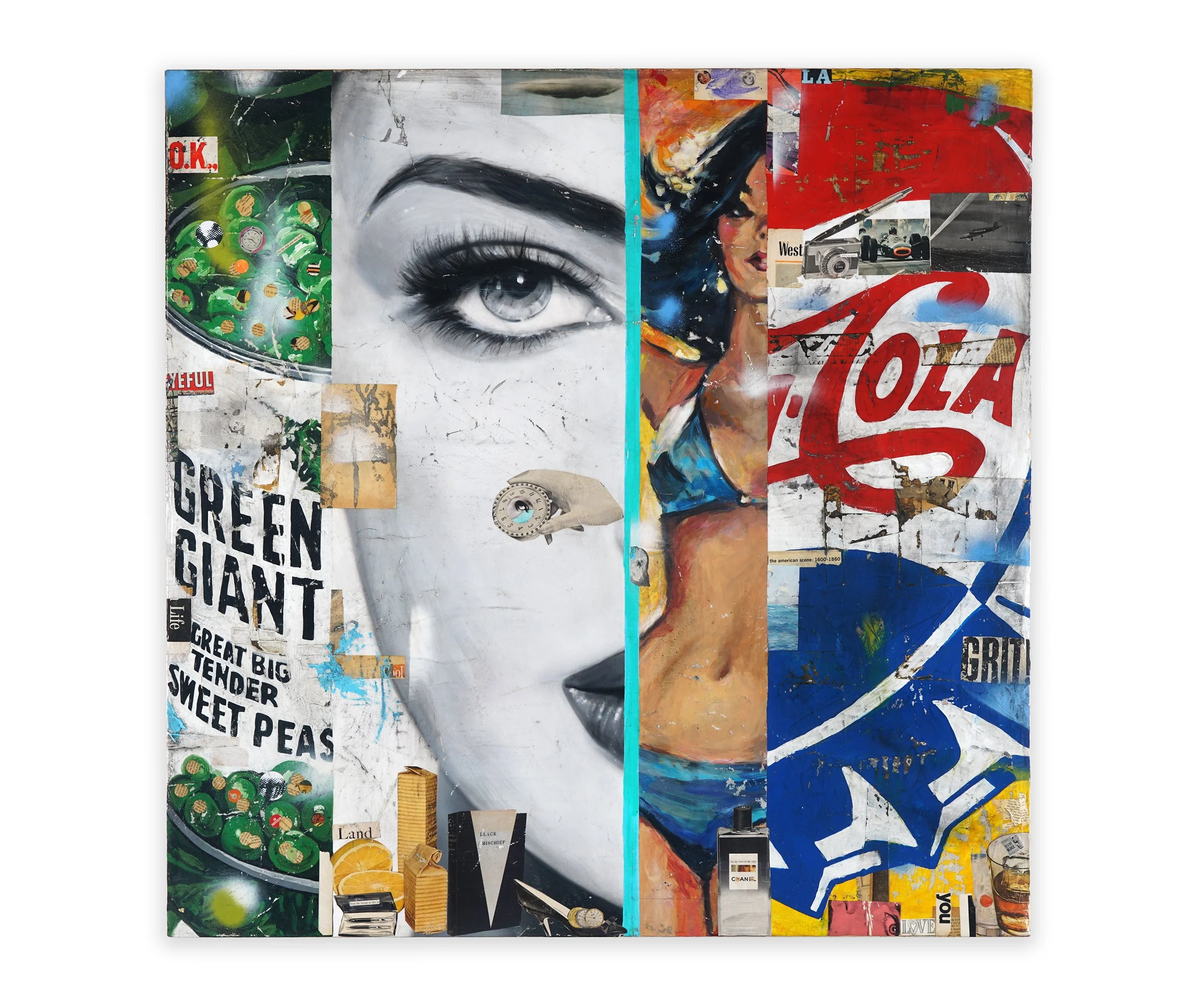
GREG MILLER, Eyefull, acrylic on canvas, 48”x48”

DECEMBER 11 - JANUARY 29, 2022
Opening Saturday, December 11, 4-7pm


On the occasion of William Turner Gallery’s thirtieth anniversary, it is with great pleasure to conclude the observance with the gallery’s inaugural artist, Greg Miller by presenting “FLASHBACKS.”

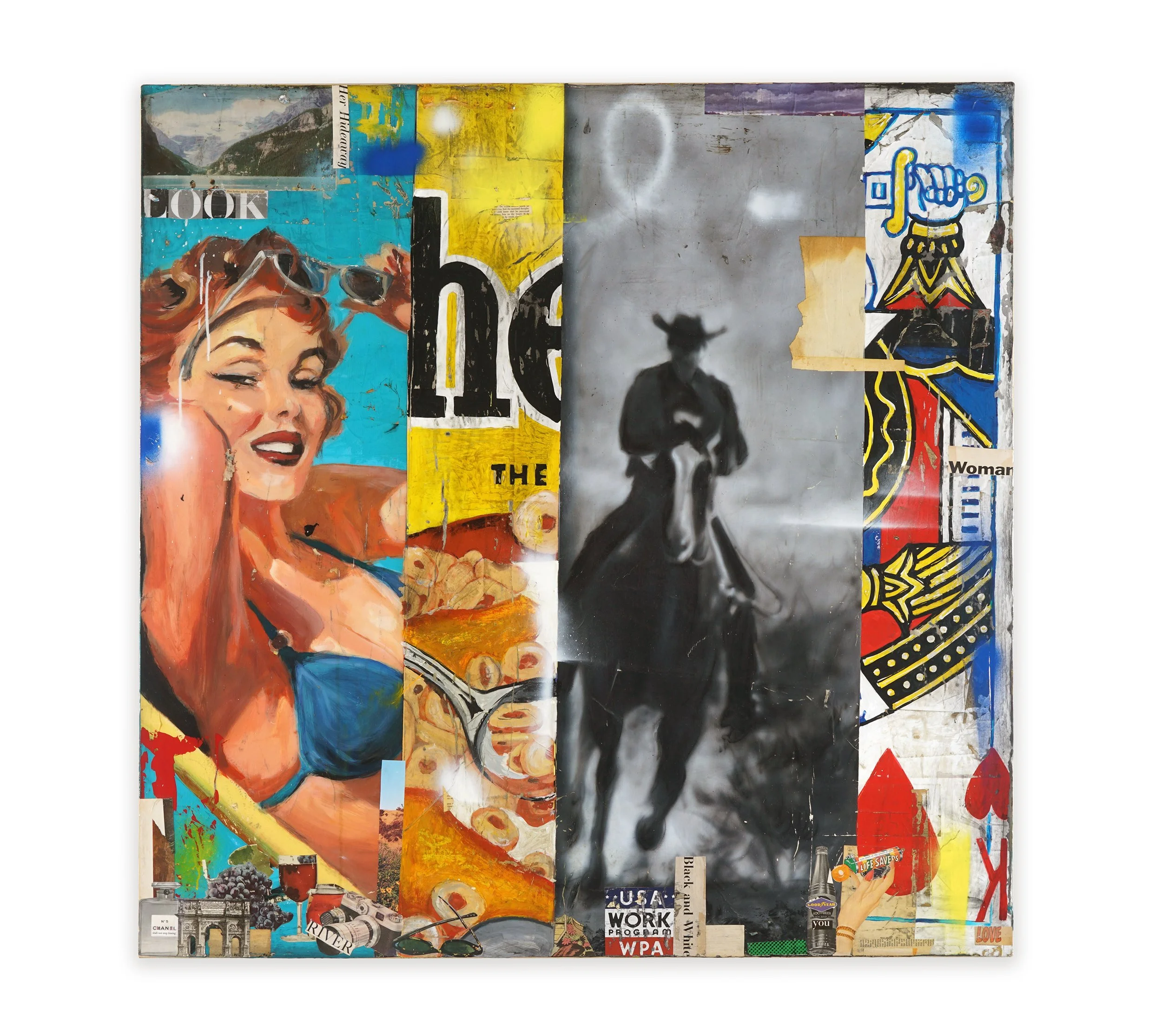
Contextually within the framework of postmodern Neo-pop and Post-pop, Miller utilizes a semiotic process of mining familiar pictorial codes from the popular culture of his youth for his visual vocabulary. Through his examination of sign systems, the modality of their transmission, as well as methods of production, Miller constructs paradoxes of the collective appointments awarded to the conventional iconography of post-war America. Informed by a uniquely ‘California’ lens, his gaze assembles a complex of interwoven images and text, high and low culture, with allegorical references to labor, leisure and Capitalism in medium and process.

With “FLASHBACKS,” Miller binarily indexes the polemics of “universal literacy,” while considering the problematic nuances of cultural relativism. Parsing his canvases is to unpack ethnographic maps which not only survey the landscape of industrialized Americana, but additionally addresses the global reach of what some have interpreted as cultural imperialism, others as soft diplomacy. Richly laced with irony and humor, Miller exploits the spectacle and banality of mass culture in an eclectic pastiche void of overt social commentary.

GREG MILLER, Cool Man, acrylic on canvas, 48”x48”

Miller’s investigation of materials associated with Venice, California’s surf, car and graffiti cultures introduced mediums and techniques he continues to incorporate. In his strategies involving the appropriated image, Miller paints and airbrushes rendered quotations of cowboys and glamazons amidst an assemblage of photographs and text from newspapers and magazines. The overlapping layers of archived prints are accretively assembled and embalmed as inclusions below a capsule of crystalline resin. Beginning in the 1940’s, “Glassing” surfboards with resin became a process of waterproofing and finishing employed by Southern California’s professional surfboard shapers and appropriated by Miller.

Cultural relativism applies not only to geographic boundaries but generational and economic intersectionalities. “FLASHBACKS” canvases afford materials new lives in a transformative process of negotiating the radically shifting cultural constructs of contemporary social morés and re-contextualizes them, provoking questions on our relationship with the images we consume.

Greg Miller was born in 1951 in Sacramento, California. His work is featured in numerous museum and private collections, including those of the Frederick R. Weisman Foundation and Charles Saatchi Foundation. The Get Go, a volume of his writings, photography and paintings, was published in 2010, and the first comprehensive monograph on the artist, Signs of the Nearly Actual, was published in 2009.

Greg Miller: FLASHBACKS - Opening Saturday, December 11, 2021

Please join us December 11 for the opening of FLASHBACKS, a grouping of new works by Greg Miller. The gallery will open at 12 and the opening will be held from 4-7PM. There will be live entertainment, food trucks and a bar with holiday refreshments. The gallery will also be featuring new works from gallery artists in the main room.

Also on Saturday, December 11, Bergamot Station will be holding its annual Bergamot Station Open House and Gift Market. Please find additional information about that event below. We look forward to seeing you!

GREG MILLER
FLASHBACKS

December 11 - January 29, 2021
Opening Saturday, December 11, 4-7PM

Bergamot Station Holiday Open House and Gift Market 2021

When: Saturday, December 11th. Individual gallery hours vary.

Where: Bergamot Station, 2525 Michigan Ave, Santa Monica, CA 90404

In celebration of the winter holidays, Bergamot Station is pleased to present a Winter Holiday Open House and Gift Market. Join us Saturday, December 11th for a day of holiday spirit and fine arts. The galleries at Bergamot Station will have tables of small artworks and giftable items for sale. Peruse the artwork at over 30 galleries and listen to live music.


Saturday at William Turner Gallery - Catalog Signing for LIGHT | GLYPHS & Special Music Event

CASPER BRINDLE - LIGHT | GLYPHS
Extended thru December 5, 2021

Casper Brindle will be at the gallery this Saturday, November 20th at 3PM to sign catalogs followed by a special musical performance by YUKI SHIBAMOTO at 4 PM 

Signed Catalogs will be available for $35.

READ ABOUT THE EXHIBITION 
AUTRE MAGAZINE
THE ARGONAUT

Digital Catalog

ART & HOPE: A Tour of the USC Fisher Museum Show with Edward Goldman

If you have not yet seen the USC Fisher Museum show curated by NPR/KCRW art critic Edward Goldman please visit the exhibition before it comes down on December 4. William Turner Gallery has two artists included in the exhibition, Andy Moses & Mark Steven Greenfield. We would like to thank Edward for including these important Southern California artists in the exhibition. Please follow the link below for hours, dates and directions to view the Art and Hope at the End of the Tunnel.

Learn more

Gallery Artists Ed Moses, Andy Moses and Charles Arnoldi Featured in On the Edge: Los Angeles Art 1970's - 1990's from the Joan and Jack Quinn Family Collection

Learn more

Joan Agajanian Quinn and her late husband Jack represent a key moment in the history of contemporary art, as Los Angeles came to symbolize an innovative and prolific brand of creative freedom. Few individuals have left such an indelible mark on the artistic landscape of Southern California more than Joan and Jack Quinn. Joan found herself both muse and promoter of several Southern California artists, while Jack used his skills as a prominent and influential attorney to help an array of emerging artists and their dealers navigate the worlds of law and business.

Known for her charisma, intelligence and incomparable flamboyance, Joan Agajanian Quinn has served as inspiration for artists such as Robert Mapplethorpe, Jean-Michel Basquiat, David Hockney, Ed Ruscha, Zandra Rhodes, Larry Bell, Frank Gehry, Ed Moses, Helmut Newton, Billy Al Bengston, Antonio Lopez and many others. As artists sought to record her image across a variety of media, Joan Quinn found herself with one of the world’s largest and significant collections of contemporary portraiture — a poignant representation of friendship, appreciation, and respect.

This exhibition will highlight the couple’s collection primarily amassed from the 1970s to 1990s. Much of the work was collected directly from the artists and has never changed hands or been shown publicly. Works in the exhibition will explore various themes such as Ferus Group “Cool School,” Gagosian, female artists, Finish Fetish, Documentary, Light and Space/Minimalism, Chicano Art, Pop Art, nature vs. urban landscape, and international artists and influences.


Edward Goldman’s Own ‘Made In LA’— Pandemic Version

We are pleased to have two gallery artists Andy Moses and Mark Steven Greenfield included in this exhibition at USC Fisher Museum of Art. To read the article about the exhibition please click on the link below.

Read on forbes online

PRESS: The Argonaut Reviews LIGHT | GLYPHS

Argonaut_4inch.jpg
Photograph courtesy Brent Broza Photography

Photograph courtesy Brent Broza Photography

Casper Brindle is convinced that he’s putting out some of his best work yet in his latest exhibition at William Turner Gallery in Santa Monica.

The artist, who began painting in the 1980s and is a disciple of the Light and Space art movement in Los Angeles, has woven a Southern California influence through all his work, whether the hot rod and surf culture found in his earlier work or the pure light in his latest exhibition.

“I think the light in LA is different than anywhere else in the world,” Brindle said. “This will be my best show yet. I’m really proud of this show.”
The show is called “Light | Glyphs” and will be on display through November 5. The series contains 25 pieces of which 15 will be shown at William Turner Gallery.

“Light is a huge part of my work in general and especially this body of work,” Brindle said. “I would say it is as important as the materials that I use, even more so. These works came to fruition just playing with light and seeing what happens with other materials. I started with light itself and manipulated the materials to do different things and bring different energies.”

Brindle, who was born in Toronto, moved to LA when he was 6 years old in the mid-1970s and he has lived there ever since. He was an apprentice to the Light and Space pioneer Eric Orr. He has exhibited on a regular basis at William Turner Gallery for more than 10 years and this is his 7th solo exhibition with the gallery.

A surfer, Brindle is constantly observing the play of light on water and how it expresses itself with color. Many of the works were done during the COVID lockdowns, something that Brindle said worked out to be a great thing for a lot of artists.

“Everything went on the backburner,” Brindle said. “You didn’t have to follow deadlines. You were kind of like, now it is time to really play with ideas and research and do the things that you can’t do when you have commitments and things like that.”

To create the works in this exhibit, Brindle used automotive paints, pigmented acrylic and metal leaf. The final works are 3 feet by 3 feet by 4 inches. He used translucent sculptural boxes which he air painted with diffused colors through the frosted surfaces.

The light in the colored background reflects in a quietly dramatic manner. In the center of each piece is a glyph, inspired by hieroglyphs that were ancient modes of communication, where symbols or marks were carved in relief to convey ideas.

Brindle’s glyph is a three-dimensional rectangle that intersects the center of the translucent box. The glyphs have been described as a beacon cutting through fog – quietly dramatic.
“I’m fascinated with hieroglyphs and how they used them to communicate,” Brindle said. “I use that as kind of a vehicle to do this newer work with glyphs. They go back awhile in the paintings.

There is just something that a spirit bigger than us is speaking to us. When I look at just a single glyph, it is speaking to that bigger power. I found that fascinating to use in the work.”

With Brindle’s use of gold and silver leaf to create the glyphs, he feels they really lend themselves to telling a story and he wanted to further the investigation into glyphs with these paintings.

Casper Brindle, Light-Glyph II, 2021, pigmented acrylic, 74” x 44” x 12”

Two different processes went into creating the works in this exhibit. With the glyphs, he did a lot of preparation, research and models. The decision-making process was very conscious as from the start he had an idea of where he wanted to go with them.
The paintings, on the other hand, had a more Zen approach. Brindle would find himself in a meditative state, a state of calmness where he let the work take over.

“It is a meditative state where all of a sudden at the end of the day, you’re like, ‘What just happened?’” Brindle said. “It’s that kind of thing when you’re driving and then all of a sudden, you’re at your destination and you don’t remember how you got there. That’s the same feeling I get when I make the works. The day starts and then it is 8 p.m. and I’ve got to go home.”

Brindle said he doesn’t typically have a preconceived idea of what he is going to do with the paintings. He lets them paint themselves.

“It’s a constant trance-like state of making right and wrong decisions along the way,” Brindle said. “I don’t say I’m going to do a blue painting. I just start and make a number of decisions along the way and just kind of paint these paintings.”

Throughout the years and with individual paintings, his choice of materials has always changed and shifted, evolving until he gets to where he is now.

“That’s part of the process,” Brindle said. “The best part about making art is the process. Things are changing all the time until you get to a place where you are like, now I have it. I know what this is about.”

The trance-like state is one that he shares with those that experience his work. Brindle said he’s had a lot of reactions to his art, but the most common one is a sense of lightness and calm — a sense of their bodies decompressing and entering a meditative state.

He stressed the importance of seeing his three-dimensional work in person. It’s the only way to experience its depth and the way the light shimmers and moves. The large paintings shift as a person walks by them, inviting viewers to pause, to explore perception.

This is Brindle’s first major show since the pandemic delayed an earlier showing at the William Turner Gallery in 2020. He invites patrons to come and lose themselves in his meditative works, to let art minister to their hungry souls.”

READ ON THE ARGONAUT SITE

Casper Brindle, LIGHT | GLYPHS - Catalog is now Available

Screen Shot 2021-10-05 at 4.50.49 PM.png
View the catalog for LIGHT | GLYPHS

We encourage you to view the digital catalog of LIGHT | GLYPHS. We will be printing a hard copy of this catalog. If you would like to receive a hard copy of the catalog please contact the gallery.

CASPER BRINDLE ARTIST PAGE
EXHIBITION PAGE FOR LIGHT | GLYPHS

TOMORROW @ WTG - Casper Brindle: LIGHT | GLYPHS - 4-8PM

CASPER BRINDLE LIGHT | GLYPHS

With Light | Glyphs, Casper Brindle presents two new bodies of work, each involving dramatic investigations into light, color, and perspective.

A contemporary disciple of the 1960s & 70s Light and Space generation, Brindle is intrigued by the phenomenological possibilities stimulated by color and light. Employing a variety of materials and styles, Brindle’s work engages the viewer in experiences that inspire both reflection and interaction, as one begins to explore the enigmatic spaces of perception.

Utilizing tools and techniques adopted from Southern California’s distinctive car culture, Brindle applies fine layers of airbrushed sprays to create atmospheric gradations of subtle depth. Brindle's treatment of color and light as a material modality, draws the viewer deeper into the illusory depths of the canvas, anchoring our attention against the constant pull of time and distraction, so that we might pause and reflect.

While his work has clear ties to the materiality of the Finish Fetish and Light and Space movements, he synthesizes these sensibilities to create something entirely his own, captivating the viewer in expansive fields that have the power to elicit deeper emotional responses.


CASPER BRINDLE

Born in Toronto in 1968, Brindle’s family relocated to Los Angeles in 1974, and he has called the city home ever since. Growing up surfing the beaches of LA’s coast undoubtedly made a profound impact on the artist. Brindle started painting as a teen and in his early twenties, he apprenticed for the pioneering Light and Space artist Eric Orr.

Casper Brindle’s work has been exhibited across the United States and internationally. This exhibition is the artist’s seventh solo exhibition with the gallery. His work is held in a number of prominent private and museum collections including the Frederick R. Weisman Art Foundation and the Morningside College Collection in Sioux City, IA.

Meet Artist Kim DeJesus - Featured in the LA WEEKLY

kimdejesus1-759x500.jpg

Be sure to catch the feature in LA WEEKLY highlighting the work of Kim DeJesus. Read the article on the LA WEEKLY web site by clicking the button below.

LA WEEKLY
 

Kim’s work is featured in the current exhibition CONFLUENCE. View the catalog for the exhibition below.

CONFLUENCE EXHIBITION CATALOG

CONFLUENCE Exhibition Catalog Now Available

CONFLUENCE Exhibition Catalog is now available.  Click on the button below to to take a look at the latest publication from William Turner Gallery.

CONFLUENCE Exhibition Catalog is now available. Click on the button below to to take a look at the latest publication from William Turner Gallery.

CONFLUENCE catalog